Veliparib (ABT-888) PARP-1/2 Inhibition: Cardiac Repolarization Safety in Advanced Solid Tumors
Copy code to add this image to your page
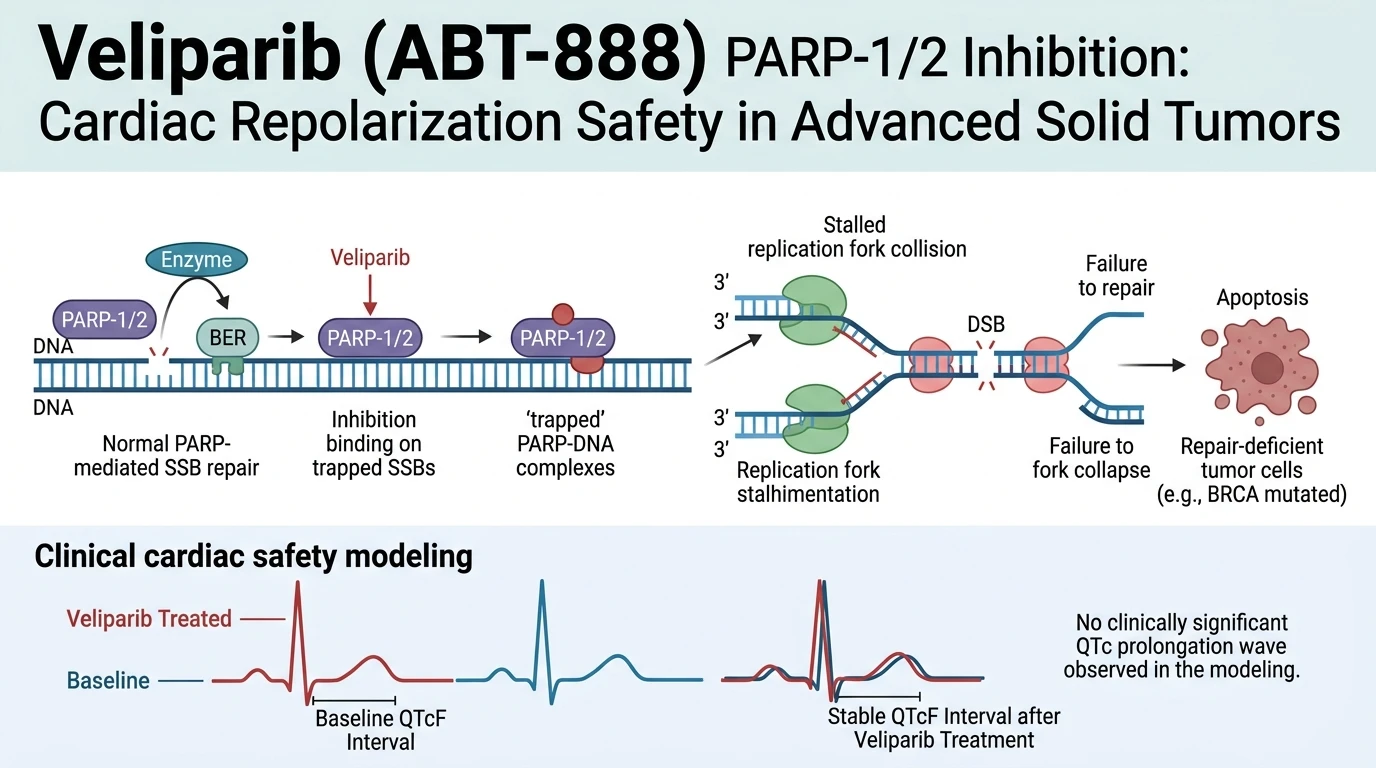
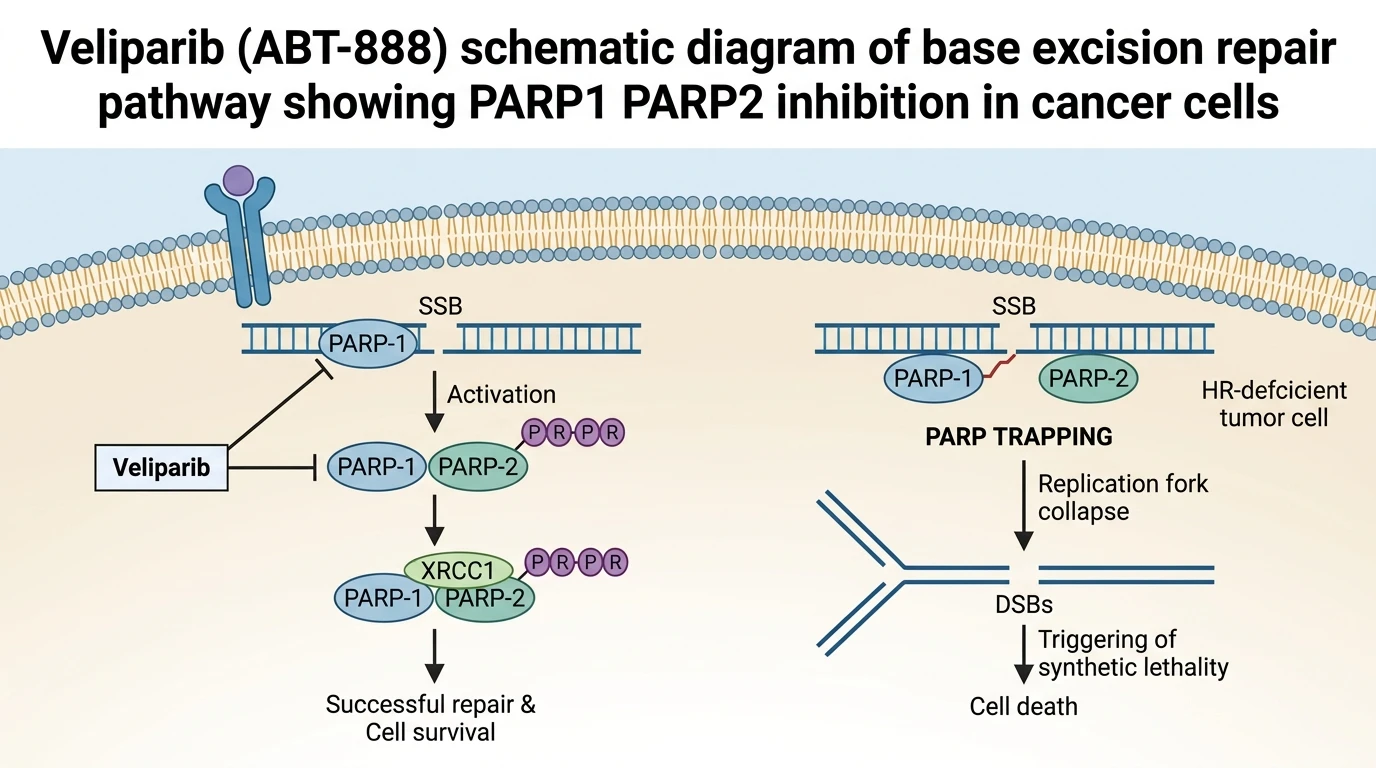
Poly(ADP-ribose) polymerase enzymes PARP-1 and PARP-2 function as crucial sensors of genomic instability. Upon binding to single-strand DNA breaks, these enzymes convert nicotinamide adenine dinucleotide (NAD+) into polymers of ADP-ribose, covalently modifying nuclear acceptor proteins. This enzymatic auto-PARylation recruits multiprotein DNA repair complexes through interaction with scaffold proteins such as XRCC1, thereby initiating single-strand DNA repair via the base excision repair pathway. Small-molecule inhibition of PARP-1 and PARP-2 blocks poly(ADP-ribose) chain synthesis and catalytic turnover. Concurrently, trapped PARP-DNA complexes physically impede replication fork progression during S-phase. In homologous recombination-deficient (HRD) tumor backgrounds—such as those harboring BRCA1 or BRCA2 mutations—the inability to resolve stalled replication forks leads to persistent double-strand DNA breaks, genomic catastrophe, and selective cell death via synthetic lethality. Beyond monotherapy applications, PARP inhibition acts synergistically to sensitize tumor cells to cytotoxic chemotherapy and ionizing radiation.
Evaluation of off-target cardiac ion channel interactions, specifically hERG potassium channel binding, represents a mandatory component of clinical development for small-molecule kinase and enzyme inhibitors. Prolongation of cardiac repolarization, quantified by the baseline-corrected Fridericia-corrected QT interval (QTcF), poses severe clinical risks, including Torsades de Pointes and ventricular arrhythmias. A randomized, double-blind, placebo-controlled crossover Phase 1 trial systematically assessed the effect of single oral administration of Veliparib (ABT-888) at therapeutic (200 mg) and supratherapeutic (400 mg) doses on cardiac repolarization dynamics in 47 adult patients with advanced solid tumors.
Electrocardiographic (ECG) data were gathered across pre-specified timepoints synchronized with intensive pharmacokinetic sampling. Quantitative evaluation centered on calculating the baseline-corrected, placebo-adjusted QTcF change (ΔΔQTcF). Following a single 200 mg dose of Veliparib, the maximum mean ΔΔQTcF reached 3.6 ms, accompanied by a 95% upper confidence bound (UCB) of 6.1 ms. Administration of the 400 mg dose yielded a maximum mean ΔΔQTcF of 6.4 ms, with a corresponding 95% UCB of 8.9 ms. Both upper confidence boundaries remained strictly below the 10 ms threshold established by International Council for Harmonisation (ICH) E14 regulatory guidelines for clinical significance.
Pharmacokinetic analysis demonstrated linear, dose-proportional increases in maximum plasma concentration (Cmax) and total area under the concentration-time curve (AUC). Exposure–response modeling linking plasma Veliparib concentrations directly to ΔΔQTcF changes exhibited a flat relationship, confirming the absence of concentration-dependent QTc prolongation across clinically relevant exposure ranges. No treatment-emergent ECG abnormalities, absolute QTcF values exceeding 500 ms, or ΔQTcF increases greater than 60 ms from baseline were recorded. Overall, single-dose administration was well tolerated without cardiac safety signals, supporting its continued combination with DNA-damaging therapeutics.
Cardiac Safety Profile and Exposure-Response Dynamics
Copy code to add this image to your page
Veliparib selectively inhibits PARP-1 and PARP-2 enzymes, suppressing poly(ADP-ribose) synthesis required for base excision repair of single-strand DNA breaks. Trapped PARP-DNA complexes collapse active replication forks, precipitating double-strand breaks that lead to synthetic lethality in homologous recombination-deficient tumors. In clinical evaluation, single doses up to 400 mg maintained ΔΔQTcF values below regulatory thresholds, demonstrating an absence of clinically relevant cardiac repolarization risk.
Baseline-Corrected QTcF Evaluation Across Single-Dose Cohorts
Cardiotoxicity remains a critical boundary in early-phase oncology drug development. In a randomized, double-blind, placebo-controlled crossover study, 47 patients received oral doses of Veliparib at 200 mg and 400 mg. Electrocardiographic sampling demonstrated minimal changes in cardiac repolarization parameters. The maximum mean placebo-adjusted, baseline-corrected QTcF (ΔΔQTcF) reached 3.6 ms for the 200 mg dose level. Upper confidence bounds remained strictly within predefined regulatory limits. At 400 mg, the peak ΔΔQTcF rose to 6.4 ms with a 95% upper confidence bound of 8.9 ms. This upper limit sits well beneath the standard 10 ms threshold of clinical concern. Cardiac repolarization parameters remained stable throughout the observation window. No subjects exhibited absolute QTcF intervals exceeding 500 ms. Drug-induced arrhythmias were entirely absent.
Linear Pharmacokinetic Properties and Exposure-Response Relationships
Pharmacokinetic evaluations revealed predictable systemic drug handling. Plasma concentration profiles scaled proportionally across the evaluated dose range. Linear pharmacokinetic behavior was sustained through maximum observed concentration endpoints. Pharmacometric exposure–response modeling confirmed no statistically significant relationship between plasma levels and QTc interval prolongation. Systemic accumulation remained minimal across standard therapeutic schedules. Safety observations verified robust tolerance without treatment-emergent cardiac repolarization abnormalities.