CPT Inhibitors
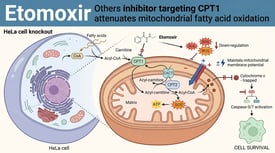
The Carnitine Palmitoyltransferase (CPT) system is a critical component of mitochondrial fatty acid beta-oxidation, responsible for transporting long-chain fatty acids (LCFAs) from the cytoplasm into the mitochondrial matrix for energy production. This system comprises two key enzymes: CPT1, located on the outer mitochondrial membrane, and CPT2, situated on the inner mitochondrial membrane, along with carnitine-acylcarnitine translocase (CACT). CPT1 is the rate-limiting enzyme, catalyzing the transfer of an acyl group from acyl-CoA to carnitine, forming acylcarnitine. This acylcarnitine is then transported into the matrix by CACT, where CPT2 converts it back to acyl-CoA for beta-oxidation. This pathway is a major energy source, particularly during fasting, prolonged exercise, or conditions of high metabolic demand. Inhibiting the CPT system, especially CPT1, has therapeutic implications for several diseases. In metabolic disorders such as obesity, type 2 diabetes, and non-alcoholic fatty liver disease (NAFLD/NASH), excessive fatty acid oxidation contributes to insulin resistance and lipid accumulation.
CPT1 inhibition can shift cellular metabolism from fat oxidation towards glucose utilization, potentially improving insulin sensitivity and reducing hepatic steatosis. In cancer, many tumor cells exhibit altered metabolic profiles, including increased fatty acid oxidation to support rapid proliferation, membrane biogenesis, and survival, especially in nutrient-deprived or hypoxic microenvironments. Inhibiting CPT1 can thus starve cancer cells of energy and reduce their viability. Furthermore, CPT inhibitors are being explored for ischemia-reperfusion injury, where excessive FAO during reperfusion can exacerbate tissue damage. Etomoxir, an irreversible CPT1 inhibitor, has been widely used in preclinical research to elucidate the effects of FAO inhibition across various disease models, including diabetes, obesity, and several cancers (e.g., leukemia, prostate, breast). Perhexiline, an older anti-anginal drug, also exhibits CPT1/2 inhibitory activity. However, the clinical development of Etomoxir has been hindered by systemic toxicities, particularly liver and cardiotoxicity, likely due to its broad inhibition of FAO in healthy tissues essential for energy homeostasis.
Current research focuses on developing newer, more selective, and reversible CPT1 inhibitors with improved therapeutic windows. Some compounds are in early clinical trials for specific metabolic diseases or cancers, aiming to overcome the limitations of earlier inhibitors. CPT inhibitors can be classified as irreversible (e.g., Etomoxir) or reversible, and by their selectivity for specific CPT1 isoforms (CPT1A, CPT1B, CPT1C). Chemically, oxirane carboxylic acids are a prominent class. Challenges include achieving tissue-specific inhibition to avoid systemic side effects, as FAO is vital for many organs. Identifying biomarkers to stratify patients who would most benefit from CPT inhibition (e.g., tumors highly dependent on FAO) is crucial. Combination strategies, such as combining CPT inhibitors with glycolysis inhibitors to induce severe metabolic stress in cancer cells, or with other targeted agents, are actively being investigated to enhance efficacy and overcome resistance mechanisms.