Etomoxir Others inhibitor targeting CPT1 attenuates mitochondrial fatty acid oxidation
Copy code to add this image to your page
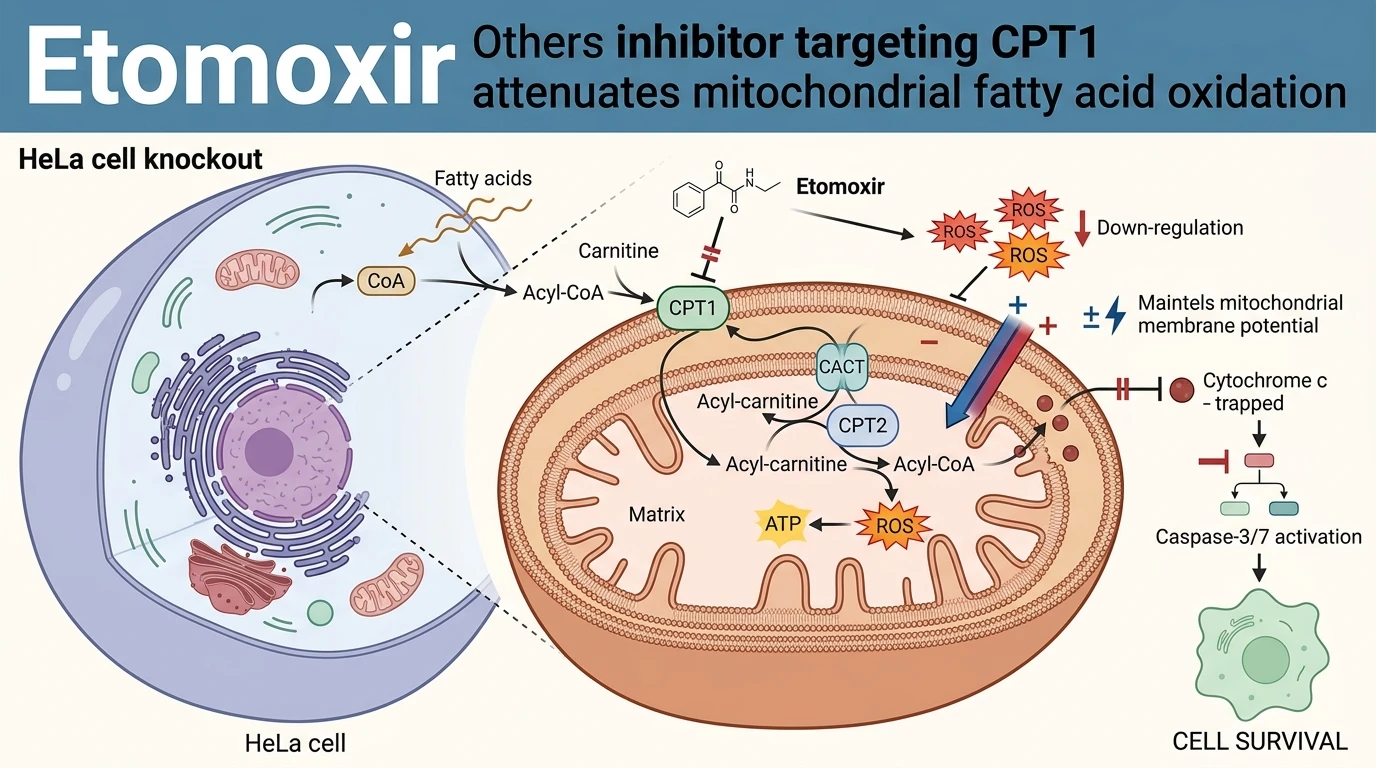
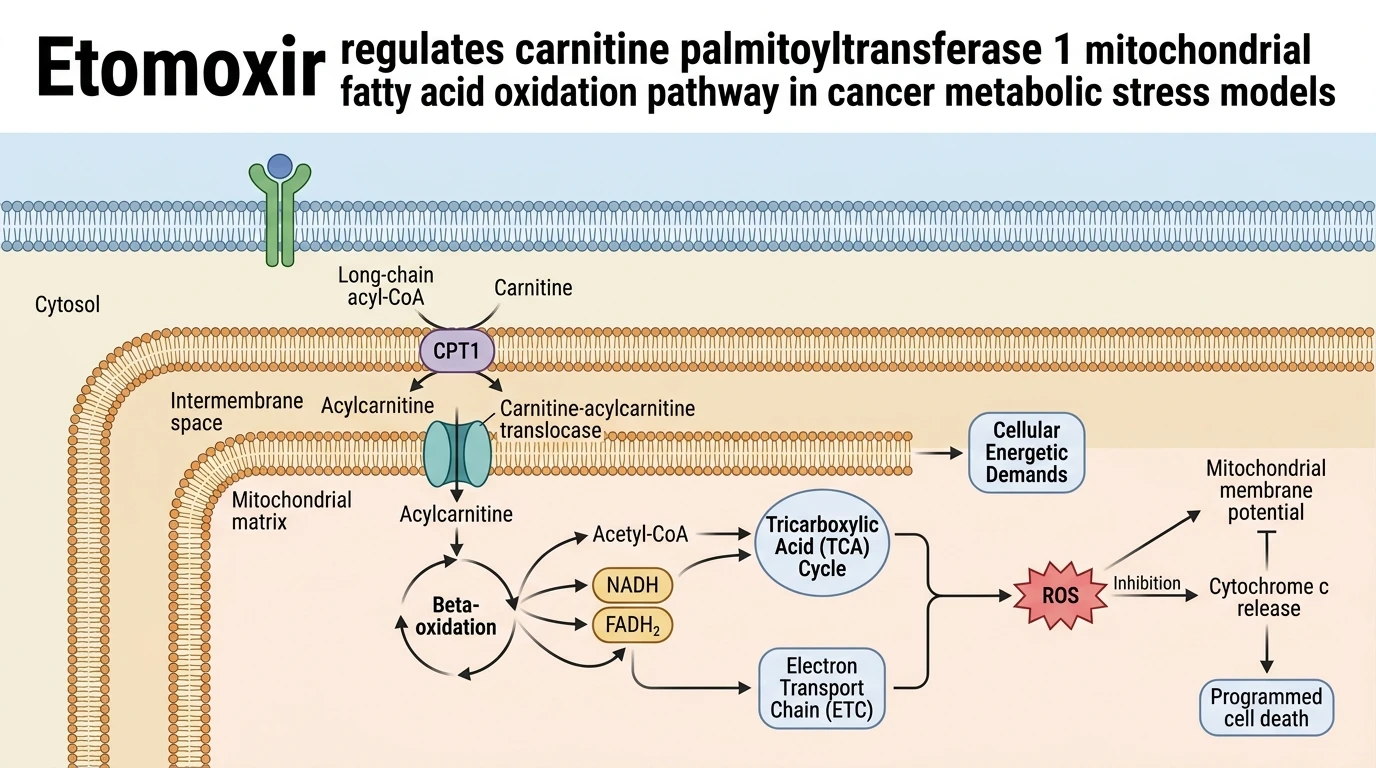
Carnitine palmitoyltransferase 1 (CPT1) anchors to the outer mitochondrial membrane, serving as the master kinetic checkpoint for long-chain fatty acid entry into the mitochondrial matrix. Under baseline physiological state, CPT1 transesterifies acyl-CoA species into acylcarnitine derivatives, enabling their translocation across the inner mitochondrial membrane via carnitine-acylcarnitine translocase. Once inside the matrix, acylcarnitines undergo reconversion to acyl-CoA for breakdown through mitochondrial beta-oxidation (FAO). This catabolic process yields acetyl-CoA along with electron donors NADH and FADH2, feeding directly into the tricarboxylic acid cycle and electron transport chain. Small-molecule inhibition of CPT1 provides a precise pharmacologic approach to interrogate metabolic flexibility and lipid reliance in transformed cell lines. Detailed target profiling reveals CPT1 selective inhibition mechanisms operate through covalent adduct formation within the catalytic catalytic center, suppressing mitochondrial fatty acid import.
In human cervical cancer (HeLa) models, gene-editing experiments eliminating myostatin (Mstn) reveal intricate connections between myogenic regulatory factors and cellular bioenergetics. Mstn depletion forces a metabolic rewiring characterized by heightened transcript and protein expression of CPT1 isoforms. Consequently, Mstn-knockout HeLa cells exhibit accelerated baseline rates of mitochondrial FAO. While elevated FAO is often associated with adaptive survival during nutrient deprivation, uncontrolled metabolic flux through the electron transport chain causes severe biochemical stress under specific genetic backgrounds. In Mstn-deficient HeLa cultures, excessive FAO activity increases electron pressure across complexes I and III, leading to localized electron leakage and elevated generation of mitochondrial reactive oxygen species (ROS).
The accumulation of mitochondrial ROS initiates an intracellular damage cascade. ROS accumulation disrupts the structural integrity of inner mitochondrial membrane phospholipids, specifically cardiolipin, leading to loss of mitochondrial membrane potential (ΔΨm). Membrane depolarization coincides with the formation of mitochondrial permeability transition pores, resulting in the efflux of pro-apoptotic factors into the cytoplasm. Cytosolic cytochrome c complexes with Apaf-1 and pro-caspase-9 to form the functional apoptosome, which subsequently executes the proteolytic cleavage and activation of executioner caspase-3 and caspase-7. As a result, Mstn-deficient cancer cells undergo rapid apoptosis driven primarily by metabolic overactivation rather than external growth factor withdrawal.
Pharmacological interventions using the CPT1 inhibitor Etomoxir clarify this metabolic susceptibility. By blunting CPT1 enzymatic activity, Etomoxir restricts long-chain acyl-CoA entry into the mitochondrial matrix, rapidly attenuating excessive FAO rates in Mstn-knockout cells. Suppressing FAO flux normalizes electron flow through the respiratory complexes, thereby reducing mitochondrial ROS accumulation to physiological baseline levels. Lower ROS levels prevent mitochondrial outer membrane permeabilization, block cytochrome c efflux, and abolish downstream activation of caspase-3/7 cascades. Pharmacological blockade of CPT1 effectively reverses the loss of cell viability induced by Mstn deficiency, demonstrating that Mstn-null cell death stems directly from FAO-mediated oxidative toxicity.
Pharmacological CPT1 Inhibition and Apoptotic Fate Modulation
Copy code to add this image to your page
Etomoxir irreversibly inhibits carnitine palmitoyltransferase 1 (CPT1), preventing long-chain fatty acid entry into mitochondria and reducing fatty acid oxidation. In Mstn-knockout cervical cancer cells, hyperactive fatty acid oxidation generates toxic mitochondrial ROS levels, leading to mitochondrial membrane potential loss, cytochrome c release, and caspase-3/7 activation. Pharmacological block with etomoxir mitigates ROS elevation, preserves membrane integrity, and rescues cell viability.
Mstn Deficiency Accelerates CPT1-Mediated ROS Accumulation
Myostatin loss alters substrate preference in human cervical carcinoma cells. Elevated baseline CPT1 activity drives rapid translocation of long-chain fatty acids into the mitochondrial matrix. Electron transfer chain complexes experience substantial electron density during heightened beta-oxidation flux. Superoxide generation increases rapidly under these conditions. In vitro fluorometric measurements demonstrated a multi-fold increase in mitochondrial hydroxyl and superoxide radical generation in Mstn-null clones compared to parental controls. Applying the Etomoxir Others inhibitor at micromolar concentrations reversed this aberrant metabolic signature within hours. Enzymatic inhibition slowed long-chain acyl-CoA uptake into the mitochondrial matrix. Consequently, mitochondrial electron overload dissipated promptly. Cellular ROS levels returned to basal thresholds, confirming that oxidative stress in Mstn-deficient cells depends strictly on intact mitochondrial fatty acid oxidation pathways.
Etomoxir Rescues Cell Viability and Mitochondrial Integrity
Hyperactive fatty acid oxidation impairs organelle structural stability. Persistent ROS production induces mitochondrial membrane depolarization in Mstn-knockout HeLa models. Permeability transition pore opening allows cytosolic release of cytochrome c. Downstream executioner proteases undergo rapid auto-proteolytic cleavage. Cleaved caspase-3 and caspase-7 levels increased significantly in Mstn-null lysates. Supplementation with Etomoxir Others inhibitor completely suppressed caspase activation. Mitochondrial membrane potential recovered toward physiological baseline values within 24 hours of exposure. Viability assays confirmed robust rescue of HeLa cell populations following metabolic enzyme blockade. These data indicate that CPT1 inhibition mitigates downstream apoptotic cascades without requiring direct genetic rescue of Mstn expression.