THR Inhibitors
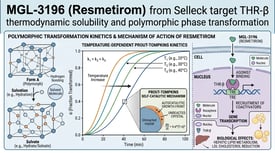
Thyroid hormone receptors (THRs) are ligand-dependent transcription factors belonging to the nuclear receptor superfamily, existing primarily as two isoforms: THR-alpha and THR-beta. THR-alpha is predominantly expressed in the heart and central nervous system, regulating heart rate and bone development, while THR-beta is the major isoform in the liver, controlling cholesterol metabolism and the hypothalamic-pituitary-thyroid axis. While much clinical focus is currently on THR-beta selective agonists for treating metabolic dysfunction-associated steatohepatitis (MASH), THR inhibitors (antagonists) represent a critical pharmacological niche for addressing conditions of thyroid hormone excess or pathological signaling. The mechanism of action for THR inhibitors involves binding to the ligand-binding domain (LBD) of the receptor, preventing the binding of triiodothyronine (T3) and inducing a conformational change that recruits co-repressor proteins like NCoR and SMRT. This recruitment leads to histone deacetylation and the active suppression of target gene transcription.
These inhibitors are primarily investigated for the treatment of hyperthyroidism and thyrotoxicosis, particularly in patients who are refractory to standard anti-thyroid drugs like methimazole or those suffering from Graves' disease. Furthermore, THR signaling is often hijacked in certain malignancies, such as hepatocellular carcinoma and specific types of leukemia, where it promotes cell proliferation and survival, making THR antagonists potential candidates for targeted oncological therapy. Research progress has transitioned from early steroidal scaffolds to more sophisticated non-steroidal compounds. Tool compounds like NH-3 and 1-850 have been instrumental in mapping the LBD, though their clinical translation has been hindered by poor bioavailability and lack of isoform selectivity. Current classifications of THR inhibitors focus on their selectivity profiles, with a major research goal being the development of alpha-selective antagonists to manage cardiac symptoms of hyperthyroidism without inducing systemic hypothyroidism.
Notable challenges in this field include the risk of 'hypothyroid-like' side effects, such as cognitive impairment and dyslipidemia, which occur when inhibition is not sufficiently localized. To mitigate these risks, researchers are exploring tissue-targeted delivery systems and bifunctional molecules that can modulate receptor activity with higher precision. Combination therapy strategies, particularly pairing THR inhibitors with beta-blockers or traditional anti-thyroid medications, are being evaluated to provide more comprehensive control of thyrotoxic symptoms. Despite the dominance of agonists in the current metabolic pipeline, the therapeutic potential of THR inhibitors in managing refractory endocrine disorders and specific cancers remains a compelling area of investigation. As our understanding of the structural biology of the THR-LBD deepens, the development of more potent and selective antagonists is expected to provide new avenues for treating complex thyroid-related pathologies.