4-HNE (4-Hydroxynonenal) 4-Hydroxynonenal Others chromatin autoantibodies in SLE
Copy code to add this image to your page
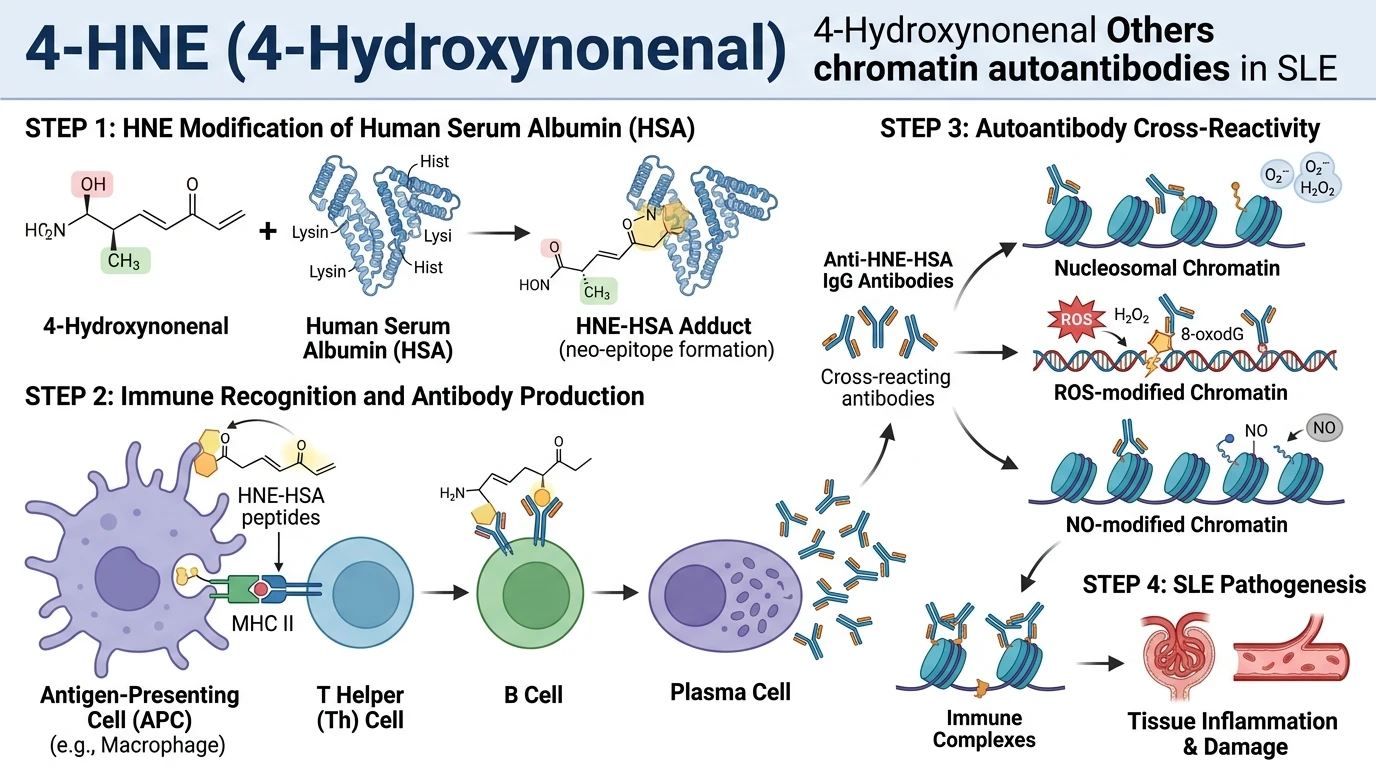
Systemic lupus erythematosus (SLE) is characterized by a breakdown in self-tolerance and the persistent production of autoantibodies against nuclear antigens. Among the upstream drivers of this autoimmune cascade, lipid peroxidation products serve as potent chemical modifiers of endogenous proteins. The reactive alpha,beta-unsaturated aldehyde 4-hydroxy-2-nonenal, designated as 4-HNE (4-Hydroxynonenal), readily forms covalent Michael adducts with nucleophilic amino acid side chains. Human serum albumin (HSA), the major circulating protein in plasma, represents a primary physiological sink for electrophilic stress. When subjected to oxidative lipid degradation, HSA undergoes structural re-ordering through chemical adduction. This chemical transformation yields distinct neo-epitopes that alter self-antigen presentation. In experimental models, immunization with HNE-modified HSA induces a robust polyclonal immune response, generating high-titer anti-HNE-HSA IgG antibodies.
A key finding in molecular immunology is that these induced antibodies do not remain restricted to the modified albumin carrier. Instead, anti-HNE-HSA IgG demonstrates pronounced cross-reactivity toward nuclear targets, specifically native chromatin. Chromatin architecture, composed of double-stranded DNA wrapped around histone octamers, is highly susceptible to metabolic and oxidative modification. Under inflammatory conditions, reactive oxygen species (ROS) and nitric oxide (NO) derivatives further modify nuclear structures, generating ROS-chromatin and NO-chromatin configurations. Experimental binding assays confirm that polyclonal anti-HNE-HSA IgG binds with high affinity to ROS-modified chromatin and NO-modified chromatin in vitro. This molecular recognition indicates shared conformational or chemical epitopes between lipid-modified plasma proteins and structurally perturbed nuclear complexes.
Clinical evaluations of patient-derived samples reinforce the biological relevance of this lipid-induced modification pathway. In comparative serological assays, autoantibodies purified from 55% of evaluated SLE patients exhibited preferential binding toward HNE-HSA over unmodified HSA controls. These same patient autoantibodies simultaneously displayed elevated recognition of native chromatin, ROS-chromatin, and NO-chromatin. Biochemical analysis of circulating HSA isolated directly from SLE patient sera revealed marked pathophysiological changes. HSA samples from SLE cohorts showed significantly higher carbonyl content and quantifiable 4-HNE adducts compared to healthy age-matched control subjects. In the broader scope of lipid peroxidation research, reactive aldehydes like 4-Hydroxynonenal Others act as critical drivers of neo-epitope generation.
The mechanistic link between lipid peroxidation and nuclear autoimmunity provides a concrete framework for understanding SLE etiopathogenesis. Covalent modification of serum albumin by 4-HNE transforms an abundant, non-immunogenic carrier into an immunogenic entity capable of breaking B-cell tolerance. Subsequent antibody maturation yields polyclonal IgG clones capable of recognizing modified and unmodified nuclear chromatin substrates. Rather than operating in isolation, lipid peroxidation products, serum protein modifications, and reactive oxygen or nitrogen species act synergistically to expand the autoantibody repertoire. These biochemical events demonstrate how systemic oxidative stress translates directly into target organ recognition and persistent autoantibody-mediated pathology in lupus.
Mechanistic Basis of Lipid-Driven Chromatin Autoimmunity
Copy code to add this image to your page
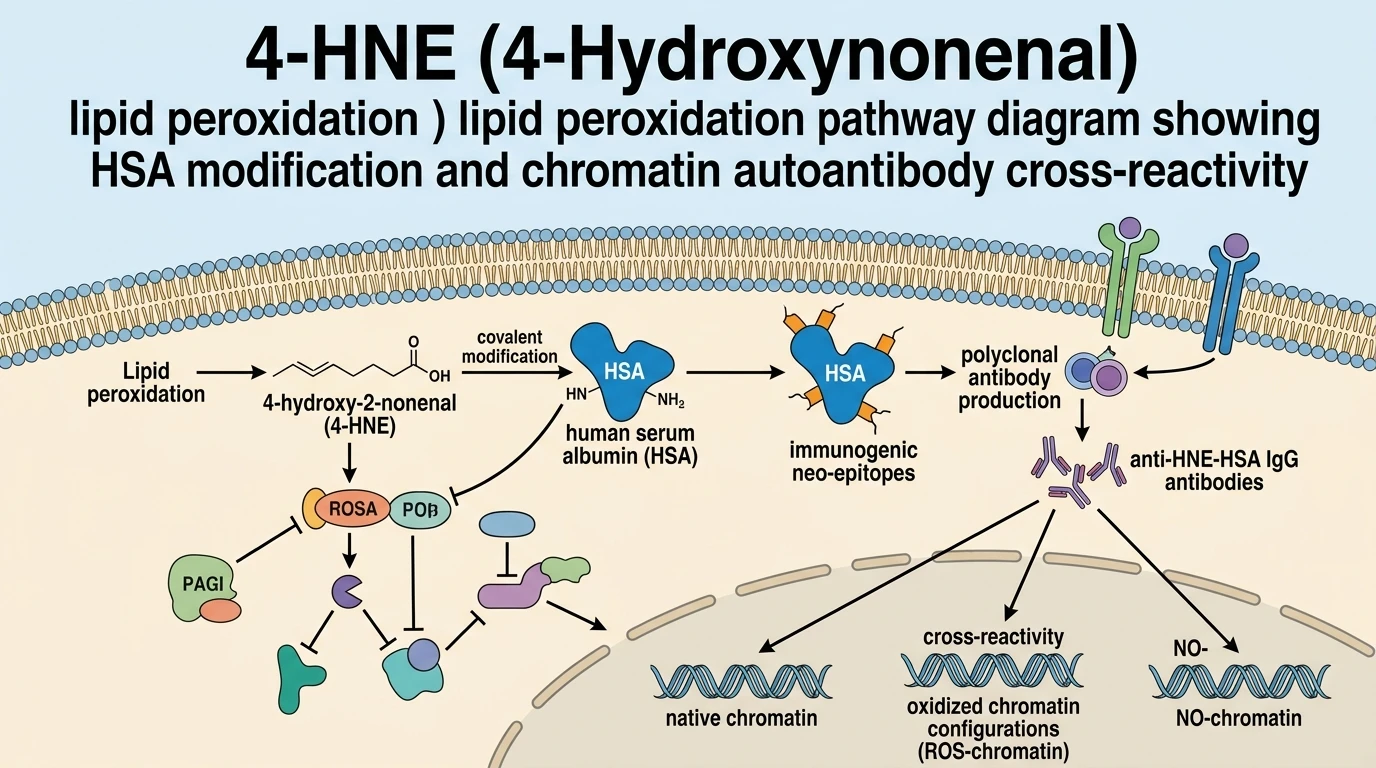
Peroxidative aldehyde 4-HNE covalently modifies human serum albumin, forming immunogenic neo-epitopes that elicit polyclonal anti-HNE-HSA IgG. These antibodies exhibit cross-reactivity with native chromatin, ROS-modified chromatin, and NO-modified chromatin. Serum isolated from SLE patients demonstrates elevated HSA carbonyl content and HNE adducts, correlating with autoimmune recognition.
Albumin Neo-Epitopes Elicit Cross-Reactive Nuclear Antibodies
Electrophilic adduction of human serum albumin by 4-HNE alters native protein conformation. Covalent binding occurs primarily at cysteine, lysine, and histidine residues. This structural alteration unmasks cryptic hydrophobic domains and generates synthetic neo-epitopes. Under tested in vitro assay conditions, rabbits immunized with HNE-modified HSA produced high-affinity polyclonal IgG. These antibodies bound specifically to modified albumin rather than native HSA controls. Crucially, anti-HNE-HSA IgG exhibited substantial cross-reactivity with isolated native chromatin. Electrophilic stress thus translates directly into nuclear antigen recognition. In secondary binding screens, the presence of lipid adducts like 4-Hydroxynonenal Others shifted antibody binding dynamics significantly. Molecular mimicry between modified surface residues and nucleosomal surface features appears to drive this cross-clonal recognition cascade.
Oxidative Nuclear Modifications Enhance Autoantibody Binding Affinity
Inflammatory microenvironments generate substantial reactive oxygen and nitrogen species. These reactive molecules modify chromatin structures to yield ROS-chromatin and NO-chromatin forms. Surface plasmon resonance and ELISA binding assays demonstrated that anti-HNE-HSA IgG exhibits higher binding affinity for oxidized chromatin than for native chromatin configurations. Free radical modifications induce structural relaxation of the histone octamer. Exposed DNA phosphate backbones and oxidized nitrogenous bases present additional binding sites. Polyclonal IgG binding reached maximum saturation at lower antibody concentrations when reacting with NO-modified chromatin. Nuclear antigen degradation was not required for epitope recognition. These biochemical observations establish that oxidative stress on both lipid and nuclear targets synergistically amplifies autoantibody engagement.
SLE Patient Sera Exhibit Elevated HSA Carbonyl Modification
Primary serum samples from patients with active systemic lupus erythematosus validate these experimental models. Spectrophotometric carbonyl assays revealed marked elevations in total HSA oxidation among SLE patient cohorts compared to healthy control subjects. In clinical cohort evaluations, autoantibodies from 55% of SLE patients demonstrated preferential binding to HNE-modified HSA and oxidized chromatin targets. Quantitative Western blotting confirmed higher baseline HNE-protein adduct levels in patient plasma. The selectivity margin between patient autoantibody reactivity and control serum remained statistically significant. Circulating lipid peroxidation adducts directly correlate with anti-chromatin autoantibody titers in patient-derived cell models. These patient-derived metrics confirm that protein carbonyl accumulation is an active pathological process in SLE.