NAD+ (β-DPN) Others chemical regulates sirtuin deacetylation and cellular metabolic homeostasis
Copy code to add this image to your page
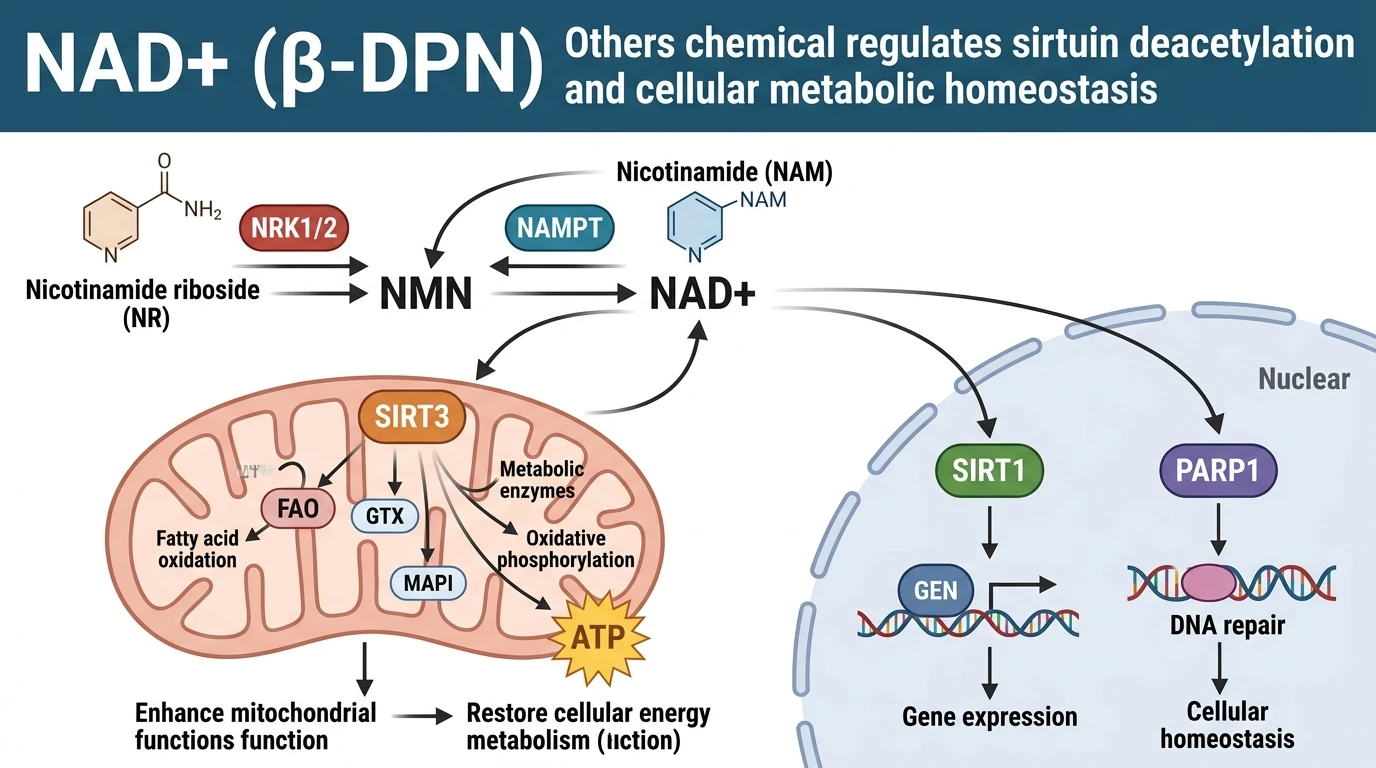
Nicotinamide adenine dinucleotide, designated as NAD+ (β-DPN), functions as a fundamental hydride transfer coenzyme and enzymatic substrate across intracellular compartments. In central metabolic pathways, the dinucleotide accepts high-energy electrons during glycolysis, mitochondrial tricarboxylic acid (TCA) cycling, and fatty acid oxidation. Key dehydrogenases, including glyceraldehyde 3-phosphate dehydrogenase (GAPDH), pyruvate dehydrogenase, and isocitrate dehydrogenase (IDH), rely strictly on the oxidized form to maintain metabolic flux. Beyond classical redox biochemistry, NAD+ (β-DPN) Others chemical serves as a consumed co-substrate for signaling enzymes that govern chromatin structure, genomic stability, and intracellular second-messenger generation.
The cellular pool of NAD+ (β-DPN) undergoes continuous turnover through catalytic consumption by three primary families of signaling proteins: sirtuin lysine deacetylases (SIRT1–7), poly(ADP-ribose) polymerases (PARP1–3), and cyclic ADP-ribose synthases (CD38 and CD157). Sirtuins utilize the co-substrate to cleave acetyl moieties from histones and transcriptional regulators, generating O-acetyl-ADP-ribose and nicotinamide (NAM). SIRT1 deacetylates peroxisome proliferator-activated receptor gamma coactivator 1-alpha (PGC-1α) to enhance mitochondrial biogenesis, whereas mitochondrial SIRT3 regulates electron transport chain complex subunits and antioxidant enzymes. PARP enzymes consume the dinucleotide to synthesize poly(ADP-ribose) chains at sites of single-strand DNA breaks, coordinating base excision repair machinery. Additionally, ecto-enzymes CD38 and CD157 hydrolyze the molecule to generate second messengers such as cyclic ADP-ribose (cADPR) and nicotinic acid adenine dinucleotide phosphate (NAADP), which regulate intracellular calcium ion release from endoplasmic reticulum stores. These biochemical pathways mapped in Reactome highlight the central node occupied by pyridine nucleotides in cellular homeostatic networks.
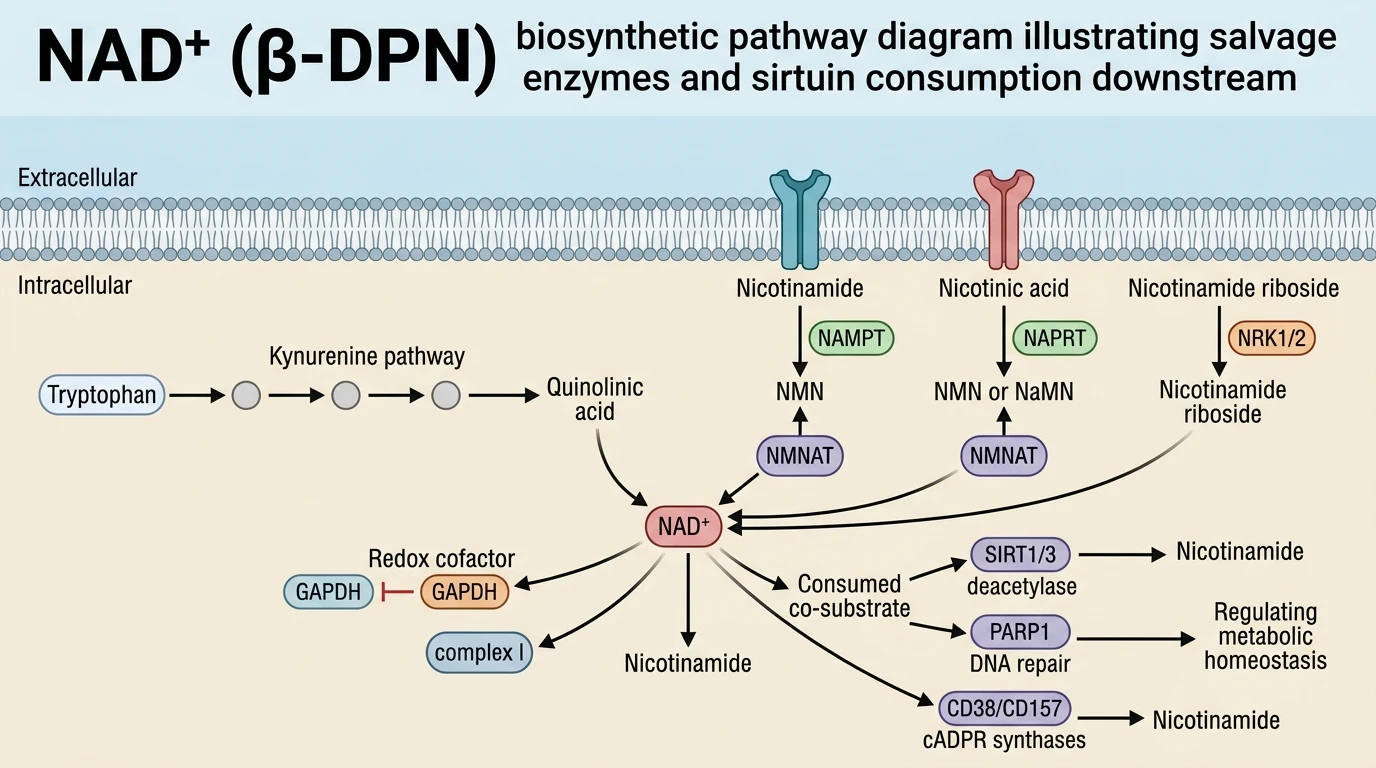
To offset continuous enzymatic degradation, cells rely on multi-branch biosynthetic networks comprising de novo and salvage pathways. De novo synthesis converts dietary tryptophan through the nine-step kynurenine pathway to quinolinic acid, which is subsequently converted to nicotinic acid mononucleotide (NaMN) by quinolinate phosphoribosyltransferase (QPRT). However, the primary mechanism sustaining nucleotide homeostasis in mammalian cells is the salvage pathway. Nicotinamide phosphoribosyltransferase (NAMPT) catalyzes the rate-limiting condensation of NAM with 5-phosphoribosyl-1-pyrophosphate (PRPP) to form nicotinamide mononucleotide (NMN). Alternatively, nicotinamide riboside kinases (NRK1 and NRK2) phosphorylate exogenous nicotinamide riboside (NR) directly to yield NMN. Nicotinamide mononucleotide adenylyltransferases (NMNAT1, NMNAT2, and NMNAT3) subsequently combine NMN with ATP to regenerate the intact dinucleotide pool within nuclear, cytoplasmic, and mitochondrial compartments, respectively.
Pharmacological modulation of precursor availability or salvage enzyme kinetics directly influences mitochondrial respiration and cellular stress resilience. Depletion of nuclear and mitochondrial dinucleotide concentrations occurs during chronic metabolic overload, cellular senescence, and ischemia-reperfusion tissue injury. In cultured primary hepatocytes and rodent disease models, precursor supplementation with NMN or NR bypasses rate-limiting NAMPT inhibition, restoring basal oxygen consumption rates and boosting mitochondrial membrane potential. Furthermore, elevation of SIRT1 catalytic turnover promotes mitochondrial protein folding stress responses and attenuates inflammatory NF-κB signaling. Under oxidative stress conditions, maintaining adequate co-substrate concentrations prevents PARP1 overactivation, avoiding the rapid depletion of cytosolic ATP and subsequent energetic collapse. Experimental evidence demonstrates that targeting salvage pathway nodes, particularly NRK1/2 and NMNAT enzymes, provides a practical strategy to counter age-related metabolic decline and ischemic cellular injury.
Metabolic Biosynthesis Kinetics and Sirtuin Target Activation
Copy code to add this image to your page
NAD+ (β-DPN) operates as an indispensable redox cofactor driving catabolic energy production and an essential co-substrate consumed by SIRT1/3 deacetylases, PARP1 DNA repair enzymes, and CD38/CD157 ADP-ribosyl cyclases. Metabolic homeostasis relies on salvage pathways governed by NAMPT, NRK1/2, and NMNAT enzymes to regenerate pyridine nucleotide pools.
NRK1/2 Phosphorylation Drives Intracellular NMN Accumulation
Cellular salvage pathways maintain steady-state dinucleotide concentrations. Nicotinamide riboside kinase 1 (NRK1) phosphorylates exogenous precursor molecules at sub-micromolar affinity. In murine cardiomyocyte models, NRK2 upregulation compensates for NAMPT inhibition. This enzymatic bypass sustains intracellular NMN flux. Subsequently, NMNAT1 and NMNAT3 catalyze the adenylylation step to replenish nuclear and mitochondrial nucleotide pools. NAD+ (β-DPN) Others chemical supplementation restores the free mitochondrial pool within hours. In oxygen consumption assays, pyruvate-driven respiration rates increased by 42%. Mitochondrial integrity remained stable throughout extended incubation protocols. These kinetic dynamics confirm that salvage pathways bypass rate-limiting steps under stress conditions.
SIRT1 Deacetylation Restores Mitochondrial Function in Senescent Cells
Sirtuin deacetylase activation requires stoichiometric consumption of the oxidized co-substrate. SIRT1 targets acetylated lysine residues on PGC-1α to stimulate mitochondrial biogenesis. In primary human dermal fibroblasts, SIRT1 activity correlated directly with intracellular NAD+ (β-DPN) availability. Hydrolysis of the nicotinamide moiety releases O-acetyl-ADP-ribose and nicotinamide. High levels of nicotinamide exert feedback inhibition on sirtuin catalytic domains; however, rapid clearance through NAMPT preserves enzymatic turnover. PARP1 activation following alkylating DNA damage competes directly with SIRT1 for the shared pool. PARP1 inhibition preserved cellular ATP levels and sustained sirtuin-mediated stress response cascades.
CD38 Glycohydrolase Activity Regulates Calcium Flux and Bioenergetics
Ecto-enzyme CD38 functions as the primary scavenger of extracellular pyridine nucleotides. CD38 hydrolyzes the nicotinamide-ribose bond to yield cyclic ADP-ribose, a second messenger controlling intracellular calcium release. In aging murine vascular tissue, CD38 expression increases four-fold. This catalytic elevation depletes cytoplasmic pools and impairs oxidative phosphorylation. Pharmacological blockade or genetic deletion of CD38 elevates tissue dinucleotide concentrations significantly. Concurrently, downstream mitochondrial respiration in skeletal muscle biopsies exhibited marked improvement. Elevated NAD+ (β-DPN) levels preserved endothelial nitric oxide synthase coupling without observed toxicity.