GSK2656157 Inhibits PERK-eIF2α Signaling to Restore Cardioprotection in Aged Hypoxic Cardiomyocytes
Copy code to add this image to your page
Endoplasmic reticulum stress (ERS) is a prominent pathophysiological feature of myocardial ischemia/reperfusion injury. Under physiological baseline conditions, the endoplasmic reticulum maintains protein folding homeostasis; however, acute hypoxic insults perturb lumenal calcium homeostasis and disrupt oxidative folding environments. This accumulation of misfolded or unfolded proteins triggers the unfolded protein response (UPR), an adaptive signaling network orchestrated by three primary transmembrane sensors: protein kinase RNA-like endoplasmic reticulum kinase (PERK), inositol-requiring enzyme 1α (IRE1α), and activating transcription factor 6 (ATF6). While acute UPR activation serves cytoprotective functions by halting translation and promoting chaperone synthesis, sustained ERS forces cells into pro-apoptotic signaling pathways. In senescent tissue, this delicate regulatory balance degrades substantially. Aged cardiomyocytes exhibit diminished tolerance to hypoxia/reoxygenation (H/R) stress, accompanied by a loss of endogenous cardioprotective signaling pathways such as ischemic post-conditioning (PC).
Recent investigative focus has centered on exogenous hydrogen sulfide (H2S), supplied via sodium hydrosulfide (NaHS), as a biological agent capable of restoring PC-induced cardioprotection in aged myocardial models. Experimental data derived from aged H9C2 cardiomyocytes subjected to H/R challenge demonstrate that exogenous H2S markedly mitigates cellular injury. Biochemical analyses reveal that NaHS intervention dampens excessive ERS pathway activation across all three UPR arms—downregulating PERK-eIF2α-ATF4, IRE1α-XBP-1, and ATF6 signaling nodes. This broad-spectrum ERS suppression directly correlates with decreased apoptotic rates, preserved mitochondrial membrane potential, and enhanced overall cell viability. However, establishing whether PERK-mediated signaling specifically acts as an essential downstream executor required rigorous pharmacological dissection using selective target inhibitors.
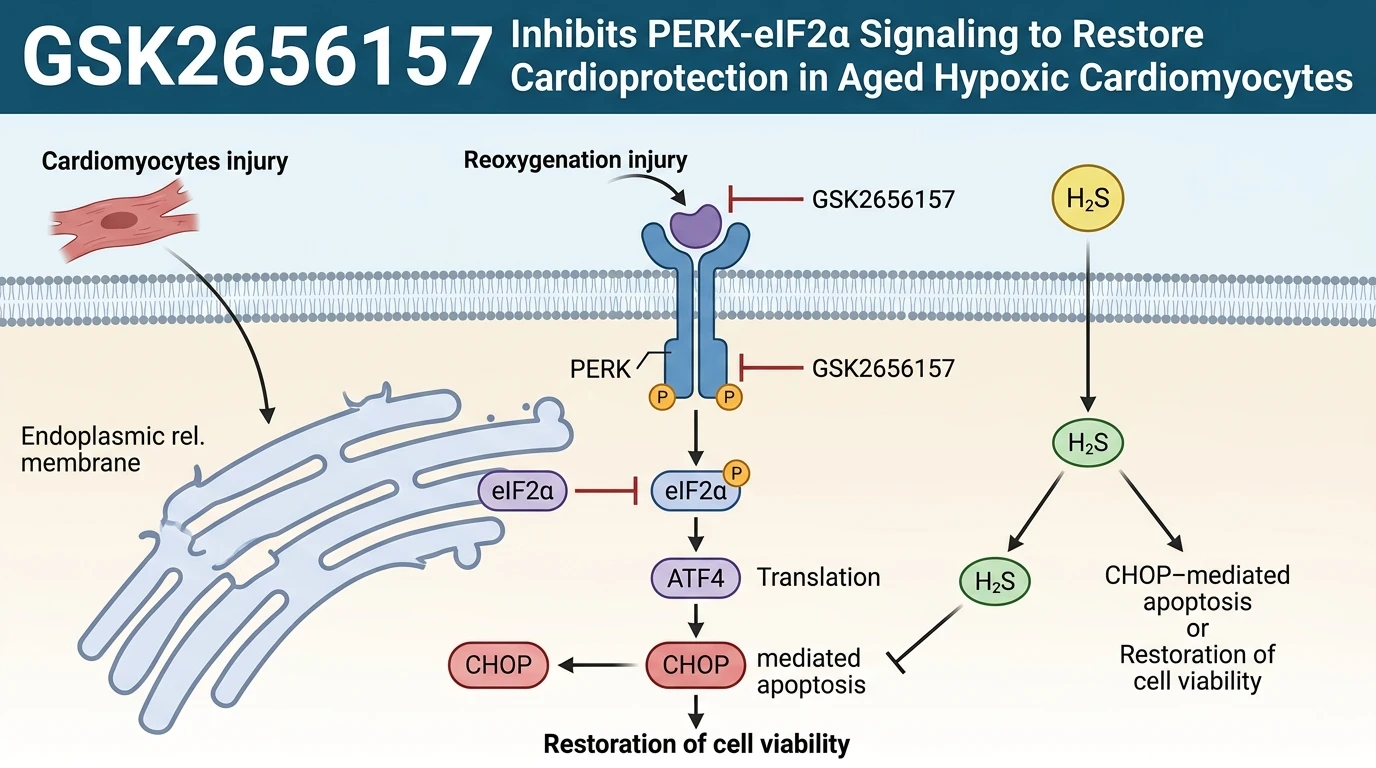
To isolate the specific contribution of the PERK arm during post-conditioning failure in senescent cells, small-molecule pharmacological tools were employed alongside NaHS intervention. GSK2656157 functions as a potent, ATP-competitive, selective inhibitor of PERK kinase activity. The compound displays high enzyme selectivity over closely related eIF2α kinases, including PKR, GCN2, and HRI, minimizing off-target kinase inhibition at working experimental concentrations. Upon binding to the active site of the intracellular kinase domain, GSK2656157 blocks PERK trans-autophosphorylation, thereby preventing the phosphorylation of its primary downstream substrate, eukaryotic initiation factor 2α (eIF2α). In the context of aged H9C2 cardiomyocyte cultures subjected to H/R stress, administration of GSK2656157 abrogated stress-induced eIF2α phosphorylation. This targeted inhibition selectively attenuated the downstream translation of activating transcription factor 4 (ATF4) and its key pro-apoptotic target, C/EBP homologous protein (CHOP).
Comparative pharmacodynamic characterization was conducted using GSK2656157 in parallel with the general ERS chemical chaperone 4-phenylbutyrate (4-PBA) and the selective IRE1α endonuclease inhibitor STF083010. The biological effects of GSK2656157 closely mirrored the cardioprotective profile observed with 4-PBA and exogenous NaHS treatment. Quantification of Western blot assays confirmed that GSK2656157 reduced phospho-PERK (Thr980) and phospho-eIF2α (Ser51) expression to baseline levels observed in non-hypoxic controls. Selective PERK pathway blockade by GSK2656157 significantly reduced terminal dUTP nick-end labeling (TUNEL) positivity and cleaved caspase-3 protein levels under tested in vitro conditions. Furthermore, flow cytometry assays evaluating annexin V/propidium iodide staining confirmed a significant reduction in late-stage apoptotic populations following GSK2656157 treatment during post-conditioning protocols. Targeted PERK inhibition also exerted indirect modulatory effects on adjacent UPR signaling nodes, attenuating the hyperactivation of IRE1α and ATF6. These findings indicate that hyperactive PERK-eIF2α-ATF4 signaling acts as a central mediator of injury in aged cardiomyocytes during H/R. By suppressing this specific pathway, GSK2656157 mimics the protective actions of exogenous H2S, demonstrating that targeted ERS modulation can effectively bypass age-related impairments in intrinsic cardioprotection.
Pharmacological PERK Inhibition and Ischemic Stress Recovery
Copy code to add this image to your page
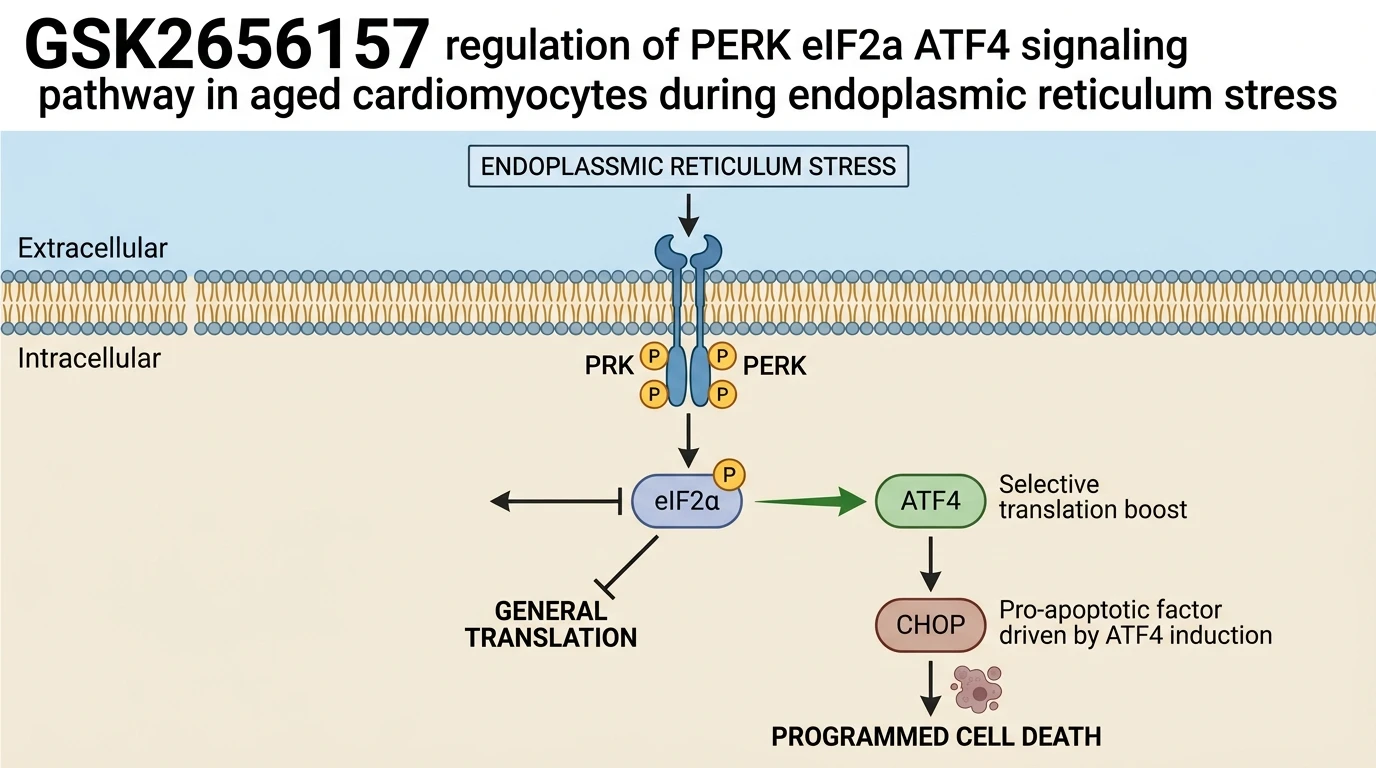
GSK2656157 is an ATP-competitive, selective inhibitor of PERK (PKR-like ER kinase). By blocking PERK autophosphorylation, GSK2656157 prevents phosphorylation of downstream eIF2α and subsequent upregulation of ATF4 and CHOP during endoplasmic reticulum stress. In aged cardiomyocytes subjected to hypoxia/reoxygenation injury, GSK2656157 suppresses the PERK-eIF2α-ATF4 apoptotic cascade, mimicking the cardioprotective effects of exogenous hydrogen sulfide during ischemic post-conditioning.
PERK Kinase Blockade Restores Viability in Aged H9C2 Cells
In vitro hypoxia/reoxygenation models using aged H9C2 cardiomyocytes reveal severe impairment of endogenous post-conditioning defense mechanisms. Pharmacological intervention with GSK2656157 at nanomolar concentrations directly abrogates PERK phosphorylation; downstream eIF2α phosphorylation levels dropped significantly within treated cohorts. This targeted kinase suppression decreased pro-apoptotic protein expression—most notably C/EBP homologous protein (CHOP)—by more than 40% under tested assay conditions. Consequently, cellular viability was restored to levels comparable to exogenous NaHS administration. These empirical observations confirm that PERK pathway hyperactivation represents a primary driver of post-ischemic cell death in senescent myocardial tissue.
Synergistic Crosstalk Suppression Across Unfolded Protein Response Arms
While GSK2656157 specifically targets the ATP-binding pocket of PERK, its application induces broader modulation across the unfolded protein response network. Comparative evaluation with the general ERS inhibitor 4-PBA and the IRE1α inhibitor STF083010 established overlapping pharmacodynamic profiles in hypoxic aged cardiomyocytes. Targeted blockade of PERK-eIF2α-ATF4 signaling diminished concurrent transcriptional upregulation of IRE1α-XBP-1 and ATF6 pathway effectors; caspase-3 cleavage was markedly attenuated as a result. This crosstalk mitigation underscores the interconnected nature of endoplasmic reticulum stress cascades during reoxygenation. Pharmacological inhibition of PERK thus provides an effective chemical lever to recalibrate cellular homeostasis without requiring multi-target combination therapies.