Paxalisib (GDC-0084 from Selleck) Inhibits PI3K mTOR Signaling to Suppress Glioma Glycolysis
Copy code to add this image to your page
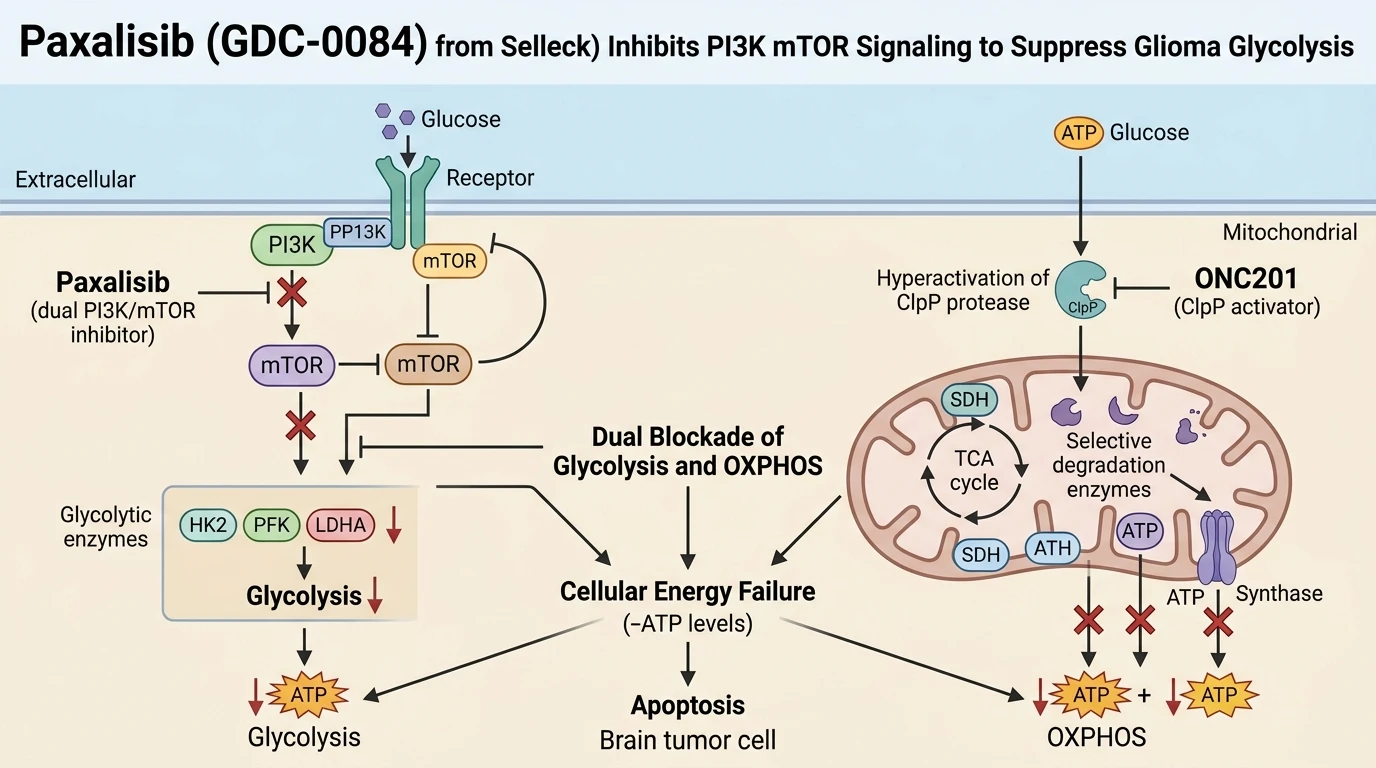
Diffuse midline gliomas (DMGs), including pediatric diffuse intrinsic pontine glioma (DIPG), represent aggressive central nervous system malignancies with limited effective clinical intervention options. High metabolic plasticity enables these tumor cells to survive under conditions of acute nutrient deprivation and hypoxia. Hyperactivation of the phosphoinositide 3-kinase (PI3K) and mammalian target of rapamycin (mTOR) signaling pathway primary drives this adaptive metabolic phenotype. By directly controlling membrane nutrient transporters and rate-limiting metabolic enzymes, the PI3K/mTOR node functions as an indispensable central regulator of bioenergetic activity in high-grade brain tumor biology.
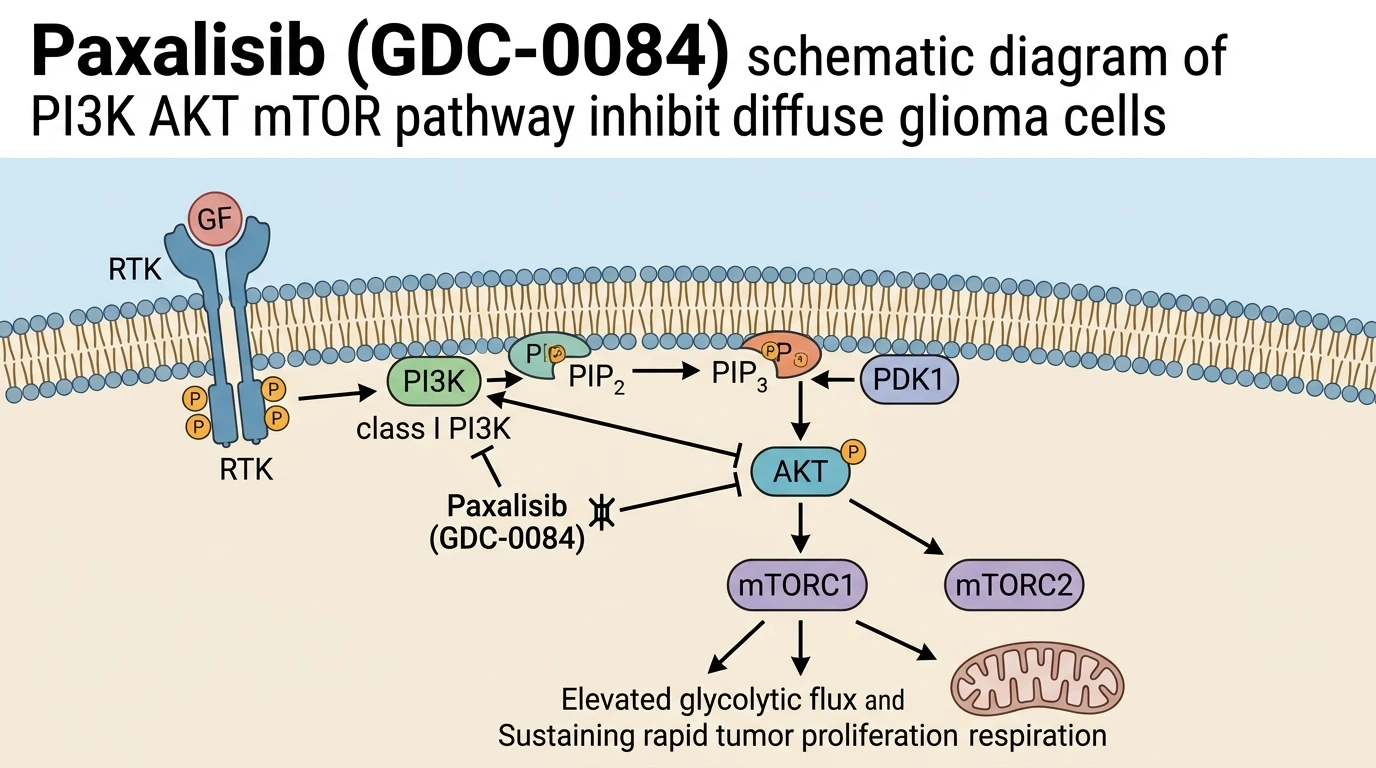
Pharmacological targeting of this signaling axis requires predictable central nervous system penetrance and sustained target engagement. Paxalisib (GDC-0084) is a small-molecule, blood-brain barrier-penetrative dual PI3K/mTOR inhibitor specifically engineered to cross the intact blood-brain barrier. According to the IUPHAR target record, dual engagement of PI3K catalytic subunits and mTOR complexes disrupts crucial feedback loops. In pre-clinical models, GDC-0084 from Selleck demonstrated equipotent inhibitory activity against class I PI3K isoforms (alpha, beta, gamma, delta) and mTOR kinase complexes. Phosphorylation of critical downstream target effectors—including AKT at Ser473 and p70S6K at Thr389—dropped markedly within hours of exposure. Downstream glycolytic flux relies heavily on signals propagated through this pathway. Consequently, enzymatic blockade directly halts glucose uptake and downstream lactate production.
Glioma cells adapt dynamically when subjected to single-agent targeted inhibition. While dual PI3K/mTOR inhibition effectively suppresses aerobic glycolysis, tumor populations frequently adapt by increasing reliance on mitochondrial oxidative phosphorylation (OXPHOS). This metabolic flexibility frequently attenuates the durable efficacy of monotherapies. Diffuse midline gliomas display dual metabolic dependence on both glycolysis and OXPHOS to fulfill elevated bioenergetic requirements. Disrupting both energy-generating pathways simultaneously induces severe, irrecoverable cellular distress.
Targeting mitochondrial integrity via caseinolytic protease P (ClpP) activation provides a complementary therapeutic strategy. ONC201, a selective mitochondrial ClpP activator, induces hyperactivation of ClpP and promotes selective degradation of essential respiratory chain proteins. This activation degrades electron transport chain function and severely restricts OXPHOS capacity. When combined with Paxalisib (GDC-0084), which prevents the cells from shifting to glycolytic compensation, overall cellular energy production crashes. Intracellular adenosine triphosphate (ATP) levels drop rapidly.
Preclinical evaluation in patient-derived DMG cell lines demonstrated strong synergy during dual target engagement. Combined treatment using Paxalisib (GDC-0084) and ONC201 triggered extensive reactive oxygen species (ROS) accumulation alongside profound apoptotic activation. Cellular viability decreased significantly compared to single-agent controls under identical conditions. In orthotopic murine DMG xenograft models, co-administration prolonged median overall survival without causing systemic toxicity. These preliminary data confirm that dual inhibition of glycolysis and mitochondrial respiration creates a metabolic vulnerability in tumor tissue.
These preclinical findings provided the foundational rationale for prospective clinical evaluation. The PNOC022 trial (NCT05009992) was initiated as an adaptive, multi-cohort platform study evaluating paxalisib combined with an ONC201 backbone therapy in children and young adults with newly diagnosed or recurrent DMG across defined treatment phases.
Therapeutic Evaluation and Pharmacological Characterization
Copy code to add this image to your page
Paxalisib (GDC-0084) is a central nervous system-penetrative dual inhibitor of PI3K and mTOR. By inhibiting elevated glycolytic flux driven by PI3K/mTOR hyperactivation in diffuse midline gliomas, it deprives tumor cells of primary energy pathways. When combined with the mitochondrial ClpP activator ONC201, which degrades oxidative phosphorylation capacity, the dual combination induces overwhelming metabolic stress. This dual metabolic blockade forms the mechanistic rationale for clinical evaluation in the adaptive multi-cohort PNOC022 trial (NCT05009992) for pediatric and young adult patients with diffuse midline gliomas.
Simultaneous Glycolytic and Mitochondrial Respiration Suppression in DMGs
Diffuse midline gliomas maintain bioenergetic homeostasis through dual reliance on aerobic glycolysis and mitochondrial respiration. Targeted application of GDC-0084 from Selleck effectively blocks Class I PI3K isoforms and mTOR catalytic centers. Intracellular glucose uptake decreases following treatment. However, compensatory upregulation of mitochondrial electron transport chain activity frequently buffers single-agent therapy. Combining paxalisib with the mitochondrial ClpP activator ONC201 disrupts this metabolic buffer. Hyperactivation of ClpP leads to selective degradation of structural mitochondrial complexes. Consequently, simultaneous administration depletes cellular ATP pools and elevates cytotoxic reactive oxygen species. Apoptotic cascades initiate rapidly under these acute bioenergetic deficits.
Intracranial Pharmacokinetics and Downstream Phosphorylation Kinetics
Systemic delivery of brain tumor therapeutics requires reliable passage across the blood-brain barrier. Paxalisib achieves therapeutic concentration levels in central nervous system tissues. Drug accumulation within brain parenchyma suppresses key biomarker phosphorylation. Phospho-AKT (Ser473) and phospho-S6 (Ser235/236) levels fall significantly within six hours post-administration in murine models. Target residence times remain sufficient to sustain pathway suppression across standard dosing intervals. Comparative pharmacokinetic studies demonstrate superior brain-to-plasma distribution ratios relative to non-penetrant PI3K inhibitors. In patient-derived glioma models, target engagement remains uniform across variable mutational landscapes.
Adaptive Clinical Evaluation Across PNOC022 Trial Cohorts
The demonstrated synergy between PI3K/mTOR suppression and mitochondrial disruption directly informed the adaptive PNOC022 platform trial (NCT05009992). This ongoing clinical investigation evaluates paxalisib in combination with ONC201 across pediatric and young adult patient populations diagnosed with diffuse midline gliomas. Trial stratification encompasses newly diagnosed patients following completion of radiotherapy as well as recurrent disease cohorts. Multi-cohort design features enable continuous evaluation of therapeutic responses and safety profiles. Pharmacodynamic biomarkers monitor metabolic target engagement in participant biofluids. Ongoing trial observations will determine whether dual metabolic blockade translates to improved survival outcomes.