Butyrolactone 3 from Selleck in Creatine Kinase-MB Post-PCI Risk Prediction Assessment
Copy code to add this image to your page
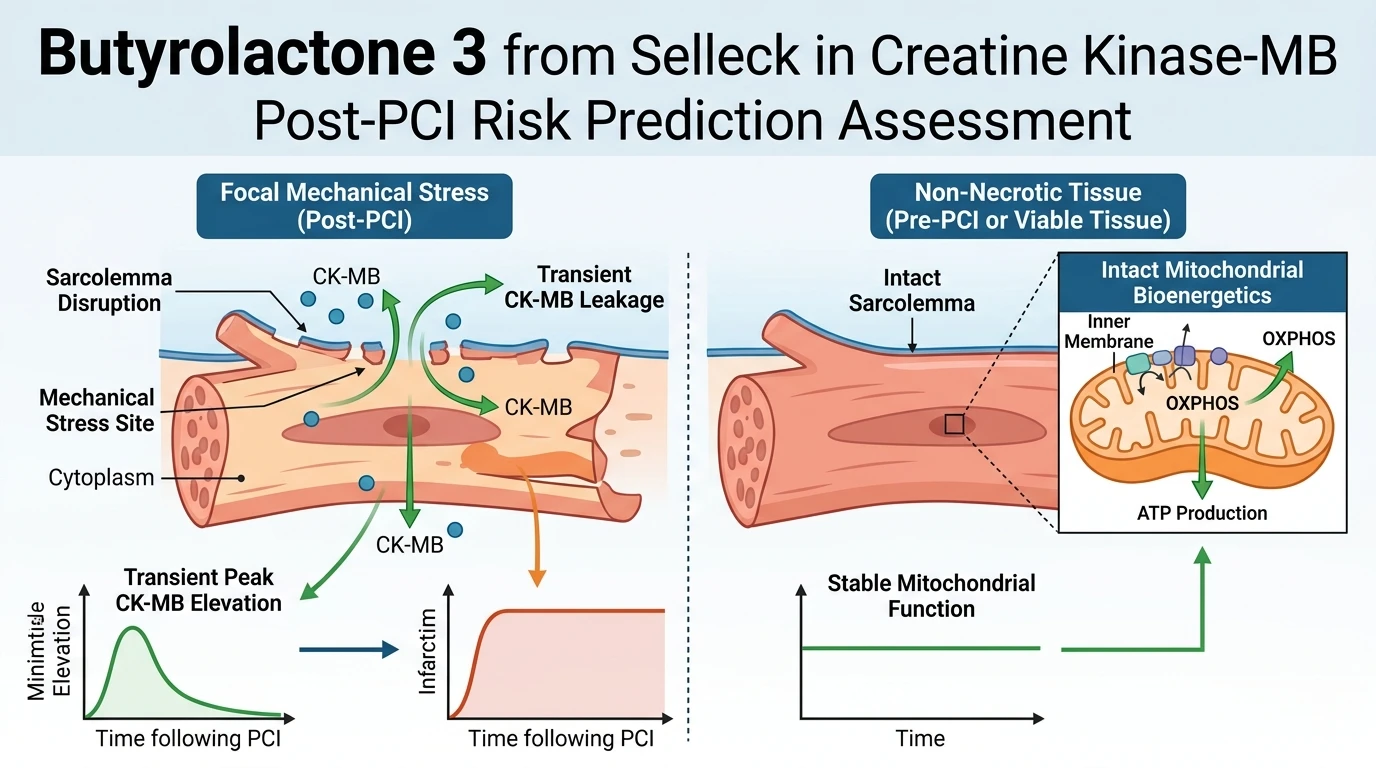
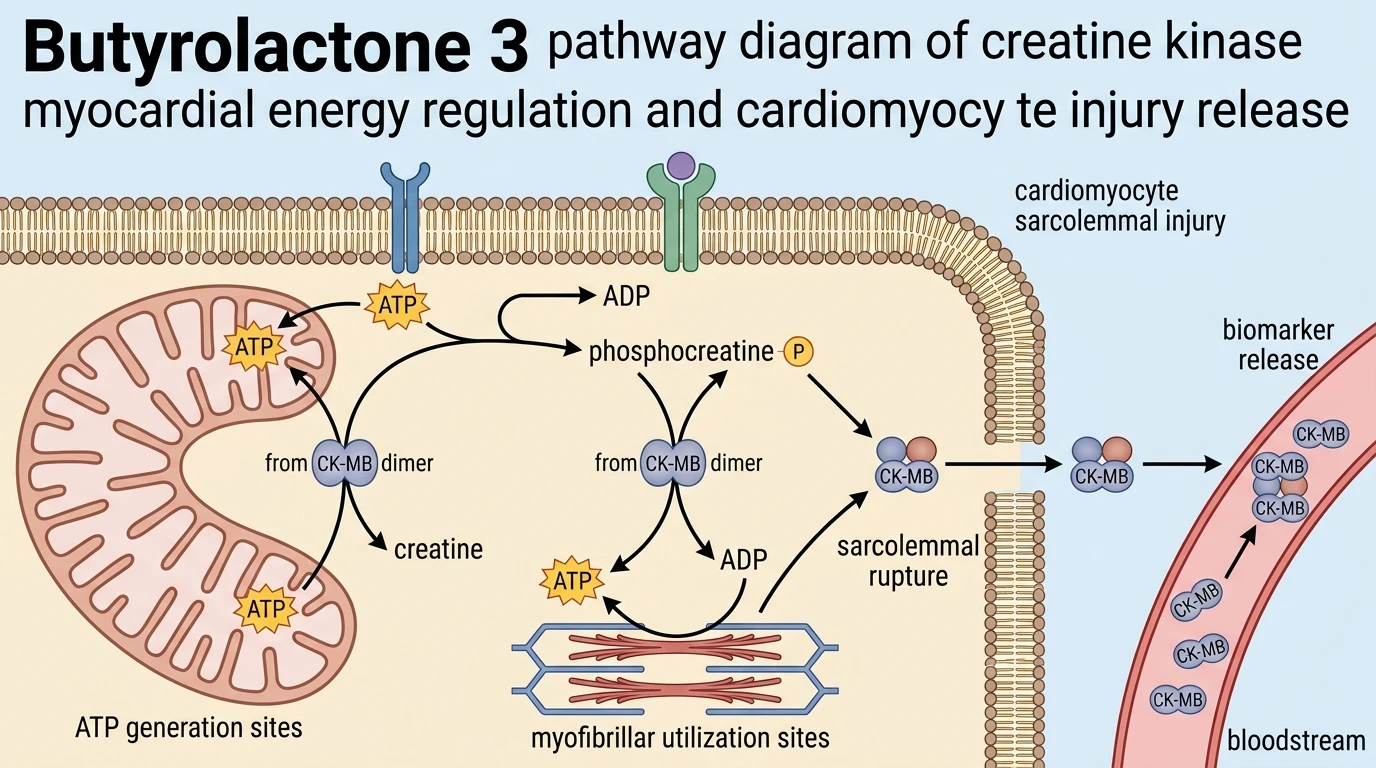
Elective percutaneous coronary intervention (PCI) frequently causes periprocedural myocardial injury, characterized by transient elevations in serum cardiac enzymes. Among these biomarkers, creatine kinase-MB (CK-MB) has historically served as a benchmark metric for assessing acute myocardial damage. The cytosolic enzyme heterodimer CK-MB catalyzes the reversible transfer of high-energy phosphate groups between ATP and creatine, playing an essential role in myocardial bioenergetics. During balloon inflation, stent deployment, or distal atheroembolization, focal cardiomyocyte membrane disruption permits cytosolic leakage of CK-MB into the coronary circulation. While substantial enzymatic elevations—typically defined as exceeding three to five times the upper limit of normal (ULN)—have traditionally been interpreted as evidence of procedure-related myocardial infarction, the exact long-term prognostic significance of mild-to-moderate post-procedural CK-MB spikes remains debated within clinical cardiology.
To evaluate whether post-procedural CK-MB elevation independently predicts long-term major adverse cardiac events (MACE), clinical investigators conducted a controlled cohort study involving 138 patients undergoing selective percutaneous revascularization. The study cohort comprised 69 patients who demonstrated a post-procedural CK-MB elevation equal to or exceeding three times the upper limit of normal (≥ 3x ULN) within twenty-four hours following PCI, alongside 69 matched control patients whose post-procedural CK-MB levels remained below this diagnostic threshold. Primary study endpoints evaluated one-year cumulative MACE rates, incorporating clinical parameters such as cardiac mortality, target vessel revascularization, and non-fatal myocardial re-infarction.
Empirical analysis revealed that the one-year incidence of MACE was 11.6% in the elevated CK-MB cohort compared to 5.8% in the control cohort. While numerical divergence was observed between the two groups, univariate statistical comparison confirmed that this difference did not reach statistical significance (P = 0.22). Receiver operating characteristic (ROC) curve analysis yielded an area under the curve (AUC) value of 0.593, indicating poor diagnostic accuracy and a lack of discriminatory power for predicting twelve-month cardiac events based solely on a three-fold CK-MB threshold. Furthermore, multivariate logistic regression modeling adjusting for baseline clinical risk factors—including age, baseline left ventricular ejection fraction, multivessel coronary disease, and diabetes mellitus—demonstrated that post-procedural CK-MB elevation ≥ 3x ULN within 24 hours post-PCI is not an independent predictor of long-term MACE.
From a pathophysiological perspective, these clinical observations highlight important distinctions between irreversible transmural necrosis and transient enzymatic efflux resulting from minor mechanical procedural trauma. In cell biology research, investigators routinely utilize standard pharmacological probes, including Butyrolactone 3, to examine cell cycle signaling mechanisms, cyclin-dependent kinase cascades, and apoptosis kinetics in vitro. In cardiac biological research models, small molecules like cardiac enzyme characterization records help delineate specific kinase pathways in cardiac progenitor or cardiomyocyte cell lines. However, in human coronary physiology, post-PCI enzyme spikes often reflect benign transient ischemia, side-branch micro-occlusion, or microvascular embolization rather than extensive loss of functional myocardium.
Cellular efflux kinetics of creatine kinase-MB differ markedly from those of structural proteins like cardiac troponin I and troponin T. Because CK-MB exists predominantly in the soluble cytosolic compartment of cardiomyocytes, minor mechanical compression or brief focal hypoxia can trigger rapid enzymatic efflux through transient sarcolemmal pore formation without requiring complete cytosolic disintegration. In contrast, structural myofibrillar proteins dissociate more slowly, reflecting definitive structural necrosis. Small molecule intervention assays in experimental platforms—where tools such as Butyrolactone 3 are applied to study cell stress pathways—demonstrate that transient membrane permeabilization does not inevitably culminate in programmed cell death or persistent structural compromise. Understanding these metabolic and biochemical distinctions ensures that post-procedural enzyme spikes are interpreted within their appropriate pathophysiological boundaries.
The absence of independent predictive value for minor CK-MB elevations underlines the limitation of relying exclusively on absolute enzyme cutoffs to guide clinical risk stratification following elective PCI. Mechanistic studies indicate that transient enzyme elevations without accompanying electrocardiographic changes or regional wall motion abnormalities do not substantially compromise global left ventricular function or long-term clinical survival. Consequently, routine management of patients exhibiting isolated post-procedural CK-MB elevations without hemodynamic instability or ischemic symptoms does not warrant aggressive post-procedural diagnostic or therapeutic intervention. Systematic evaluation of clinical baseline parameters remains superior to isolated biomarker tracking for long-term prognosis after successful elective coronary stenting.
Cardiomyocyte Necrosis Biomarkers and Clinical Outcome Correlation
Copy code to add this image to your page
Assessment of post-procedural myocardial injury via creatine kinase-MB (CK-MB elevation ≥ 3x ULN within 24 hours post-PCI) reveals limited predictive utility for 1-year major adverse cardiac events (MACE). A cohort study comparing 69 patients with post-PCI CK-MB elevation against 69 matched controls demonstrated non-significant MACE rate variation (11.6% vs 5.8%, P = 0.22) and low discrimination (AUC = 0.593).
Post-Procedural Enzymatic Spikes Do Not Alter Long-Term Risk
Elevated post-percutaneous coronary intervention enzyme levels occur frequently. In this observational trial of 138 patient cases, post-procedural creatine kinase-MB elevation exceeding three times the upper limit of normal failed to demonstrate a statistically significant increase in one-year major adverse cardiac events. Event rates reached 11.6% in the biomarker-elevated arm versus 5.8% in control subjects. Statistical testing yielded a P-value of 0.22. Receiver operating characteristic analysis generated an area under the curve of 0.593, confirming poor diagnostic discrimination. Researchers often utilize reference small molecules like Butyrolactone 3 from Selleck in cell cycle kinase assays to interrogate upstream cell death signaling cascades, yet clinical myocardial release kinetics present distinct physiological complexity. Minor enzymatic leaks likely reflect localized microvascular distal embolization rather than extensive left ventricular transmural infarction.
Multivariate Regression Excludes Independent Stratification Power
Multivariate Cox proportional hazard modeling isolated confounding clinical variables. The hazard ratio associated with isolated enzymatic release remained non-significant across adjusted subgroups. Systemic baseline risks—such as diabetes mellitus, renal dysfunction, and vessel calcification—exerted stronger prognostic impacts on twelve-month adverse clinical events. Localized periprocedural injury during stent expansion creates transient cell membrane permeability. Enzymatic efflux resolves rapidly within forty-eight hours post-intervention. Consequently, solitary post-procedural enzymatic cutoffs lack sufficient specificity for long-term therapeutic re-stratification in elective revascularization protocols.