Buparlisib (BKM120) and BKM120 Regimens in Advanced HR+/HER2- Breast Cancer Evaluation
Copy code to add this image to your page
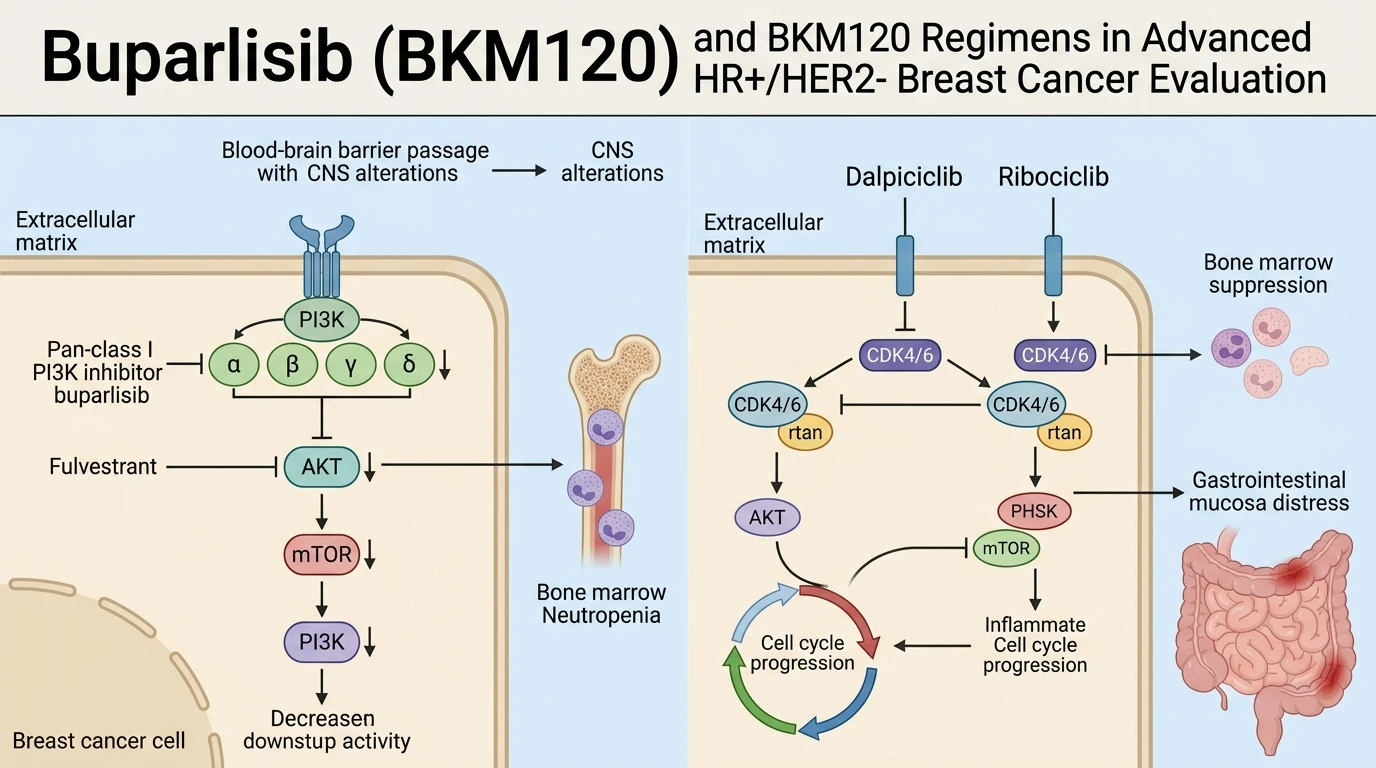
Targeting the phosphatidylinositol 3-kinase (PI3K) pathway represents a primary pharmacological strategy to overcome endocrine resistance in hormone receptor-positive, human epidermal growth factor receptor 2-negative (HR+/HER2-) breast cancer. Buparlisib (BKM120) is an oral, pan-class I PI3K inhibitor that equipotently inhibits p110α, p110β, p110γ, and p110δ catalytic isoforms. In postmenopausal patients who progress on prior endocrine monotherapy, hyperactivation of the PI3K/AKT/mTOR axis frequently restores transcription of estrogen-responsive genes independent of ligand binding. Administering BKM120 in combination with fulvestrant, a selective estrogen receptor degrader (SERD), seeks to execute a dual blockade across both the nuclear hormone signaling network and the cytoplasmic kinase cascade.
In a comparative retrospective evaluation of postmenopausal women with advanced HR+/HER2- breast cancer, treatment regimens comprising buparlisib plus fulvestrant, dalpiciclib plus fulvestrant, and ribociclib plus letrozole were analyzed to establish real-world clinical benchmarks. Within this study population, the buparlisib plus fulvestrant combination yielded a 74% clinical benefit rate (CBR). Tumor regression and prolonged stable disease were documented across several patient subgroups previously refractory to aromatic inhibitor therapy. Furthermore, the buparlisib cohort achieved prolonged progression-free survival (PFS) and overall survival (OS) when compared directly against the first-generation combination of ribociclib plus letrozole. These empirical metrics confirm that enzymatic inhibition of class I PI3K isoforms effectively suppresses oncogenic signaling downstream of altered receptor tyrosine kinases.
Despite demonstrating measurable antitumor efficacy, the therapeutic index of Buparlisib (BKM120) remains restricted by its compound-specific pharmacokinetic and pharmacodynamic liabilities. The physical capability of BKM120 to cross the blood-brain barrier (BBB) induces marked central nervous system toxicities. Patients assigned to the buparlisib arm experienced clinically meaningful elevations in severe depression, anxiety, and mood alterations. Pharmacologically, off-target modulation within central neural networks combined with pan-PI3K inhibition in non-malignant glial and neuronal populations accounts for these neuropsychiatric adverse events.
In parallel, systemic off-target and class-effect toxicities further complicated the clinical profile of the buparlisib combination. Severe neutropenia occurred at frequencies exceeding those observed in standard endocrine control arms. Gastrointestinal adverse events—specifically high-grade diarrhea, nausea, and stomatitis—necessitated frequent dose interruptions or drug disconnections. Consequently, when evaluated against the selective cyclin-dependent kinase 4/6 (CDK4/6) inhibitor regimen of dalpiciclib plus fulvestrant, the buparlisib cohort demonstrated inferior PFS and OS outcomes. Dalpiciclib combination therapy achieved superior systemic control while avoiding the profound psychiatric and mucosal toxicities associated with pan-PI3K blockade. These comparative findings highlight how target selectivity and organ-specific drug distribution govern overall clinical utility in target-directed breast cancer combinations.
Comparative Efficacy and Tolerability Profiles in Clinical Regimens
Copy code to add this image to your page
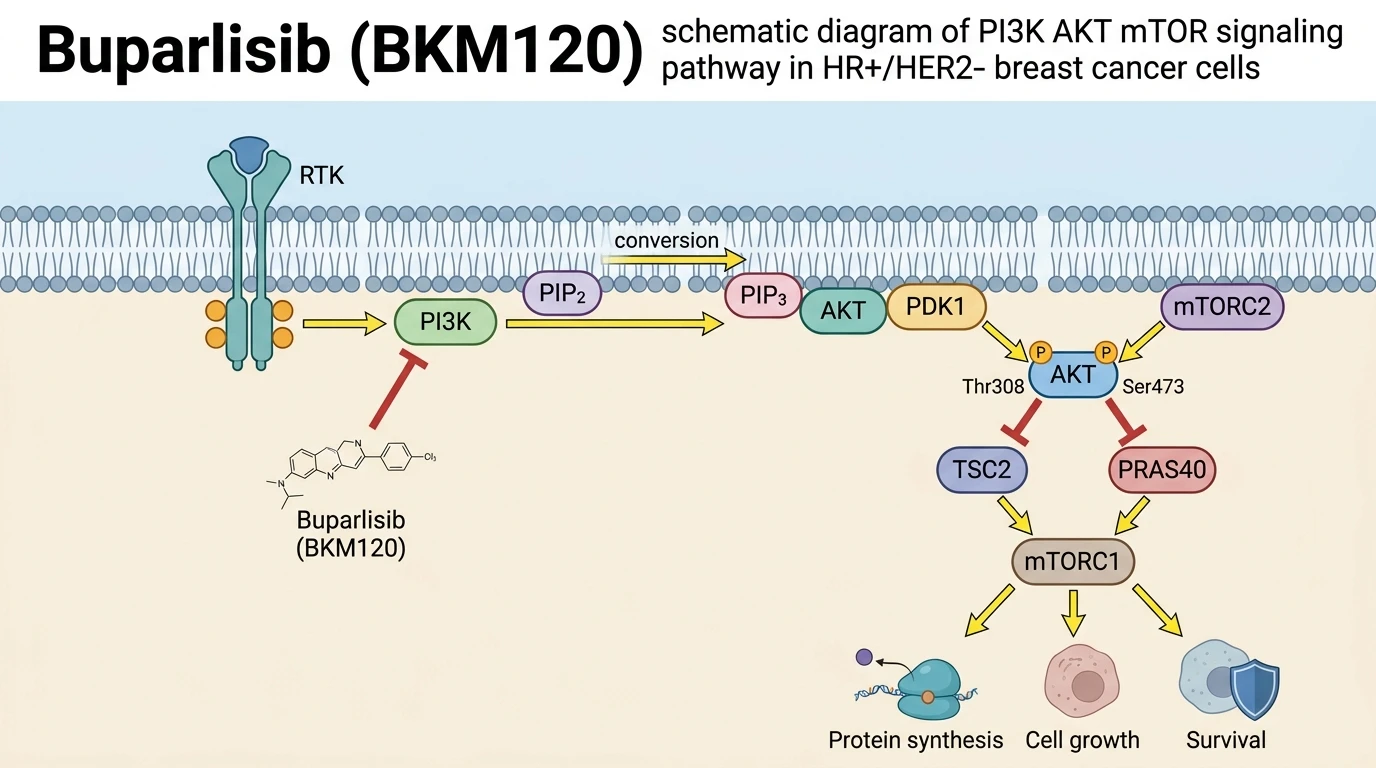
Buparlisib (BKM120) is an orally bioavailable, pan-class I phosphatidylinositol 3-kinase (PI3K) inhibitor targeting p110α, p110β, p110γ, and p110δ isoforms. By competitively binding the ATP-binding pocket of catalytic PI3K subunits, BKM120 prevents conversion of PIP2 to PIP3, shutting down downstream AKT Thr308/Ser473 phosphorylation and mTORC1 effector activation. In estrogen receptor-positive (HR+) breast cancer, PI3K blockade reverses endocrine resistance mediated by cross-talk between estrogen receptor signaling and the PI3K/AKT axis. However, CNS penetration and off-target profile induce psychiatric toxicities, neutropenia, and gastrointestinal adverse effects.
Dalpiciclib Combination Demonstrates Superior Progression-Free and Overall Survival
In the retrospective cohort comparison, dalpiciclib combined with fulvestrant surpassed the survival outcomes observed with BKM120 plus fulvestrant. Median progression-free survival reached statistically significant extensions in the dalpiciclib arm. Overall survival metrics similarly favored selective CDK4/6 inhibition over pan-class I PI3K blockade. Direct enzymatic target selection appears to account for these divergence patterns. While PI3K suppression blocks signal transduction upstream, CDK4/6 inhibition prevents cell cycle entry at the G1/S checkpoint regardless of upstream receptor reactivation. Consequently, tumor control remained more durable under dalpiciclib administration within this patient group.
Central Nervous System Penetration Drives Distinct Psychiatric Toxicity Profiles
The lipophilic architecture of BKM120 permits substantial crossing of the blood-brain barrier. Brain tissue exposure led to high rates of grade 3 psychiatric events. Patients experienced acute depression, mood instability, and severe anxiety during treatment cycles. Dose reductions failed to fully eliminate central nervous system toxicity without compromising systemic drug levels. In contrast, non-brain-penetrating agents like dalpiciclib completely avoided psychiatric adverse events. This organ-specific exposure profile substantially degraded patient adherence in the buparlisib trial arm.
Hematologic and Gastrointestinal Adverse Events Limit Broad Clinical Application
Pan-PI3K inhibition disturbs glucose homeostasis and intestinal epithelial repair. In the evaluated clinical dataset, buparlisib-treated patients exhibited high rates of grade 3/4 neutropenia alongside persistent gastrointestinal distress. Severe diarrhea and stomatitis required frequent therapeutic holidays. These cumulative toxicities forced treatment discontinuations before maximal antitumor responses could mature. Dalpiciclib combination therapy maintained a manageable safety margin, consisting primarily of predictable, monitorable neutropenia without mucosal breakdown. Selective therapeutic targets thus provided a superior therapeutic window in postmenopausal HR+/HER2- breast cancer.