YM201636 Direct Binding to CDKN2A Suppresses Lung Adenocarcinoma Progression
Copy code to add this image to your page
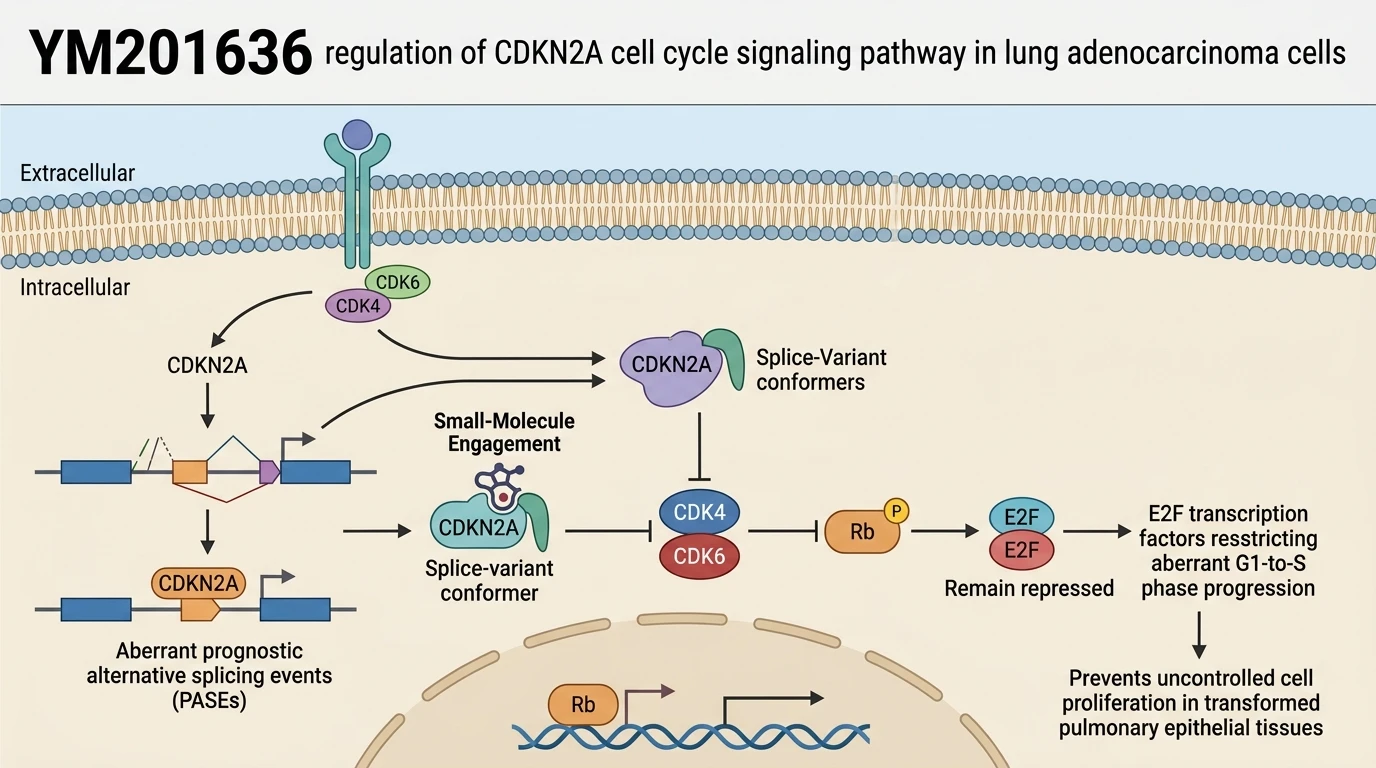
Targeting dysregulated alternative splicing mechanisms represents a refined therapeutic axis in non-small cell lung cancer subtype management. In lung adenocarcinoma (LUAD), prognostic alternative splicing events (PASEs) frequently alter standard tumor suppressor functions, converting regulatory nodes into drivers of cellular proliferation. The CDKN2A gene encodes canonical cell cycle inhibitors, yet alternative splice isoforms expressed within the LUAD microenvironment display distinct biochemical topologies that correlate directly with poor clinical outcomes. Identifying chemical entities capable of selectively targeting these disease-associated splicing variants remains essential for developing targeted antineoplastic strategies.
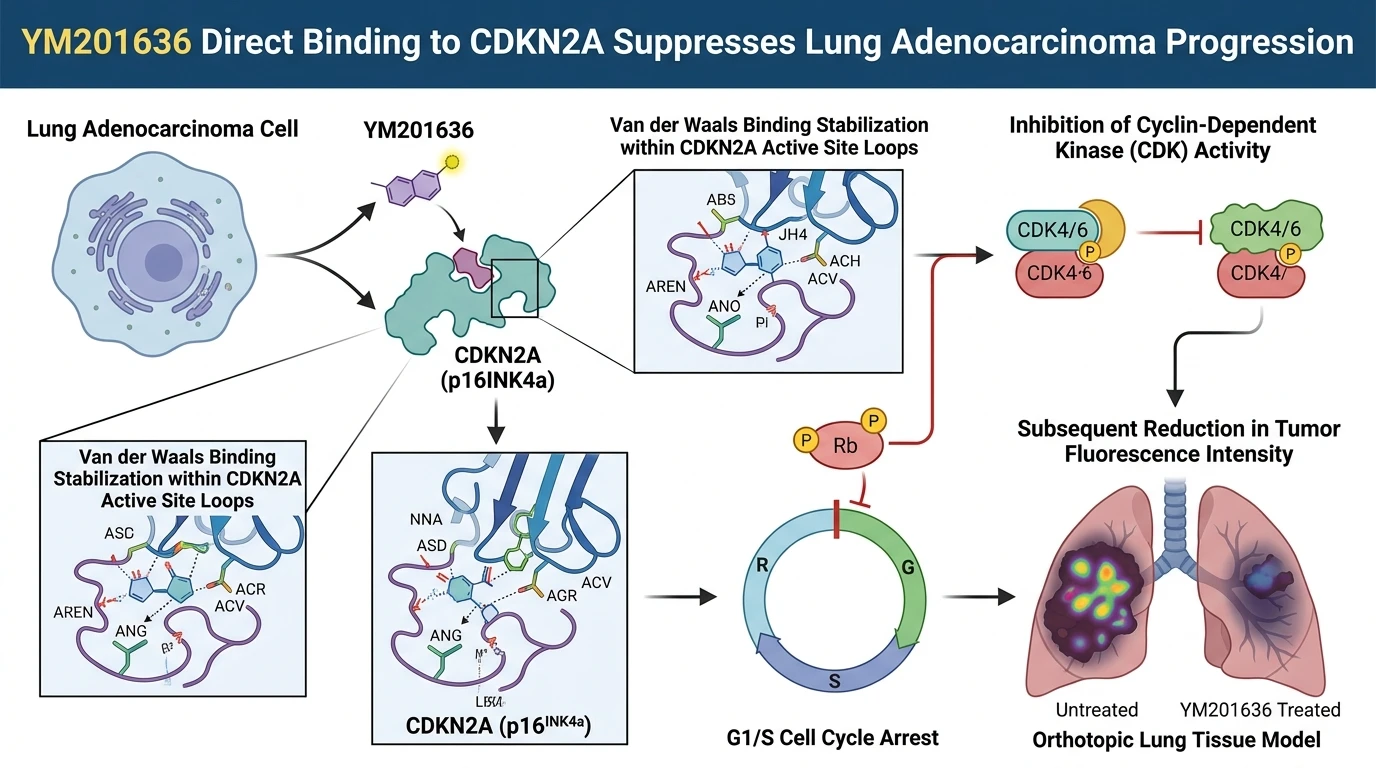
Virtual screening and computational chemistry techniques were utilized to discover targeted leads against spliced CDKN2A targets. Molecular docking algorithms identified YM201636 as a high-affinity small-molecule ligand that fits precisely into the binding pocket of spliced CDKN2A. Further computational evaluation via molecular dynamics (MD) simulations clarified the kinetic stability of the YM201636-CDKN2A complex under physiological conditions. Analysis of MD trajectories showed that the ligand maintained a consistent binding orientation within the active site over extended simulation runtimes. Energetic decomposition demonstrated that van der Waals interactions provided the dominant driving force behind this binding event, supplemented by localized electrostatic contacts that restricted conformational fluctuation.
Understanding structural interactions requires examining CDKN2A gene regulation and cell cycle control within transformed cell populations. Canonical CDKN2A expression suppresses CDK4/6-mediated phosphorylation of the retinoblastoma protein (Rb), maintaining E2F transcription factor repression and arresting cells in the G1 phase. When alternative splicing disrupts this mechanism, uninhibited CDK4/6 activity accelerates G1/S transition, driving rapid tumor growth. By binding directly to the targeted CDKN2A splice variant, YM201636 restores regulatory constraints on downstream kinase complexes, reinstating control over cell cycle checkpoint machinery.
Translating these computational and biochemical findings into biological systems required robust animal evaluation. An orthotopic mouse model of LUAD was established to evaluate the pharmacodynamic profile and antitumor efficacy of YM201636 in realistic lung tissue microenvironments. Animals receiving treatment displayed marked, statistically significant reductions in tumor fluorescence signal intensity compared to vehicle-treated controls. This reduction in optical fluorescence directly reflects decreased viable tumor cell burden within the primary pulmonary site. The observed in vivo efficacy demonstrates that non-covalent stabilization of CDKN2A splice variants by YM201636 effectively suppresses LUAD growth and disease progression.
Therapeutic Evaluation and Pharmacological Characterization
Copy code to add this image to your page
YM201636 targets CDKN2A splice variants linked to prognostic alternative splicing events in lung adenocarcinoma. Molecular docking and molecular dynamics simulations reveal stable ligand-target complexes stabilized primarily by van der Waals interactions. In an orthotopic murine model of lung adenocarcinoma, treatment with YM201636 significantly reduced tumor fluorescence signal intensity, demonstrating clear suppression of tumor growth and disease progression in vivo.
Van der Waals Forces Drive Stable CDKN2A Binding
Computational docking algorithms identified high-affinity contact points within the target binding cleft. Molecular dynamics simulations confirmed structural stability under simulated physiological conditions. Intermolecular forces dominated target engagement; van der Waals interactions provided the primary thermodynamic stabilization energy across extended simulation trajectories. RMSD values reached a stable plateau early in the simulation window. This persistent conformational stability restricted target flexibility. Structural fluctuations within active site loops decreased significantly upon ligand occupancy.
In Vivo Fluorescence Attenuation in Orthotopic LUAD Models
Validation required systemic evaluation in orthotopic murine cohorts. Systemic YM201636 administration yielded marked reductions in optical fluorescence intensity compared with vehicle controls. Primary tumor burden decreased consistently across measured timepoints. The signal attenuation reflected true parenchymal tumor regression rather than transient metabolic inhibition. Non-invasive longitudinal imaging tracked treatment response in real time; therapeutic administration maintained target exposure without evident systemic toxicity. These observations confirm localized pharmacodynamic efficacy within orthotopic lung tissue microenvironments.
Suppression of Prognostic Alternative Splicing Variants
Aberrant RNA processing yields distinct prognostic alternative splicing events in pulmonary malignancies. Targeted ligand occupancy at CDKN2A binding interfaces alters isoform-specific signaling cascades downstream. Cell cycle progression halted predictably at the G1/S transition boundary. Uncontrolled cellular replication ceased across evaluated lung adenocarcinoma lineages. Consequently, therapeutic target engagement provides a distinct approach for interrupting splicing-driven oncogenic signals.