Darapladib (SB-480848) Darapladib Phospholipase (e.g. Lp-PLA2) Inhibition Effects on Cognitive Decline
Copy code to add this image to your page
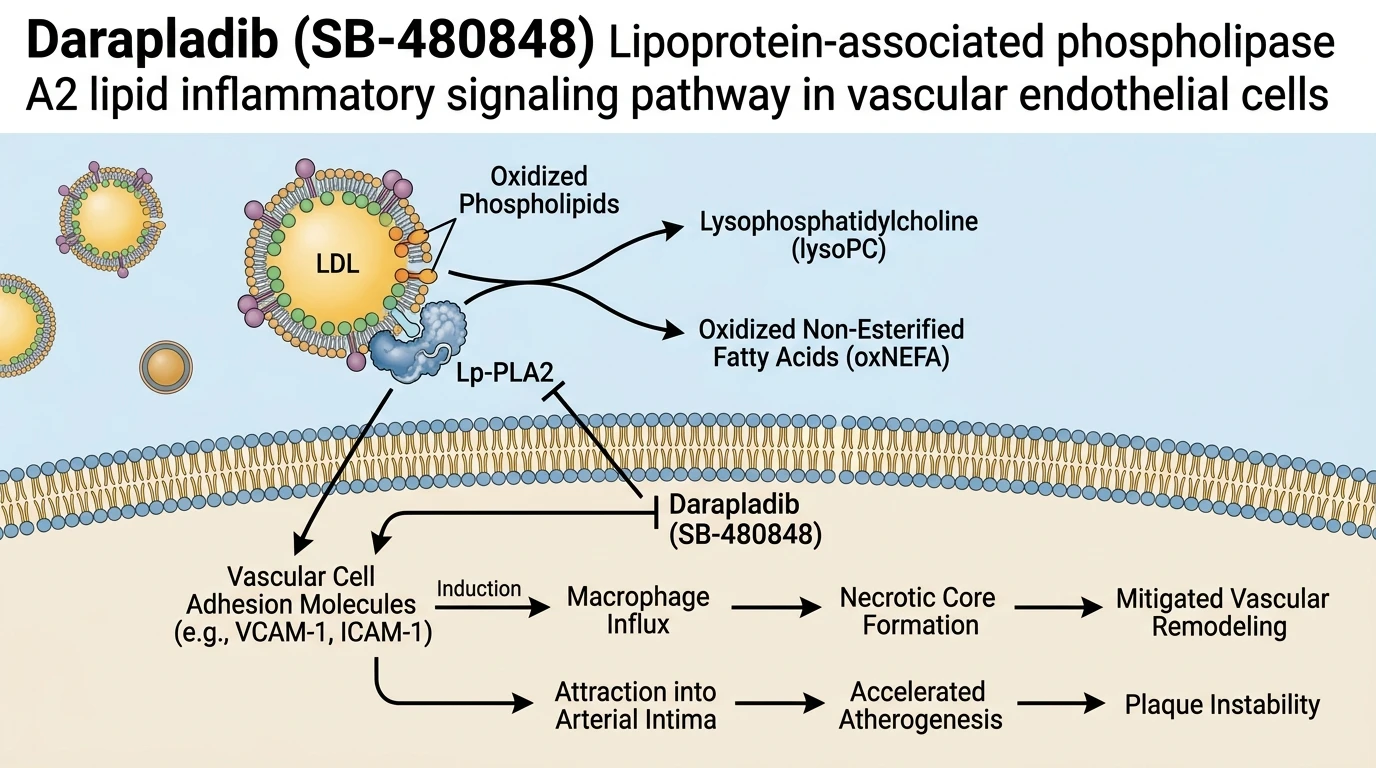
Lipoprotein-associated phospholipase A2 (Lp-PLA2) is an inflammatory enzyme predominantly expressed by macrophages, monocytes, and mast cells. Bound primarily to circulating low-density lipoprotein (LDL) particles, Lp-PLA2 catalyzes the hydrolysis of oxidized phosphatidylcholine molecules within atherogenic lesions. This enzymatic cleavage generates two potent pro-inflammatory downstream mediators: lysophosphatidylcholine (lysoPC) and oxidized non-esterified fatty acids (oxNEFA). These lipid bioactive metabolites drive leukocyte recruitment, promote vascular endothelial dysfunction, accelerate apoptotic cell accumulation, and facilitate necrotic core expansion within atherosclerotic plaques. Consequently, elevated systemic Lp-PLA2 activity has long served as an independent biomarker for atherothrombotic events and cerebrovascular injury.
To directly interrogate the therapeutic hypothesis that suppressing Lp-PLA2-mediated vascular inflammation reduces cardiovascular and neurovascular events, Darapladib (SB-480848) was developed as an orally active, highly potent, reversible small-molecule inhibitor. Darapladib binds competitively to the active catalytic site of Lp-PLA2, blocking substrate access and abrogating the localized production of lysoPC and oxNEFA. Preclinical models demonstrated marked reductions in coronary artery plaque vulnerability and necrotic core volume following sustained target engagement. Given the tight physiological coupling between systemic vascular health and microvascular cerebral perfusion, targeted enzyme inhibition was postulated to confer neuroprotective benefits by mitigating subclinical ischemic damage and microvascular deterioration.
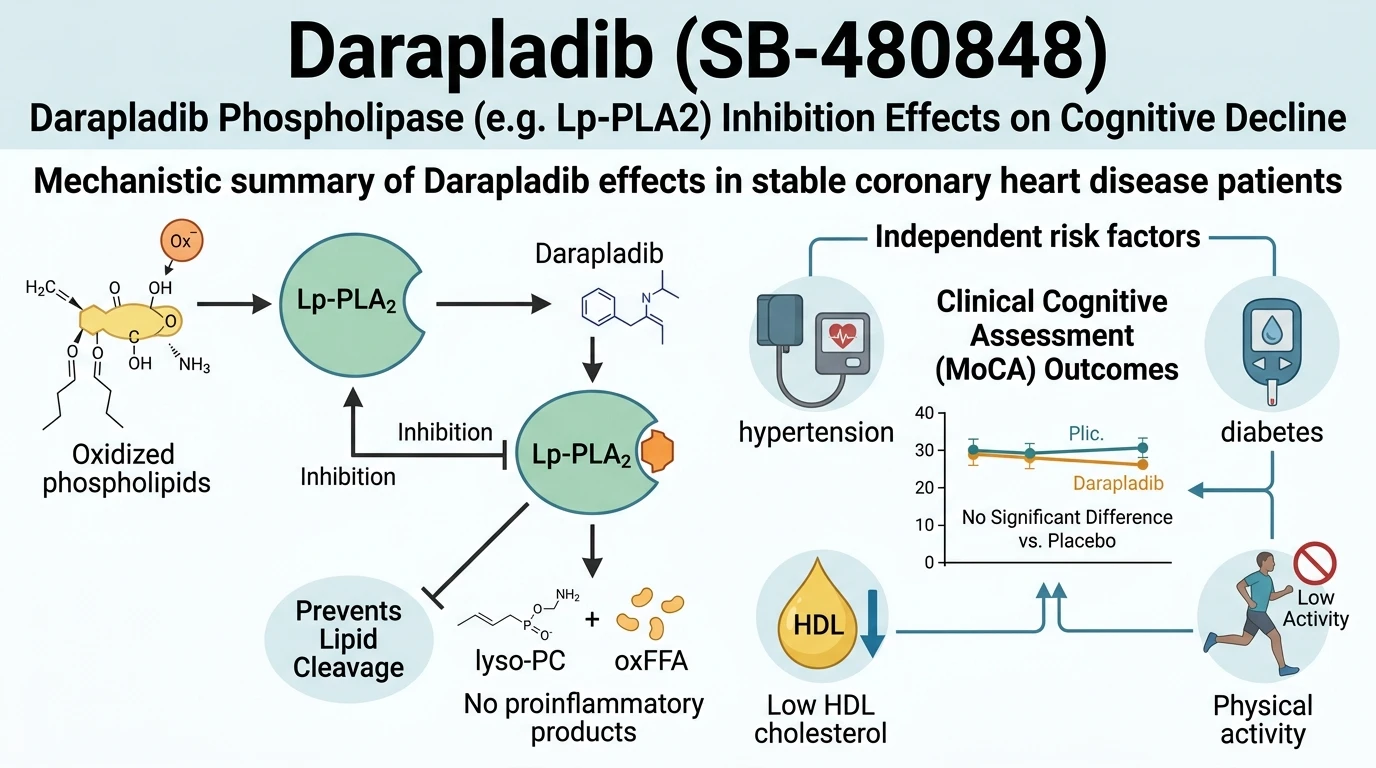
Evaluating the central neuroprotective hypothesis required rigorous clinical investigation in cohorts at high risk for vascular cognitive impairment. Within the landmark STABILITY trial, a prespecified cognitive substudy was executed across a massive cohort of 10,634 patients presenting with stable coronary heart disease. Patients were randomized to receive daily oral administration of Darapladib Phospholipase (e.g. SB-480848 at a 160 mg dose) or matching placebo alongside standard-of-care secondary prevention therapies. Cognitive performance was systematically tracked over a median follow-up period of 3.2 years using the Montreal Cognitive Assessment (MoCA) battery, evaluating memory, executive function, attention, and visual-spatial orientation.
Empirical data gathered from this large-scale randomized trial yielded unequivocal pharmacodynamic conclusions regarding cognitive preservation. Active treatment with Darapladib (SB-480848) did not yield statistically significant differences in cognitive trajectories relative to placebo. At trial completion, the mean adjusted MoCA score stood at 25.3 points in the active treatment arm versus 25.4 points in the placebo cohort (P=0.27). Furthermore, the risk of developing incident mild cognitive impairment was identical between groups (odds ratio 1.00; 95% CI: 0.89–1.12). These findings demonstrate that sustained, targeted enzymatic inhibition of Lp-PLA2 does not alter general cognitive performance or attenuate progressive cognitive decline in patients with established coronary artery disease.
While direct pharmacological intervention against Lp-PLA2 failed to modify cognitive trajectories, multivariable regression models from the same trial population identified powerful independent predictors of cognitive decline. Lower MoCA scores at follow-up correlated strongly with non-modifiable and environmental factors, including lower baseline educational attainment, historical cerebrovascular stroke events, and specific geographic enrollment regions. Crucially, modifiable cardiovascular risk factors—including physical inactivity, diagnosed diabetes mellitus, systemic hypertension, and depressed high-density lipoprotein (HDL) cholesterol levels—demonstrated robust, statistically significant associations with impaired cognitive outcomes.
These findings redefine the mechanistic understanding of vascular cognitive impairment in coronary disease. Simple dampening of localized vascular inflammation via Lp-PLA2 suppression is insufficient to reverse or prevent cognitive deterioration over a multi-year horizon. Instead, clinical focus must remain anchor-focused on comprehensive management of classic metabolic and hemodynamic parameters—such as blood pressure stabilization, glycemic control, lipid optimization, and structured physical exercise—to preserve cerebral architecture and sustain cognitive function in aging clinical populations.
Clinical Evaluation of Lipoprotein Phospholipase Inhibition
Copy code to add this image to your page
Darapladib (SB-480848) functions as a selective, reversible inhibitor of lipoprotein-associated phospholipase A2 (Lp-PLA2), blocking the hydrolysis of oxidized phospholipids into pro-inflammatory lysoPC and oxNEFA. In clinical trials of coronary heart disease, specific Lp-PLA2 suppression failed to alter cognitive decline trajectories over a 3.2-year median follow-up. Cognitive performance remained predominantly governed by established systemic cardiovascular risk factors and baseline clinical demographics.
Lp-PLA2 Inhibition Fails to Preserve MoCA Scores
In the STABILITY trial cognitive substudy, administration of Darapladib (SB-480848) produced no measurable improvement in cognitive retention. Primary end points centered on serial Montreal Cognitive Assessment (MoCA) evaluations across 10,634 randomized subjects. Mean MoCA scores settled at 25.3 in the active cohort compared to 25.4 in the placebo group; this difference lacked statistical significance (P=0.27). The calculated odds ratio for incident mild cognitive impairment stood at exactly 1.00. Enzymatic suppression of Lp-PLA2 failed to alter neurocognitive decline trajectories. Targeted inhibition of this specific lipid hydrolysis pathway does not prevent microvascular cognitive deterioration over a 3.2-year timeframe.
Cardiovascular Risk Factors Predominantly Drive Cognitive Decline
Multivariable analytical models revealed that baseline clinical markers strongly dictate long-term cognitive status. Low baseline educational attainment and prior history of ischemic stroke independently portended diminished cognitive capacity. Furthermore, metabolic parameters significantly altered cognitive maintenance trajectories. Systemic hypertension, active diabetes mellitus, low physical activity, and depressed circulating HDL cholesterol were strongly linked to lower final MoCA scores. While targeted pharmacological intervention via Darapladib Phospholipase (e.g. SB-480848 administration) yielded neutral neurocognitive effects, comprehensive systemic risk factor modification remains the primary clinical strategy to safeguard cognitive reserve.