CFI-400945 CFI400945 Suppresses Pancreatic Tumor Growth via Polo-like Kinase 4 Inhibition
Copy code to add this image to your page
Centrosome amplification and dysregulated centriole duplication represent structural hallmarks of modern oncology, particularly within aggressively refractory solid malignancies such as pancreatic ductal adenocarcinoma. Polo-like kinase 4 (PLK4), a distinct member of the polo-like serine/threonine kinase family, operates as the master enzymatic regulator controlling centriole biogenesis and duplication during the eukaryotic cell cycle. Under non-pathological physiological conditions, PLK4 expression and catalytic activity are strictly constrained through autophosphorylation-triggered ubiquitin-proteasomal degradation, ensuring that centrosome duplication occurs exactly once per cell cycle during late G1 and S phases. In neoplastic tissues, however, PLK4 overexpression breaks this regulatory circuit, driving centriole amplification, multipolar spindle formation, and chromosomal instability. Consequently, targeted inhibition of PLK4 catalytic function has emerged as a compelling therapeutic concept to exploit centrosomal vulnerabilities in tumor cells.
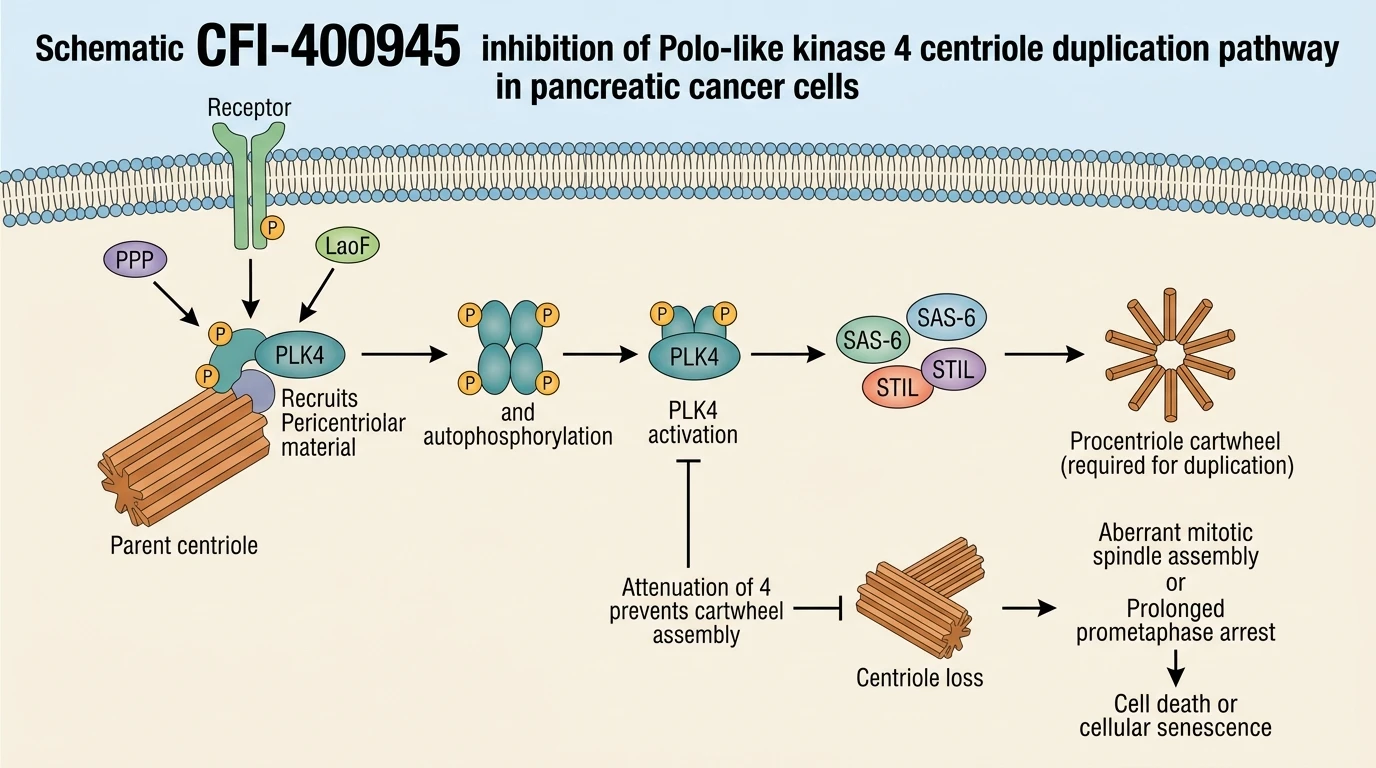
Among emerging small-molecule targeted therapies, CFI-400945 stands out as a novel, first-in-class orally active inhibitor explicitly synthesized to selectively target PLK4 catalytic activity. In biochemical kinase assays, CFI400945 binds the ATP-binding pocket of PLK4 with nanomolar affinity, competitively blocking substrate phosphorylation and downregulating downstream scaffolding interactions with STIL and SAS-6 required for procentriole cartwheel assembly. To establish preclinical translational validity, researchers evaluated CFI-400945 across a comprehensive panel of pancreatic cancer patient-derived xenograft (PDX) models. Patient-derived xenografts preserve the genetic heterogeneities, architectural features, and dense desmoplastic microenvironments characteristic of primary human pancreatic tumors, offering a highly relevant substrate for evaluating kinase inhibitor pharmacodynamics compared to traditional two-dimensional cell culture systems.
Experimental protocols administering daily oral doses of CFI-400945 yielded substantial therapeutic efficacy across diverse patient-derived xenografts. Statistically significant tumor growth suppression and marked extension of overall survival were documented in four out of six orthotopic PDX models tested. Notably, the therapeutic response was not uniform across all six models, highlighting potential heterogeneity in baseline PLK4 expression, downstream checkpoint integrity, or differential drug metabolism within individual patient tumors. In responsive orthotopic PDX cohorts, sustained drug exposure attenuated tumor expansion without causing systemic toxicity or substantial body weight loss in host mice under tested dosing schedules, demonstrating an acceptable preclinical safety window.
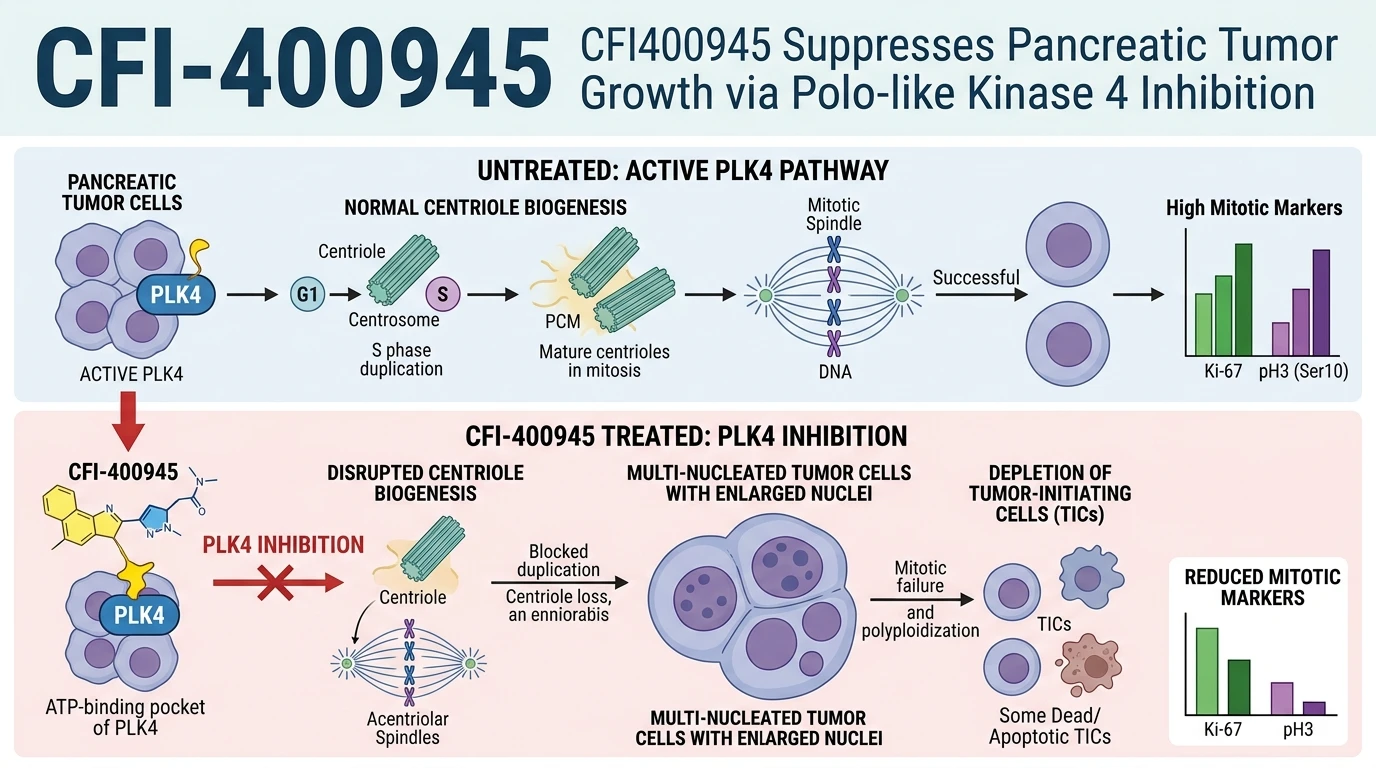
Detailed pharmacodynamic assessment of harvested tumor tissues illuminated the cellular mechanism driving tumor regression. Tissue sections harvested from CFI-400945 treated PDX models exhibited marked reductions in established biomarkers of active cell cycle progression and mitosis, specifically Ki-67 nuclear staining intensity and phospho-histone H3 (pH3) positivity. Simultaneously, morphological evaluation uncovered a dramatic increase in tumor cell nuclear diameter—a phenotypical manifestation of macronucleosis. This structural enlargement directly aligns with impaired centriole replication, leading to monopolar or aberrant multipolar mitotic spindles, failure of cytokinesis, endoreduplication, and eventual mitotic catastrophe.
A particularly critical finding from these PDX studies lies in the impact of CFI-400945 on tumor-initiating cells (TICs), often referred to as cancer stem cells. TICs contribute heavily to therapeutic failure, chemoresistance, and rapid post-treatment disease recurrence in pancreatic cancer. Utilizing serial transplantation and limiting dilution assays, investigators quantified a profound reduction in TIC frequency within CFI-400945 treated tumors—achieving reductions of up to an order of magnitude compared to vehicle-treated controls. Furthermore, upon re-challenging recurrent or relapsed tumors with secondary courses of CFI-400945, the tumor cells maintained sensitivity to PLK4 inhibition rather than acquiring rapid resistance mechanisms. These combined findings demonstrate that targeting PLK4 through CFI-400945 simultaneously eliminates bulk proliferating neoplastic populations and depletes self-renewing tumor-initiating sub-populations, providing a strong rationale for ongoing clinical development.
Pharmacological Evaluation and Tumor-Initiating Cell Depletion
Copy code to add this image to your page
CFI-400945 acts as a selective inhibitor of Polo-like kinase 4 (PLK4), a serine/threonine kinase regulating centriole duplication. By blocking PLK4 activity, the compound halts procentriole cartwheel assembly during S-phase, resulting in centriole depletion, monopolar or multipolar spindle formation, and abnormal mitosis. In pancreatic cancer PDX models, this leads to reduced Ki-67/pH3 expression, striking nuclear enlargement, and cell death. Crucially, PLK4 inhibition also targets self-renewing tumor-initiating cells (TICs), markedly reducing TIC frequency and suppressing tumor recurrence.
PLK4 Suppression Halts Orthotopic PDX Growth and Mitotic Progression
Daily small-molecule target inhibition suppressed primary pancreatic tumor growth. Within four out of six orthotopic patient-derived xenograft models evaluated under daily dosing regimens, treatment significantly extended overall survival while concurrently depleting key proliferation markers including nuclear Ki-67 and phospho-histone H3. Histological analysis revealed striking cellular alterations. Tumor tissue sections displayed a marked increase in mean nuclear diameter, a phenotypic signature consistent with centriole duplication arrest, spindle assembly failure, and polyploidization preceding catastrophic mitotic failure. Control groups maintained intact centrosomal architecture. Conversely, tumor tissue exposed to CFI400945 showed a distinct collapse of mitotic fidelity, confirming target engagement within the complex stromal microenvironment of pancreatic cancer.
Depletion of Tumor-Initiating Cells Prevents Rapid Disease Recurrence
Cancer stem cell populations frequently drive clinical relapse. In secondary limiting dilution transplantation assays using treated PDX tissue, target inhibition depleted tumor-initiating cell frequencies by up to an order of magnitude compared to vehicle controls. Recurrent tumors retained full therapeutic sensitivity. Re-treatment of relapsed tumor cohorts demonstrated sustained suppression without major acquired resistance mechanisms, indicating that targeting centriole biogenesis vulnerabilities hits both bulk proliferating cells and self-renewing progenitor subpopulation niches effectively.