BAY 80-6946 PI3K inhibitor Copanlisib with PARP Inhibition in Recurrent Gynecologic Cancers
Copy code to add this image to your page
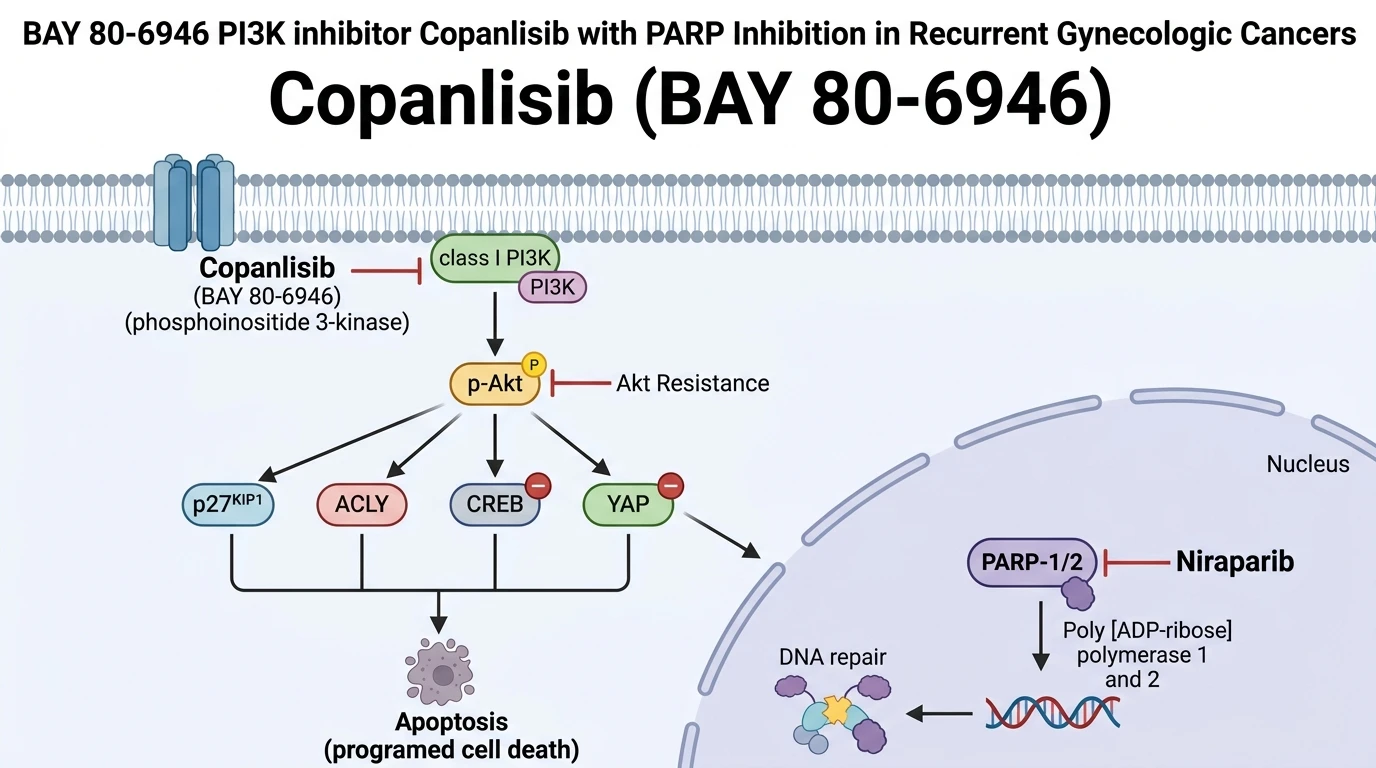
Phosphoinositide 3-kinase (PI3K) signaling regulates fundamental cellular processes, including nutrient sensing, cell cycle progression, and anti-apoptotic signaling. In human gynecologic malignancies, particularly high-grade serous ovarian cancer and endometrioid endometrial carcinoma, aberrant activation of the class I PI3K pathway occurs frequently through genomic amplification or activating mutations in PIK3CA, loss of PTEN function, or altered upstream receptor tyrosine kinase signaling. Class I PI3Ks comprise four distinct catalytic isoforms: p110α, p110β, p110γ, and p110δ. Small-molecule inhibition using Copanlisib (BAY 80-6946), an intravenous pan-class I PI3K inhibitor, potently attenuates p110 sub-isoform activities with nanomolar IC50 values. Dual blockade of oncogenic survival pathways and DNA repair machinery represents a mechanistic framework to trigger synthetic lethality in repair-deficient tumor lineages.
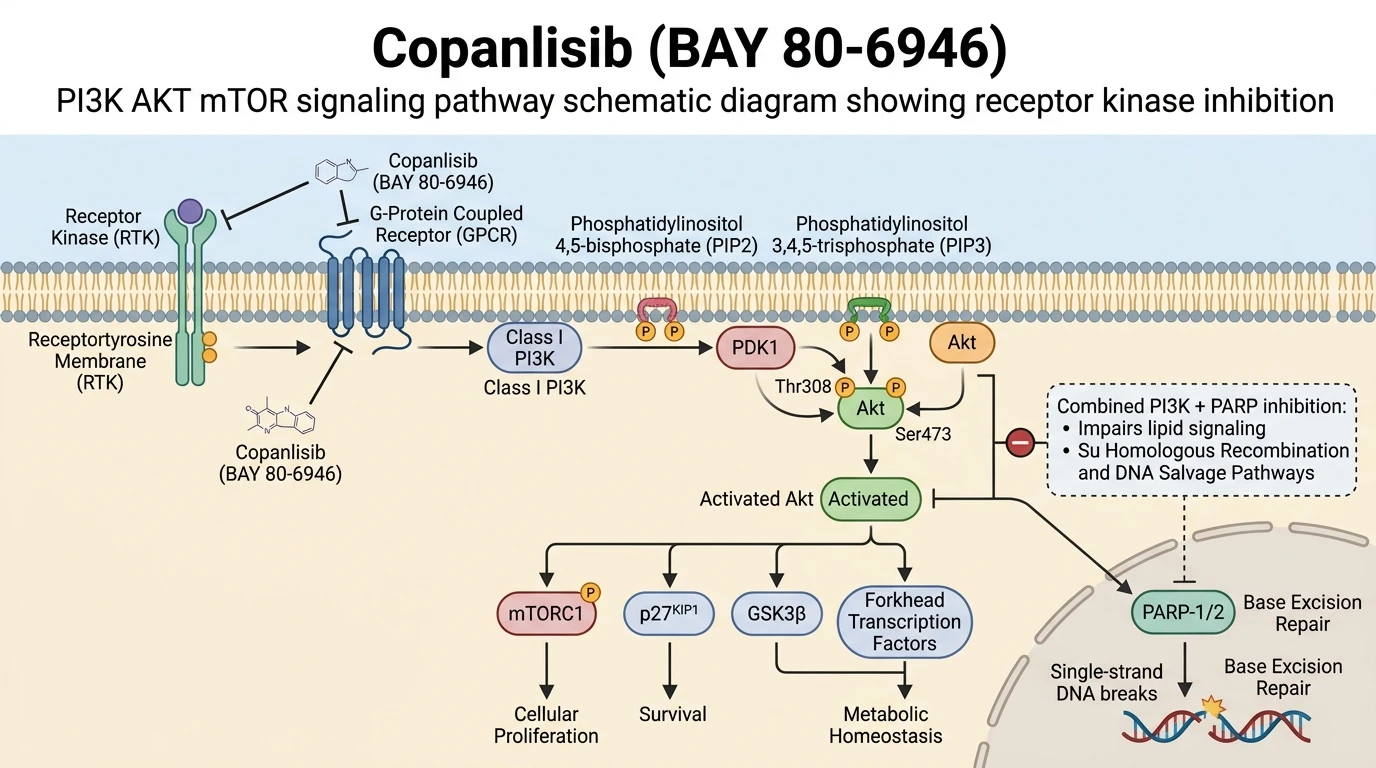
Poly(ADP-ribose) polymerase (PARP) enzymes, specifically PARP-1 and PARP-2, detect single-strand DNA breaks and coordinate base excision repair pathways. Pharmacological PARP inhibition causes persistent single-strand lesions, which convert to toxic double-strand breaks during replication forks. Tumors with homologous recombination deficiencies succumb to PARP inhibition. However, resistance mechanisms frequently emerge, driven by secondary restoration of homologous recombination or parallel activation of survival kinases. Inhibition of PI3K destabilizes homologous recombination proteins, such as BRCA1 and BRCA2, thereby dampening DNA damage repair capabilities. Consequently, combining the pan-class I PI3K inhibitor copanlisib with the oral PARP inhibitor niraparib aims to exploit pathway cross-talk. This dual strategy seeks to force cellular apoptosis in recurrent ovarian and endometrial tumors.
A phase Ib clinical study evaluated this combination regimen in 30 patients diagnosed with recurrent endometrial or ovarian cancer. Patients received escalating doses of intravenous copanlisib on days 1, 8, and 15 alongside continuous daily oral niraparib in 28-day cycles. Clinical tolerability proved challenging. The primary objective of establishing a recommended phase II dose was not achieved. Dose-limiting toxicities emerged rapidly during dose-escalation cohorts. Grade 3 maculopapular cutaneous rash represented the dominant dose-limiting adverse event. Dermatologic toxicities were specifically attributed to copanlisib administration. Secondary toxicities included transient hypertension and hyperglycemia, characteristic off-target and target-mediated side effects of pan-class I PI3K inhibition.
Despite safety constraints, initial efficacy signal measurements revealed modest antitumor activity. The combination achieved an objective response rate of 12.5% across the treated population. The overall clinical benefit rate reached 37.5%, encompassing partial responses and prolonged stable disease states. Measurable lesion regression occurred in a subset of patients who previously demonstrated resistance to platinum-based chemotherapy or single-agent PARP inhibitors. These empirical observations suggest that simultaneous blockade of PI3K and PARP retains activity in select recalcitrant cohorts.
To identify molecular mechanisms governing sensitivity and resistance, investigators conducted comprehensive proteomic profiling on pre-treatment tumor tissue using reverse phase protein array (RPPA) technology. Genomic sequencing alone proved insufficient to predict clinical response. PI3K pathway activation scores did not correlate with somatic PI3K mutation status. Instead, baseline proteomic expression patterns yielded functional biomarkers. Elevated baseline levels of downstream Akt substrates—specifically p27KIP1, ATP citrate lyase (ACLY), cAMP response element-binding protein (CREB), and YAP—were significantly associated with primary disease progression. Additionally, high expression of AT-rich interaction domain 1A (ARID1A) correlated with lack of clinical benefit. These quantitative biochemical markers highlight downstream substrate hyperactivation as a driver of therapeutic failure.
The divergence between PI3K mutational status and functional pathway output emphasizes the complexity of signaling networks in advanced gynecologic cancers. Upstream receptor crosstalk, alternative phosphorylation cascades, and feedback loops frequently override single genomic alterations. Consequently, functional proteomic screening offers superior utility over isolated DNA sequencing when selecting candidates for pan-PI3K combination trials. The identification of elevated ACLY, p27KIP1, CREB, and YAP as markers of disease progression indicates that active Akt-dependent transcription and metabolic remodeling bypass joint PI3K and PARP target suppression. Future trial designs must incorporate dynamic functional biomarkers to enrich for responsive patient subsets while minimizing systemic dermatologic toxicities.
Pharmacological Characterization and Proteomic Biomarker Analysis
Copy code to add this image to your page
Copanlisib (BAY 80-6946) functions as a potent pan-class I PI3K inhibitor targeting p110α, p110β, p110γ, and p110δ isoforms. By suppressing lipid kinase activity, copanlisib decreases PIP3 generation and blocks Akt phosphorylation. Combining copanlisib with the PARP inhibitor niraparib impairs homologous recombination DNA repair, inducing synthetic lethality in gynecologic cancer cells. Resistance is driven by elevated baseline downstream Akt effectors—including p27KIP1, ACLY, CREB, and YAP—and ARID1A.
Dose-Limiting Cutaneous Toxicity Prevents Recommended Phase II Dosing
In the phase Ib evaluation of copanlisib and niraparib in 30 patients with recurrent ovarian or endometrial cancer, clinical toxicity constrained protocol progression. Dose-escalation cohorts experienced dose-limiting toxicities that hindered the determination of a recommended phase II dose. Grade 3 maculopapular rash developed as the predominant dose-limiting toxicity. Dermatologic events were directly linked to copanlisib administration. Systemic target engagement by the BAY 80-6946 PI3K inhibitor induced rapid cutaneous vascular and epidermal reactions. Transient hypertension and hyperglycemia occurred concurrently in several subjects. These adverse events reflect systemic inhibition of p110α and p110β isoforms in peripheral tissues. Tumor responses remained modest, yielding an objective response rate of 12.5% and a clinical benefit rate of 37.5%. High toxicity rates halted further dose optimization within this clinical cohort.
Downstream Akt Substrates Associated with Primary Disease Progression
Reverse phase protein array profiling of pre-treatment tumor specimens provided key insights into resistance mechanisms. Oncogenic PI3K pathway activation failed to correlate with somatic PIK3CA or PTEN genomic mutations. Instead, elevated baseline levels of phosphorylated downstream Akt substrates strongly predicted therapeutic failure. Elevated baseline expression of p27KIP1, ATP citrate lyase (ACLY), cAMP response element-binding protein (CREB), and YAP significantly associated with progressive disease. High baseline expression of the chromatin remodeling protein ARID1A likewise tracked with treatment resistance. These proteomic observations indicate that transcriptional and metabolic effectors downstream of Akt sustain tumor survival despite dual PI3K and PARP enzyme inhibition. Screening for baseline downstream substrate hyperactivation may refine future patient selection criteria.