PF-8380 Direct Autotaxin Inhibition Suppresses Lysophosphatidic Acid Signaling in Osteoarthritis
Copy code to add this image to your page
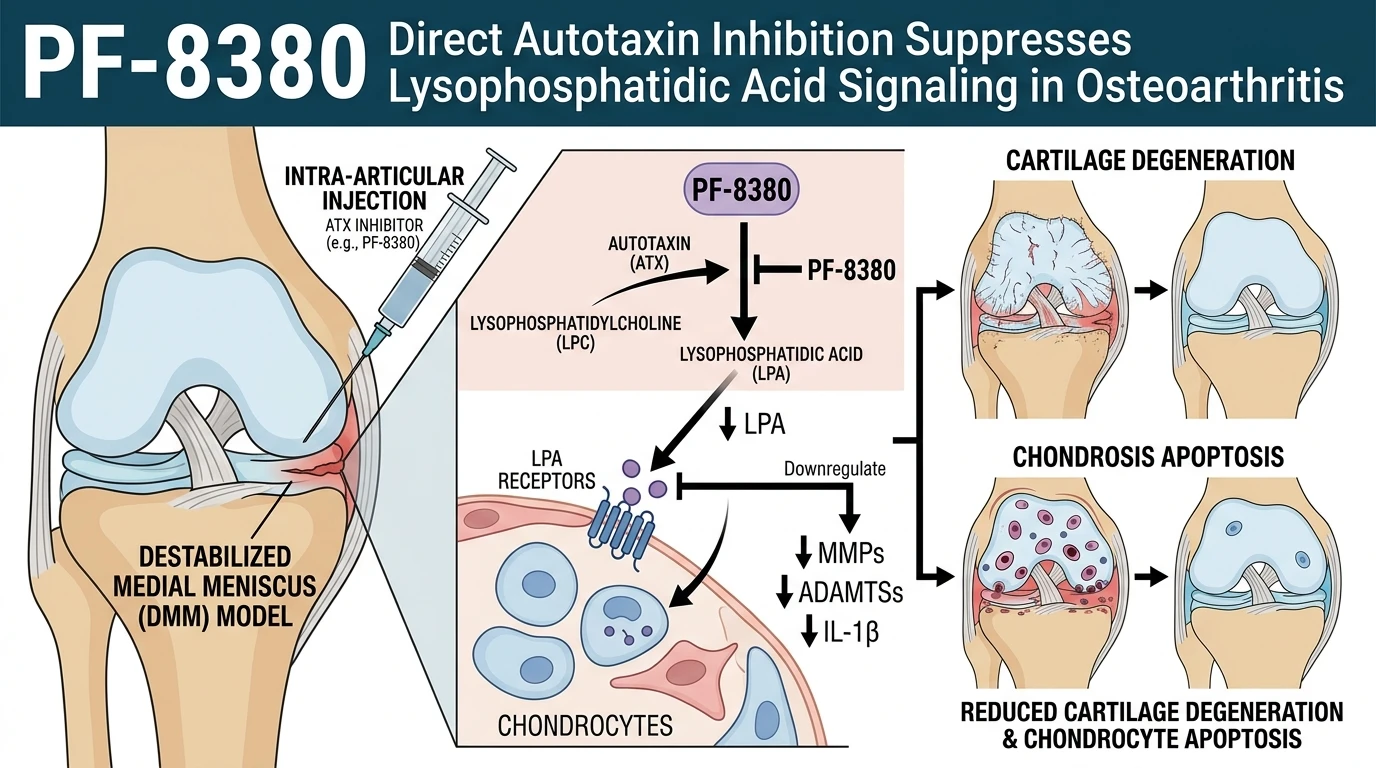
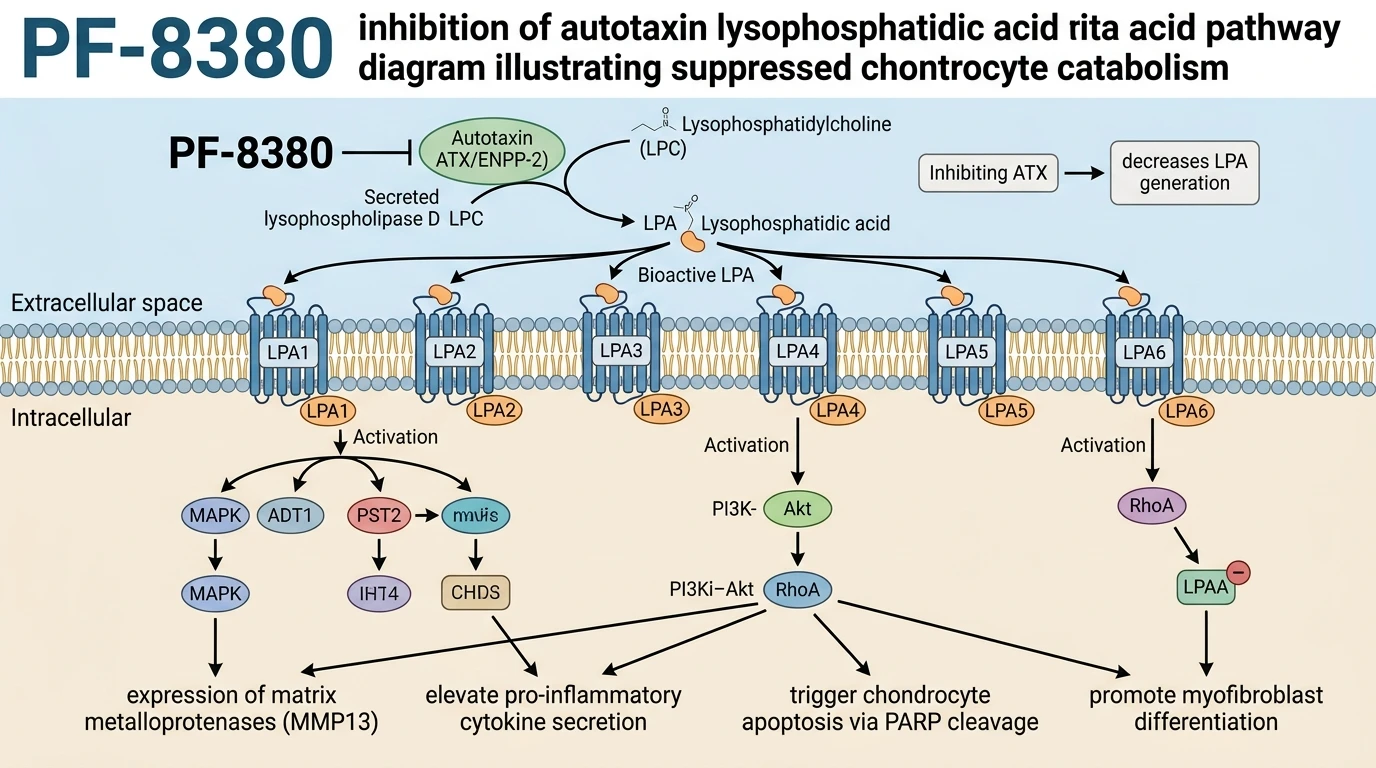
Autotaxin (ATX, encoded by ENPP2) functions as a primary lysophospholipase D in extracellular fluids, responsible for converting lysophosphatidylcholine (LPC) into bioactive lysophosphatidic acid (LPA). Within the articular joint microenvironment, dysregulated LPA production activates G protein-coupled LPA receptors (LPA1 through LPA6) expressed across articular chondrocytes, synovial fibroblasts, and subchondral bone osteoblasts. Ligation of these receptors triggers intracellular signaling pathways—specifically mitogen-activated protein kinase (MAPK), nuclear factor kappa B (NF-κB), and Rho-associated kinase (ROCK)—that amplify the production of pro-inflammatory cytokines, chemokines, and matrix-degrading enzymes. Consequently, target engagement with small-molecule inhibitors such as PF-8380 offers a targeted method to disrupt LPA generation directly within the joint space.
To evaluate the therapeutic efficacy of local ATX inhibition, experimental models utilizing surgically induced destabilization of the medial meniscus (DMM) in mice were examined. The DMM surgical model reproduces mechanical stress and progressive articular degradation representative of human osteoarthritis (OA). Following meniscus transection, mice received intra-articular injections of PF-8380 at three and five weeks post-surgery. Localized delivery concentrated target occupancy within the knee capsule while minimizing potential systemic off-target effects. Histological assessment at terminal endpoints demonstrated that intra-articular administration of PF-8380 conferred significant protection against structural cartilage erosion, chondrocyte cell loss, and associated synovial inflammation when compared to vehicle-treated controls.
Immunohistochemical analyses of joint tissue sections provided definitive mechanistic evidence of reduced catabolic and apoptotic activity following target engagement by PF-8380. Tissue sections from treated mice exhibited marked suppression of matrix metalloproteinase 13 (MMP13), the principal collagenase responsible for type II collagen degradation in osteoarthritic cartilage. Correspondingly, staining for C1,2C—a specific neo-epitope generated by collagenase cleavage of collagen types I and II—was notably decreased, indicating structural stabilization of the pericellular and interterritorial extracellular matrix. Beyond matrix turnover, local ATX inhibition suppressed programmed cell death within the articular cartilage zone. Expression of PARP p85, a cleaved fragment generated during executioner caspase activation, was substantially reduced in PF-8380 treated joints, reflecting preserved chondrocyte density in the superficial and middle tangential zones.
In addition to chondrocyte preservation, local treatment attenuated pathological remodeling of the synovial membrane. Osteoarthritic synovitis is characterized by synovial lining hyperplasia, sub-intimal fibrosis, and infiltration of effector cells. Immunohistochemistry revealed reduced expression of alpha-smooth muscle actin (alpha-SMA) in the synovial lining and sub-intimal stroma of treated animals. Elevated alpha-SMA serves as a classic marker for myofibroblast differentiation, driven in part by local LPA receptor signaling. Lower alpha-SMA intensity indicates that local ATX inhibition dampens synovial fibrotic changes and cellular activation within the joint capsule.
To validate whether these localized rodent observations translate to human disease mechanisms, primary human OA chondrocytes were treated with autotaxin inhibitors and analyzed via high-throughput mRNA sequencing. Transcriptomic profiling demonstrated that local ATX suppression alters distinct molecular pathways critical to cellular homeostasis. Differential gene expression analysis highlighted modulation of networks governing cholesterol analogue metabolism, cell cycle entry, and extracellular matrix synthesis. The normalization of cell cycle transcripts suggests a release from catabolic arrest, whereas altered lipid metabolic gene clusters align with disrupted LPA ligand dynamics. Together, these transcriptomic and histological data demonstrate that local pharmacological inhibition of autotaxin by PF-8380 attenuates multiple facets of joint degeneration in progressive osteoarthritis.
Local Autotaxin Inhibition and Articular Joint Preservation
Copy code to add this image to your page
Autotaxin (ATX/ENPP-2) catalyzes the hydrolysis of lysophosphatidylcholine to generate lysophosphatidic acid (LPA), a potent lipid mediator driving joint inflammation and matrix breakdown. Local administration of PF-8380 selectively inhibits ATX catalytic activity, drastically reducing intra-articular LPA levels. This inhibition suppresses downstream activation of matrix metalloproteinases such as MMP13, blocks PARP p85-mediated apoptosis in chondrocytes, and diminishes alpha-SMA expression in synovial tissue. By blocking LPA signaling, the compound mitigates cartilage erosion and synovial hypertrophy in structural osteoarthritis models.
Attenuation of Cartilage Degradation in Murine Meniscal Injury
Intra-articular administration of PF-8380 was evaluated in a destabilized medial meniscus murine model. Animals received targeted injections at three and five weeks post-injury. Localized delivery concentrated the inhibitor within the joint space. Histological scoring confirmed a reduction in uncalcified cartilage erosion. Treated knee joints retained higher proteoglycan content relative to vehicle controls. Superficial zone chondrocyte loss was significantly attenuated. These structural observations confirm that local enzymatic blockade preserves cartilage morphology under chronic mechanical strain.
Downregulation of MMP13 and PARP Cleavage in Vivo
Immunohistochemical staining revealed clear suppression of catabolic executioner proteins. Expression of MMP13 dropped sharply within the calcified matrix interface. Concurrently, levels of the type II collagen cleavage fragment C1,2C were markedly attenuated. Cellular apoptosis decreased across the articular zone; cleaved PARP p85 levels remained low throughout the treatment period. Synovial hyperplasia was also restricted. Staining for alpha-smooth muscle actin (alpha-SMA) confirmed reduced myofibroblast conversion. Intra-articular PF-8380 thereby dampens both stromal reactivity and enzymatic matrix degradation.
Transcriptional Reprogramming in Human Osteoarthritic Chondrocytes
RNA sequencing of treated human OA chondrocytes revealed distinct pathway shifts. Transcripts involved in cholesterol analogue metabolism were significantly altered. Cell cycle regulatory genes showed normalization following enzyme inhibition. Extracellular matrix synthesis networks exhibited elevated expression patterns. These transcriptomic adjustments correlate with diminished lysophosphatidic acid signaling. Chondrocyte catabolism subsided under controlled assay conditions. Immunological mediator networks remained stable throughout the transcriptional study. Overall, local autotaxin blockade restructures primary human chondrocyte activity away from degenerative phenotypes.