SC144 P-gp inhibitor suppresses IL-6/gp130/Stat3 signaling and survivin expression in PTEN-deficient prostate cancer
Copy code to add this image to your page
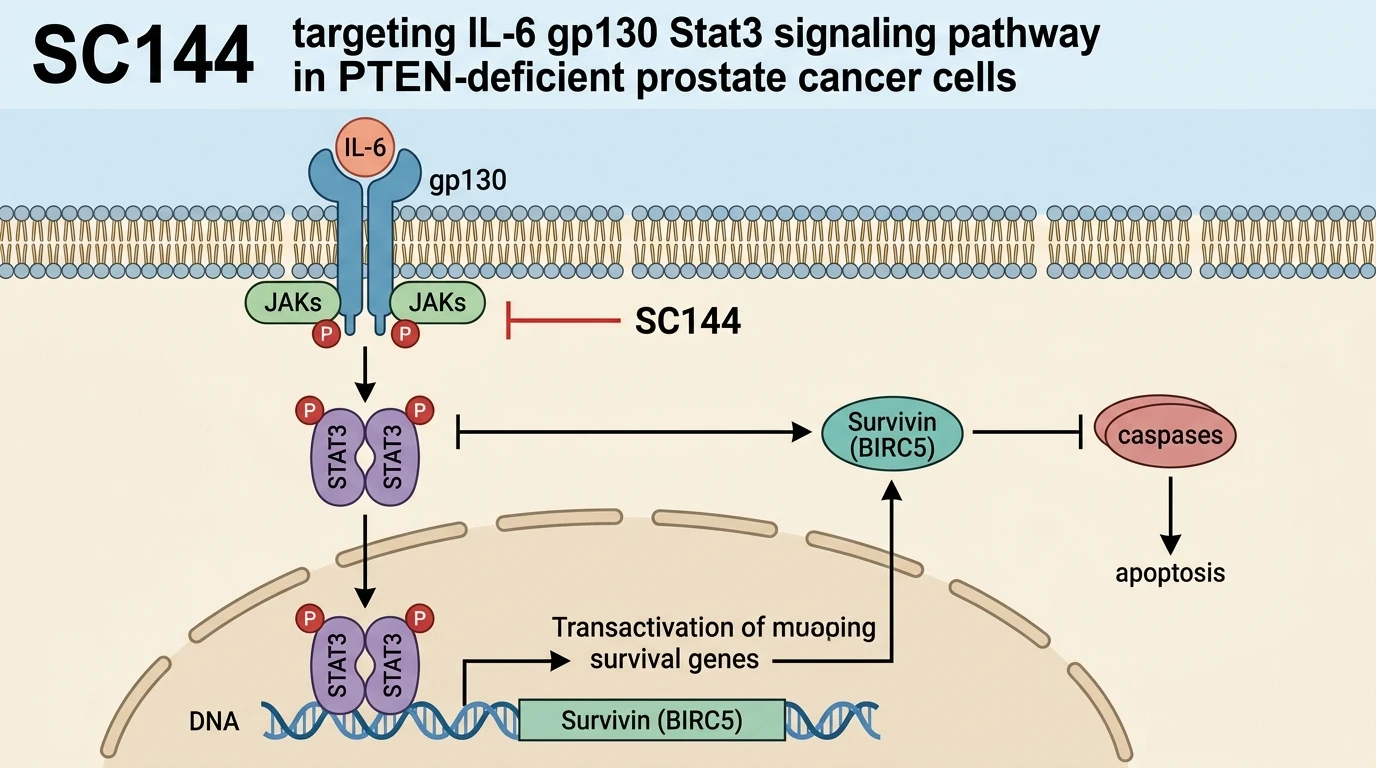
Interleukin-6 (IL-6) cytokine signaling through the gp130 co-receptor subunit triggers canonical JAK-STAT cascade activation, driving transcriptional upregulation of anti-apoptotic targets including survivin (BIRC5). In prostate cancer (PCa), loss of the PTEN tumor suppressor amplifies baseline oncogenic signaling through downstream effectors. Elevated STAT3 phosphorylation directly correlates with accelerated tumor expansion, resistance to pro-apoptotic stimuli, and enhanced migratory cell phenotypes.
Within PTEN-deficient prostate cellular frameworks, survivin expression is frequently co-elevated with monoamine oxidase A (MAOA). High MAOA activity fosters an oxidative intracellular milieu, facilitating invasive downstream cascades through matrix metalloproteinase-9 (MMP-9) upregulation. Concurrently, survivin functions as a potent inhibitor of apoptosis proteins (IAP) family member, binding directly to effector caspases to block programmed cell death. Suppressing survivin directly lowers the threshold for apoptotic induction in malignant cells.
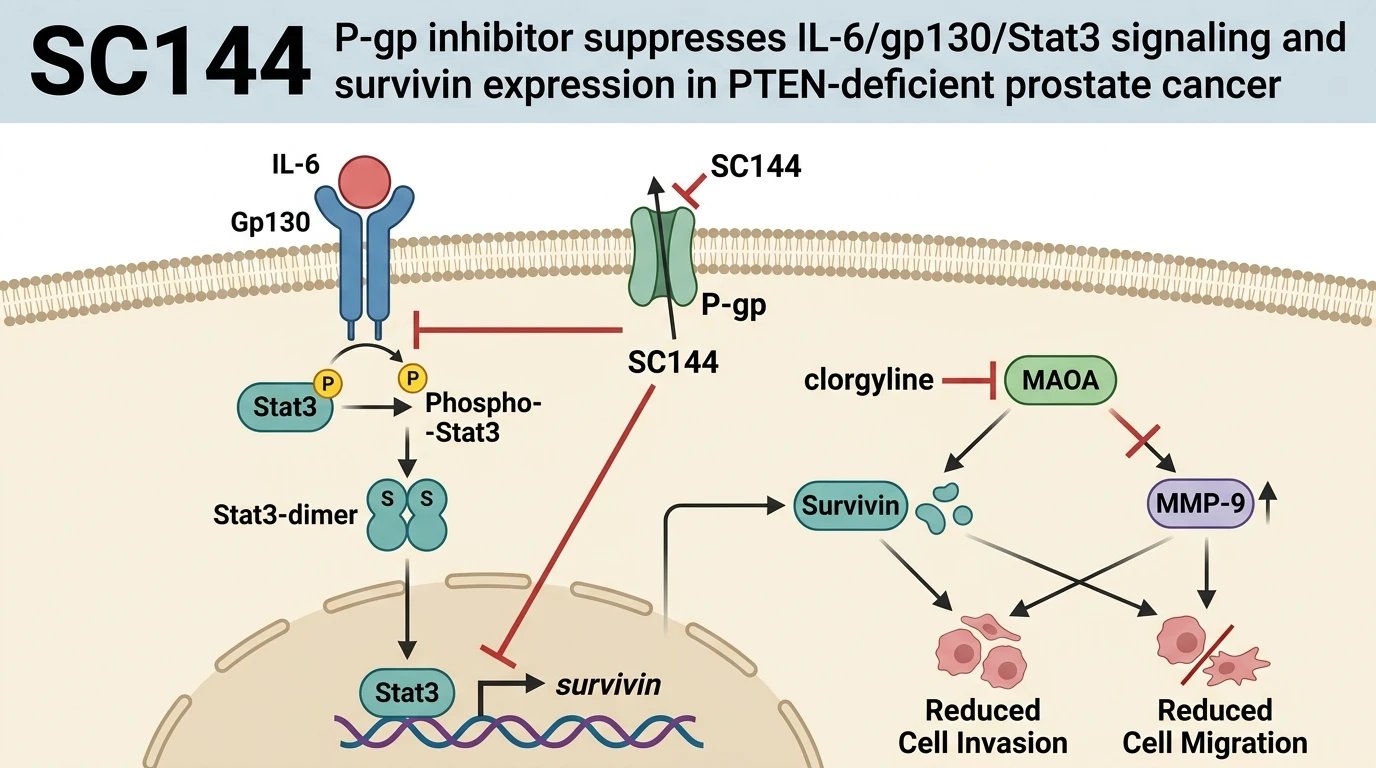
SC144 operates as a potent, small-molecule suppressant of survivin that targets the IL-6/gp130/Stat3 signaling node. By blocking gp130 signaling downstream of IL-6 stimulation, the compound reduces STAT3 phosphorylation at Tyrosine-705. Consequently, nuclear translocation of STAT3 dimers diminishes, leading to marked attenuation of survivin gene transcription. In preclinical assays, SC144 demonstrates potent anti-proliferative activity across multiple PTEN-negative prostate cancer lines.
Pharmacological characterization reveals that the molecule, also evaluated under the designation SC144 P-gp inhibitor in multi-drug resistance screening assays, exhibits potent inhibitory action against gp130-mediated signaling cascades without causing generalized systemic toxicity in preclinical mouse models. When combined with the selective MAOA inhibitor clorgyline, SC144 achieves dual-node suppression of survival and invasive pathways. The co-inhibition of survivin and MAOA demonstrates clear synergistic attenuation of cell growth, colony formation, cellular migration, and matrigel invasion in vitro.
In PTEN-deficient prostate cancer models, simultaneous targeting of survivin and MAOA reduces MMP-9 protein abundance. Downregulation of MMP-9 impairs extracellular matrix degradation, directly limiting metastatic cellular dissemination. This rational combination provides a biochemical framework for targeting co-upregulated survival mechanisms in PTEN-null malignancies.
Pharmacological Synergism and Dual Target Inhibition Strategies
Copy code to add this image to your page
SC144 inhibits the IL-6/gp130/Stat3 signaling axis, leading to downregulation of the anti-apoptotic protein survivin (BIRC5). In PTEN-deficient prostate cancer models where survivin and monoamine oxidase A (MAOA) are co-upregulated, combining SC144 with the MAOA inhibitor clorgyline synergistically suppresses prostate cancer cell proliferation, colony formation, cell motility, and invasive capacity. This pharmacological combination downregulates MMP-9 expression, blocking extracellular matrix remodeling and migratory phenotypes in PTEN-negative prostate cancer.
Co-Upregulation of Survivin and MAOA in PTEN-Deficient Models
PTEN deletion alters baseline signaling networks. Quantitative Western blot assays demonstrate parallel accumulation of survivin and MAOA in PTEN-null prostate cancer cell lines. SC144 attenuates survivin protein levels within hours of treatment at sub-micromolar concentrations. Downstream STAT3 phosphorylation ceased rapidly following compound exposure. Cellular viability dropped sharply in a dose-dependent manner. This distinct target engagement confirms that survivin suppression directly impairs PTEN-deficient cell survival.
Synergistic Suppression of Cell Invasion and MMP-9 Expression
Combining SC144 with clorgyline blocks invasive cascades. In transwell invasion assays using PTEN-negative PCa cells, dual inhibition reduced migratory cells by over 70% compared to vehicle controls. Additionally, evaluation of the compound alongside the SC144 P-gp inhibitor profile indicated consistent target specificity without compensatory activation of parallel survival pathways; MMP-9 secretion decreased substantially in co-treated cells. Reduced gelatinase activity limits matrix degradation.
Attentuation of Tumor Colony Formation via Dual Node Blockade
Clonogenic survival assays illustrate significant efficacy advantages with combination treatment. Single-agent treatment with either SC144 or clorgyline provided only modest inhibition of colony formation at sub-maximal doses; however, combined administration completely abolished colony regrowth over 14 days. These observations remain to be validated in randomized clinical cohorts, but current findings support dual blockade of survivin and MAOA in PTEN-deficient contexts.