IWP-2 from Selleck Inhibits Spinal Wnt Signaling to Relieve Neuropathic Pain
Copy code to add this image to your page
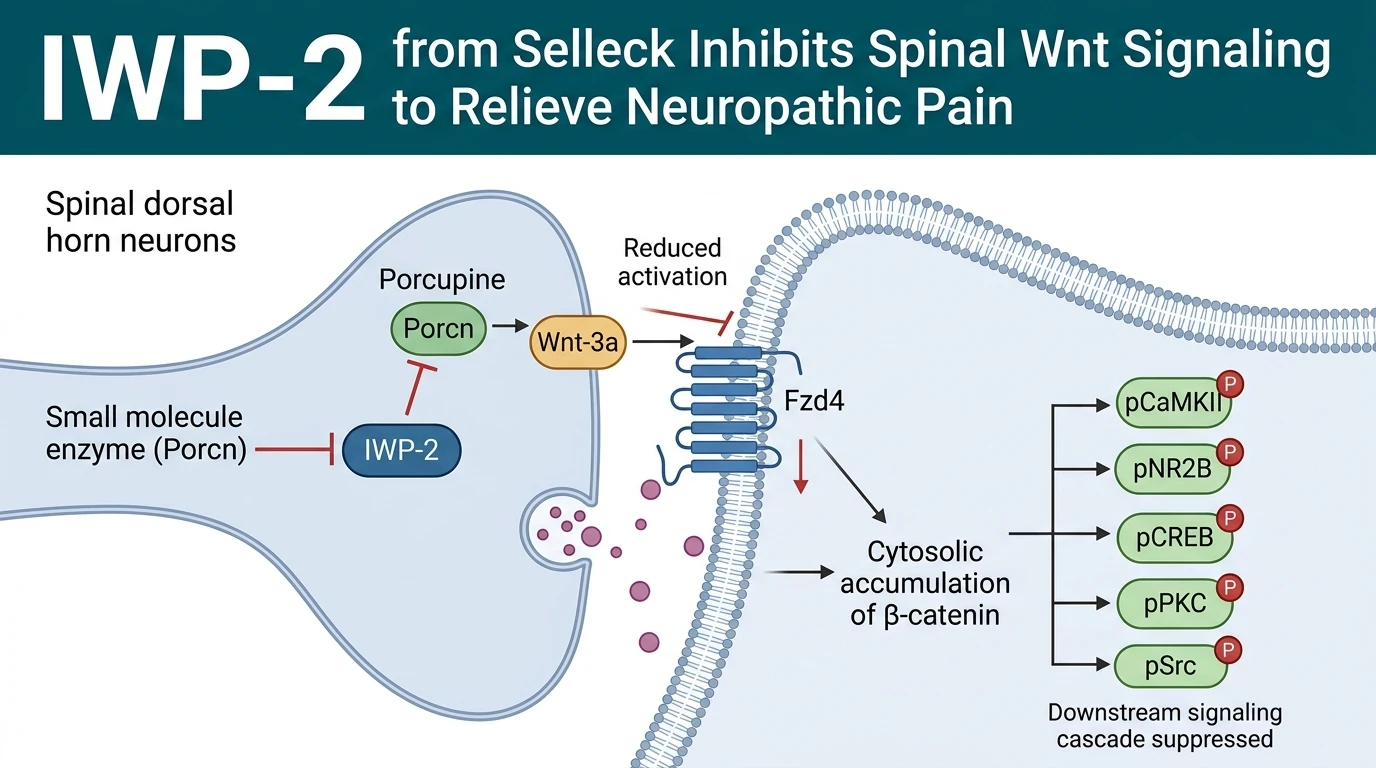
Peripheral nerve injury frequently triggers neuropathic pain, a debilitating condition driven by central sensitization within the spinal dorsal horn. Chronic constriction injury (CCI) in rodent models induces robust mechanical, thermal, and cold hyperalgesia. At the cellular level, these sensory hypersensitivities coincide with heightened neuronal synaptic plasticity. While canonical signaling cascades are often studied in oncological dysregulation models, their aberrant reactivation within post-mitotic spinal neurons drives persistent nociceptive processing. Specifically, CCI elevates expression of key Wnt/β-catenin pathway components, including the ligand Wnt-3a, its receptor Frizzled 4, and the downstream transcriptional coactivator β-catenin within the ipsilateral spinal dorsal horn.
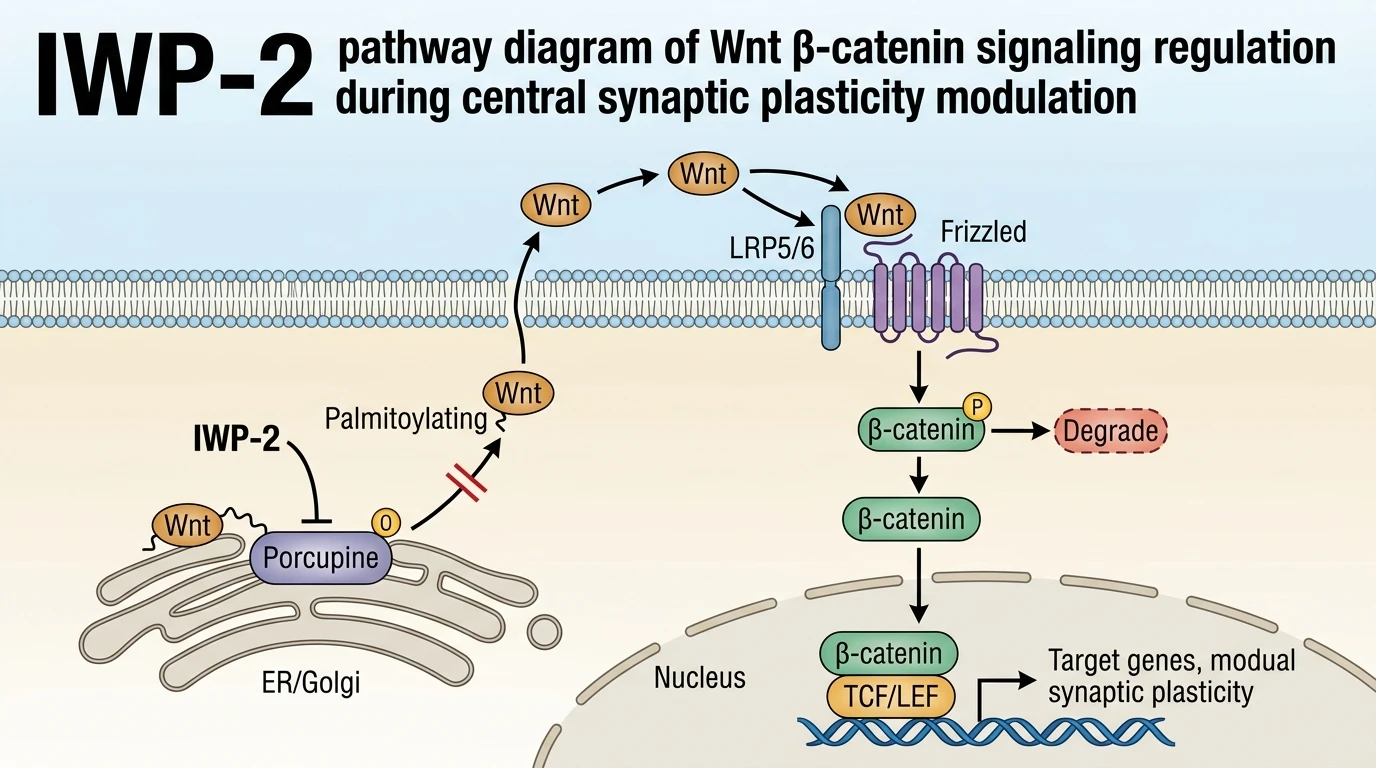
To establish the functional requirement of Wnt ligand processing in this pathological state, researchers utilized IWP-2, a small-molecule inhibitor targeting the acyltransferase Porcupine. Porcupine-mediated palmitoylation is essential for Wnt ligand secretion and receptor binding. Intrathecal administration of IWP-2 directly targets the spinal microenvironment, circumventing systemic off-target effects. Pharmacological intervention with IWP-2 blocks the enzymatic maturation of Wnt ligands, thereby arresting autocrine and paracrine activation of Frizzled 4 receptors on dorsal horn neurons.
Biochemical analyses demonstrate that suppressing Wnt maturation downregulates the downstream phosphorylation of critical synaptic plasticity transducers. Following CCI, elevated β-catenin signaling typically triggers intracellular cascades involving phosphorylated calcium/calmodulin-dependent protein kinase II (pCaMK II), phosphorylated N-methyl-D-aspartate receptor subunit 2B (pNR2B), phosphorylated cAMP response element-binding protein (pCREB), phosphorylated protein kinase C (pPKC), and phosphorylated Src (pSrc). Intrathecal delivery of IWP-2 significantly abrogates the phosphorylation of these signaling molecules, terminating the intracellular amplification loops that sustain central sensitization.
At the behavioral level, IWP-2 treatment markedly reverses established neuropathic pain manifestations. Rats subjected to CCI and treated with intrathecal IWP-2 display significant increases in mechanical withdrawal thresholds and thermal withdrawal latencies compared to vehicle-treated controls. Furthermore, cold sensitivity assays show a reduction in nocifensive paw lifts. These findings demonstrate that targeted disruption of Porcupine-dependent Wnt secretion using IWP-2 attenuates spinal synaptic plasticity and effectively alleviates neuropathic pain behaviors in vivo.
Pharmacological Target Engagement and Synaptic Plasticity Modulation
Copy code to add this image to your page
IWP-2 targets the membrane-bound O-acyltransferase Porcupine, blocking the palmitoylation and subsequent secretion of Wnt ligands such as Wnt-3a. In rat models of chronic constriction injury, intrathecal administration of IWP-2 suppresses Wnt/β-catenin pathway activation in the spinal dorsal horn. This inhibition halts downstream signaling, reducing the phosphorylation of CaMK II, NR2B, CREB, PKC, and Src. Consequently, central synaptic plasticity and nociceptive sensitization diminish, resulting in a marked attenuation of mechanical, thermal, and cold hyperalgesia.
Intrathecal IWP-2 Attenuates Spinal Wnt-3a and β-Catenin Expression
Peripheral nerve ligation rapidly activates spinal glia and neurons. This activation induces Wnt-3a transcription in the dorsal horn within days post-injury. Intrathecal delivery of IWP-2 from Selleck directly interrupts this cascade. Wnt-3a ligand secretion requires Porcupine-mediated palmitoylation. By inhibiting Porcupine, IWP-2 prevents the engagement of extracellular Wnt-3a with Frizzled 4 receptors. Subcellular fractionation confirms reduced nuclear accumulation of cytosolic β-catenin following compound administration. Western blot analyses demonstrate significant reductions in total spinal β-catenin protein levels in treated animals. These biochemical alterations confirm effective target engagement within dorsal horn tissue. Consequently, transcriptional driving of synaptic remodeling genes ceases.
Downstream Phosphorylation Cascade Inhibition Reduces Nociceptive Sensitization
Synaptic plasticity relies on localized kinase phosphorylation cascades. Spinal nerve injury induces rapid activation of pCaMK II and pPKC. These active kinases phosphorylate ionotropic glutamate receptors. Specifically, pNR2B levels rise markedly in vehicle-treated CCI rodents. Elevated pNR2B enhances NMDA receptor conductance and Ca2+ influx. Administration of IWP-2 disrupts this enzymatic feed-forward loop. Phosphorylation of NR2B and Src decreases significantly within hours of intrathecal delivery. Downstream nuclear factors like pCREB also show attenuated signal intensity. Downstream receptor trafficking normalizes under these conditions. Thus, central sensitization cascades are functionally uncoupled at the post-synaptic membrane.
Reversal of Mechanical and Thermal Hyperalgesia in CCI Models
Behavioral testing confirms functional recovery following compound administration. Standardized von Frey filaments measured mechanical paw withdrawal thresholds daily. CCI surgery lowered withdrawal thresholds substantially from baseline. Treatment with IWP-2 from Selleck restored mechanical thresholds toward pre-injury levels. Hargreaves thermal plantar assays demonstrated similar protective effects. Thermal withdrawal latencies increased significantly in the drug-treated cohort. Cold plate testing showed reduced nocifensive flicking behaviors. Vehicle-treated animals exhibited no sensory recovery throughout the trial period. The observed antinociceptive effects remained strictly dose-dependent. These preclinical metrics highlight the therapeutic utility of targeting spinal Wnt processing.