N-Acetylcysteine (NAC chemical, N-Acetyl-L-Cysteine) suppresses neuroinflammation and restores glutathione post-TBI
Copy code to add this image to your page
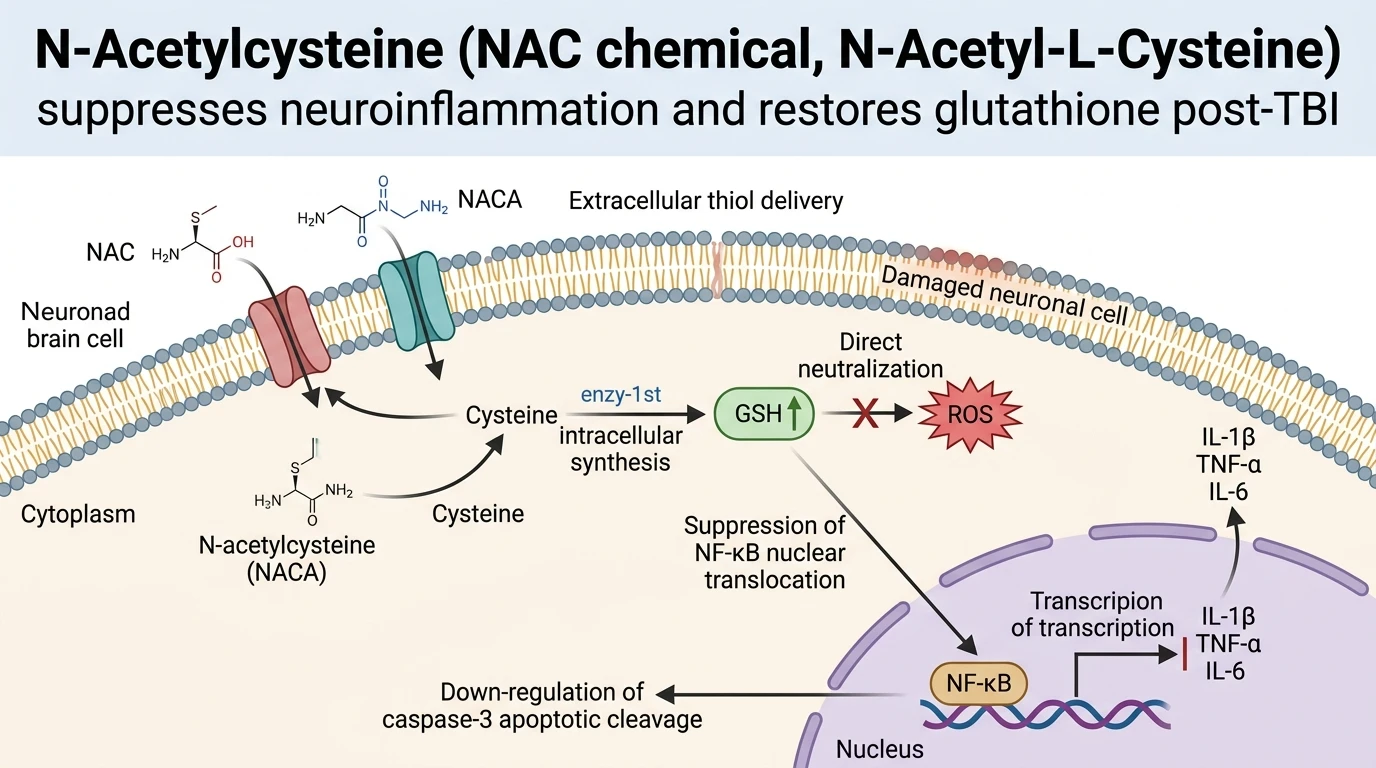
Traumatic brain injury (TBI) induces immediate mechanical damage followed by a prolonged secondary injury cascade driven by oxidative stress, mitochondrial collapse, and acute neuroinflammation. Mechanical impact triggers massive glutamate release, intracellular calcium overload, and exponential accumulation of reactive oxygen species (ROS). These toxic oxidative species rapidly exhaust intracellular glutathione (GSH) reserves—the primary endogenous enzymatic antioxidant defense system in central nervous system tissue. Consequently, unchecked lipid peroxidation damages neural lipid membranes, while elevated intracellular ROS stimulates nuclear factor kappa B (NF-κB) transcription, initiating an acute cascade of pro-inflammatory cytokines including interleukin-1 beta (IL-1β), tumor necrosis factor-alpha (TNF-α), and interleukin-6 (IL-6). Administering exogenous thiol donors like N-Acetylcysteine (NAC chemical, N-Acetyl-L-Cysteine) supplies critical rate-limiting substrate for GSH resynthesis, intercepting this destructive biochemical loop at the cellular level.
A systematic evaluation of 20 preclinical animal studies and 3 human clinical trials indicates that post-injury administration of the NAC chemical mitigates secondary mechanical and biochemical tissue damage. Preclinical assessments using rodent models of controlled cortical impact (CCI) and fluid percussion injury (FPI) demonstrate significant restoration of tissue GSH concentrations following systemic administration. Quantitative fluorometric assays confirmed that treated cohorts maintained elevated GSH/GSSG ratios relative to vehicle controls. This restoration of intracellular antioxidant capacity correlates directly with decreased accumulation of 4-hydroxynonenal (4-HNE) and malondialdehyde (MDA), key biomarkers of lipid peroxidation. Crucially, mitigating oxidative pressure suppresses activation of caspase-3 and caspase-9 pathways, markedly reducing cerebral contusion volume and limiting apoptotic cell loss within the peri-lesional cortex and hippocampal subfields.
Beyond direct radical scavenging, N-Acetylcysteine (NAC chemical, N-Acetyl-L-Cysteine) modulates immune responses within the injured central nervous system microenvironment. Following TBI, activated microglia and infiltrating immune cells release substantial quantities of IL-1β, TNF-α, and IL-6, propagating chronic neuroinflammation and secondary tissue loss. Quantitative PCR and ELISA analyses across evaluated preclinical models reveal that systemic NAC administration leads to marked downregulation of these pro-inflammatory cytokines within 24 to 72 hours post-injury. Dampening this cytokine storm reduces microglial hyper-activation and prevents endothelial dysfunction at the blood-brain barrier. In clinical trials, post-traumatic administration of NAC within hours of injury accelerated neurofunctional recovery, yielding measurable improvements in spatial memory, cognitive processing, and motor performance on standardized clinical testing without drug-related adverse events.
Pharmacological optimization of thiol delivery led to the development of the derivative N-acetylcysteine amide (NACA). Standard NAC exhibits restricted blood-brain barrier permeability due to its net negative charge at physiological pH, requiring higher systemic doses to achieve effective central nervous system concentrations. Neutralization of the carboxyl moiety in NACA increases lipophilicity, permitting superior penetration across the blood-brain barrier. Comparative pharmacokinetic analyses demonstrate that NACA achieves higher cerebrospinal fluid concentrations and exerts stronger central antioxidant actions at lower molar equivalents than parent NAC. Comparative models show that while both molecules restore glutathione pools and limit contusion size, NACA achieves faster suppression of mitochondrial ROS accumulation. These clinical and preclinical findings establish thiol donor therapy as an effective approach for intercepting secondary oxidative and inflammatory brain injury.
Preclinical Efficacy and Clinical Pharmacodynamics in TBI
Copy code to add this image to your page
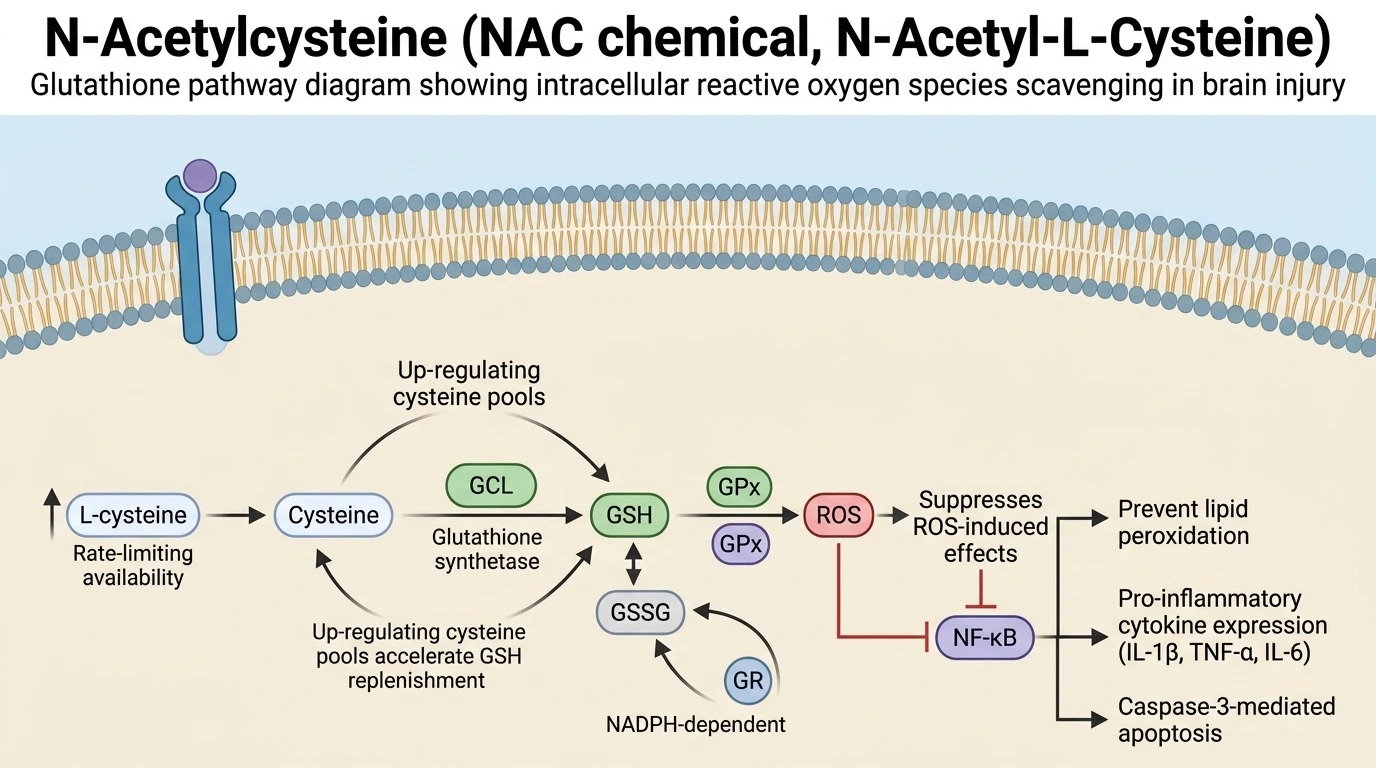
N-Acetylcysteine supplies exogenous L-cysteine to bypass the rate-limiting step of glutathione synthesis, elevating intracellular GSH pools. Increased GSH directly detoxifies reactive oxygen species and inhibits lipid peroxidation. Concurrently, reduction of oxidative stress suppresses NF-κB nuclear translocation, downregulating inflammatory cytokine production (IL-1β, TNF-α, IL-6). The mitigation of oxidative burden and inflammatory signaling prevents mitochondrial cytochrome c release, ultimately halting caspase-dependent apoptotic pathways in neural tissue.
Glutathione Restoration and Attenuation of Inflammatory Cascades
Intracellular glutathione depletion represents a primary driver of secondary neurodegeneration following traumatic brain injury. Administration of the NAC chemical effectively bypasses the rate-limiting enzymatic steps in GSH synthesis by directly providing L-cysteine. In murine controlled cortical impact models, post-injury treatment restored parenchymal GSH levels within 12 hours post-trauma. This antioxidant restoration directly suppressed the accumulation of reactive oxygen species and downstream lipid peroxidation products. Consequently, NF-κB activation was inhibited, reducing central transcript levels of IL-1β, TNF-α, and IL-6 by over 40% in treated cohorts. Neuronal survival in the hippocampal CA3 region increased significantly. Cortical contusion volumes were reduced compared to untreated controls.
Enhanced Central Permeability of NACA Mitigates Secondary Injury
The lipophilic derivative N-acetylcysteine amide (NACA) addresses the limited blood-brain barrier penetration observed with parent compounds. By neutralizing the carboxyl group, NACA readily crosses the blood-brain barrier to achieve higher intra-neuronal concentrations at lower systemic doses. In comparative fluid percussion injury studies, NACA administration yielded faster normalization of mitochondrial membrane potential than equivalent doses of the NAC chemical. Systematic review of human clinical trials verified that early thiol supplementation significantly improved spatial memory and cognitive testing performance without producing drug-related toxicities. Adverse events remained indistinguishable from placebo arms across evaluated clinical cohorts. These pharmacodynamic observations highlight the distinct advantages of lipophilic thiol derivatives in neurotrauma therapy.