Dapagliflozin (BMS-512148) targeting SGLT2 for renal hemodynamic modulation and albuminuria reduction
Copy code to add this image to your page
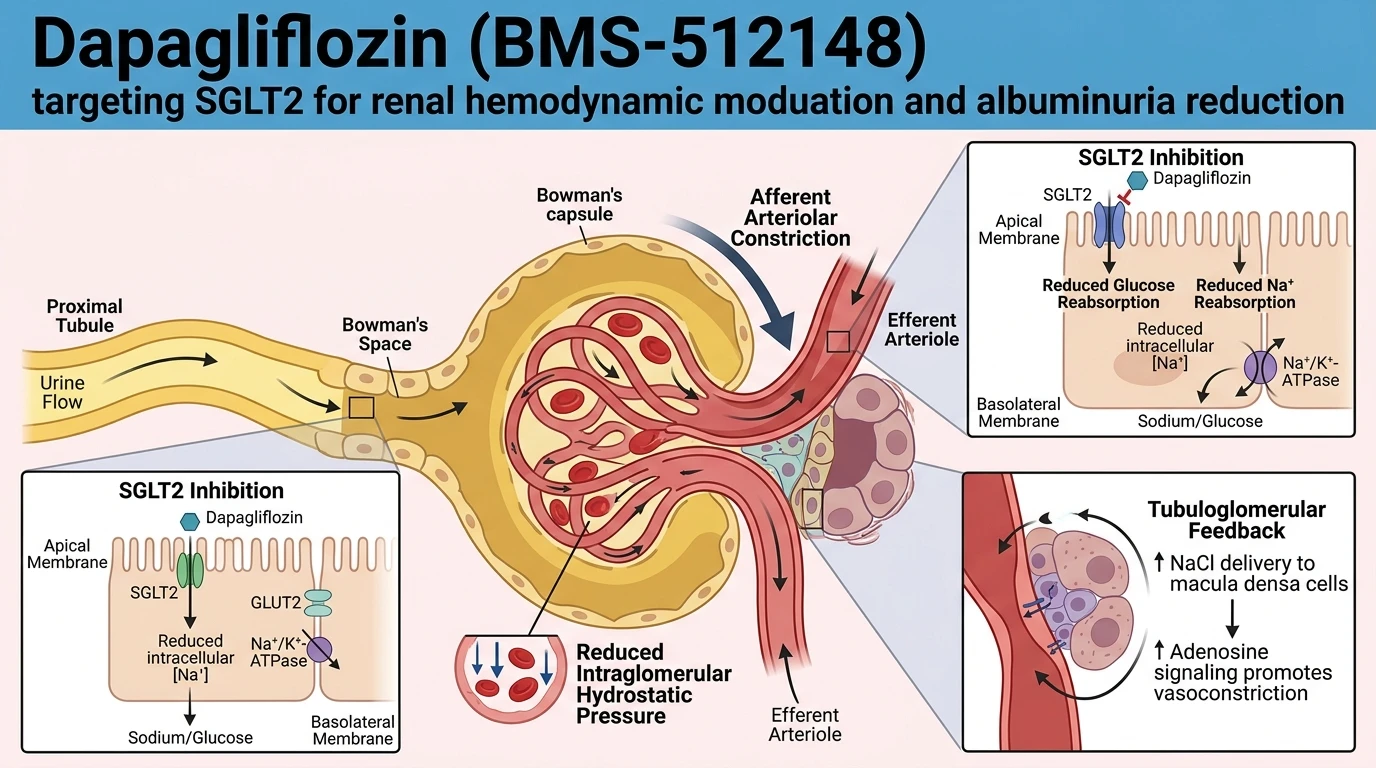
In patients with type 2 diabetes mellitus and secondary diabetic kidney disease, hyperfiltration driven by abnormal renal hemodynamics accelerates nephron decline. Hyperglycemia increases proximal tubular glucose load, upregulating sodium-glucose cotransporter 2 (SGLT2) expression and exacerbating sodium reabsorption. This reabsorption dampens solute delivery to the macula densa, turning off native tubuloglomerular feedback mechanisms. Consequent afferent arteriolar vasodilation elevates intraglomerular hydrostatic pressure, driving microalbuminuria and progressive podocyte detachment.
Dapagliflozin (BMS-512148) acts as a potent, highly selective inhibitor of SGLT2. By targeting SGLT2 in the early proximal tubule, the agent blocks coupled sodium and glucose transport back into the systemic circulation. In a controlled 12-week clinical study evaluating patients with type 2 diabetes and hypertension maintained on baseline renin-angiotensin system (RAS) blockade via ACE inhibitors or ARBs, administration of dapagliflozin at 10 mg daily demonstrated significant renoprotective activity. Treatment yielded a 33.2% reduction in urinary albumin-to-creatinine ratio (UACR) relative to placebo.
Crucially, this reduction in albumin excretion functioned independently of metabolic and systemic circulatory variables. Analysis demonstrated that changes in glycated hemoglobin (HbA1c), systemic systolic blood pressure, body weight, and baseline estimated glomerular filtration rate (eGFR) did not account for the observed decrease in UACR. Direct intrarenal physiological mechanisms drive this response rather than systemic metabolic control alone.
Upon treatment initiation, dapagliflozin induced an initial, modest decline in eGFR. This acute dip plateaued and proved fully reversible within one week following drug discontinuation. The rapid offset of filtration reduction confirms a functional, hemodynamic mechanism rather than structural nephrotoxicity or tubular destruction. Restoring distal sodium transport to the macula densa prompts local adenosine-mediated vasoconstriction of the afferent arteriole, relieving intraglomerular hypertension. The therapeutic combination was well tolerated without an excess of serious renal adverse events, highlighting the viability of dual RAS suppression and SGLT2 inhibition for long-term renal conservation.
Renal Hemodynamic and Anti-Albuminuric Effects in T2DM
Copy code to add this image to your page
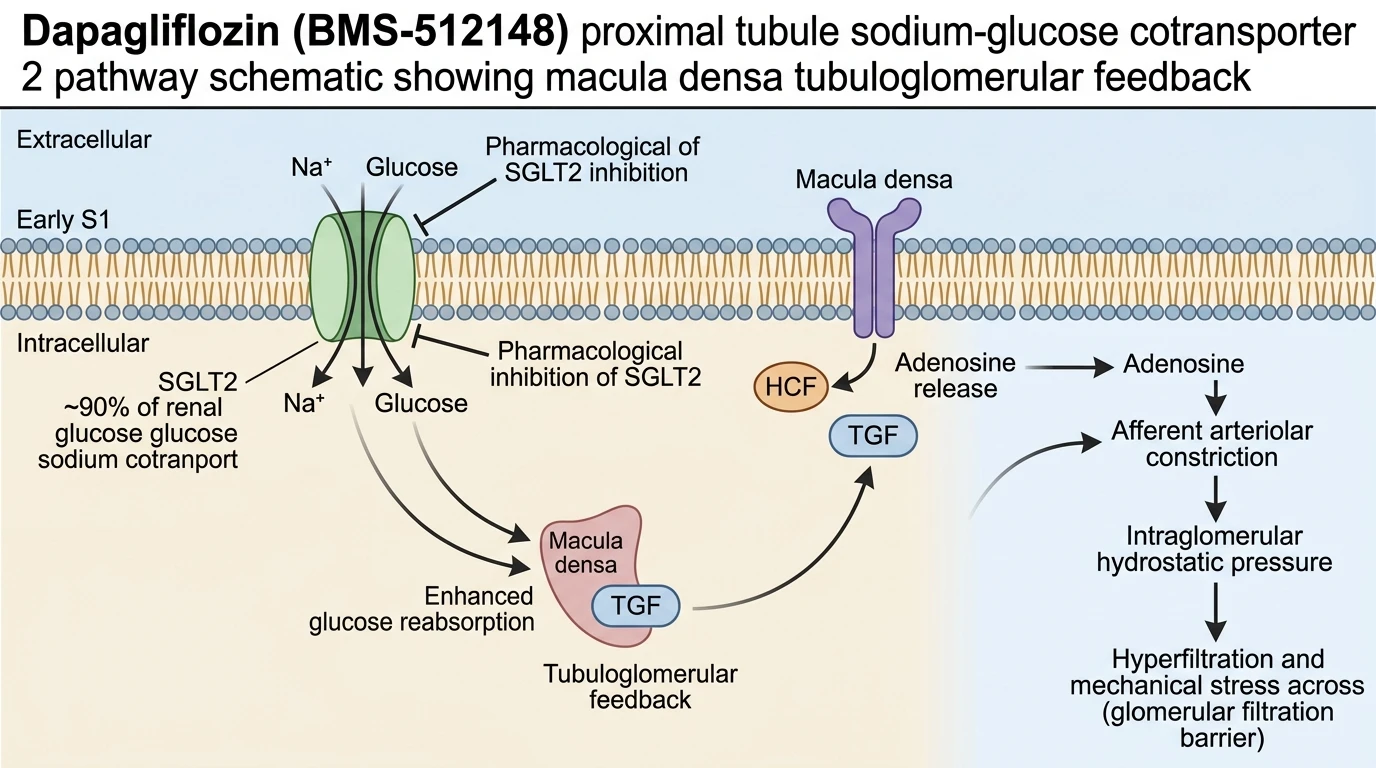
Dapagliflozin selective SGLT2 inhibition blocks proximal tubular glucose and sodium reabsorption. Enhanced distal sodium delivery to the macula densa restores tubuloglomerular feedback, triggering adenosine-mediated afferent arteriolar vasoconstriction. This intrarenal hemodynamic shift lowers intraglomerular hydrostatic pressure, reducing glomerular hyperfiltration and microalbuminuria by 33.2%. The accompanying initial eGFR decline is fully reversible upon treatment cessation, reflecting hemodynamic relief without parenchymal structural toxicity.
Reduction of Urinary Albumin Excretion Independent of Glycemia
Albuminuria signifies ongoing microvascular injury within the renal glomerulus. In patients with type 2 diabetes and hypertension receiving stable renin-angiotensin system blockade, administration of dapagliflozin at 10 mg daily elicited a 33.2% reduction in UACR compared to placebo over 12 weeks. Glycemic drift did not correlate with this anti-albuminuric response. Multivariate regression analyses revealed that the observed lowering of microalbuminuria occurred independently of alterations in glycated hemoglobin, systemic blood pressure, or body weight. The anti-albuminuric action of BMS-512148 reflects direct intrarenal activity. Restoring tubuloglomerular feedback mitigates physical shear stress across podocyte foot processes, preventing ongoing structural degradation of the filtration barrier.
Reversible Hemodynamic eGFR Dip Reflects Glomerular Unloading
Initiation of therapy induced a prompt, modest decline in eGFR. This initial functional decrease in glomerular filtration rate reflects altered arteriolar tone rather than structural acute kidney injury. Filtration capacity restored fully within seven days of treatment cessation. By inhibiting proximal tubular sodium reabsorption, BMS-512148 increases solute delivery to the macula densa, triggering local adenosine release and afferent arteriolar vasoconstriction. Intraglomerular hydrostatic pressure drops secondary to this vasoactive response. The rapid recovery of eGFR upon drug withdrawal confirms that functional hemodynamic adjustments, rather than parenchymal toxicity, govern these filtration kinetics.
Renal Safety Profile Under Concurrent Renin-Angiotensin System Suppression
Dual blockade of intrarenal pressure pathways proved well tolerated. Combining selective SGLT2 inhibition with background angiotensin-converting enzyme inhibitors or angiotensin receptor blockers produced no excess of serious renal adverse events. Incidence of acute renal failure remained comparable to control groups. The additive nephroprotective effects observed under combined blockade suggest distinct, complementary mechanisms governing efferent relaxation and afferent constriction within the renal microcirculation.