Cabozantinib (XL184) XL184 VEGFR Multitarget Kinase Blockade in Recurrent Glioblastoma
Copy code to add this image to your page
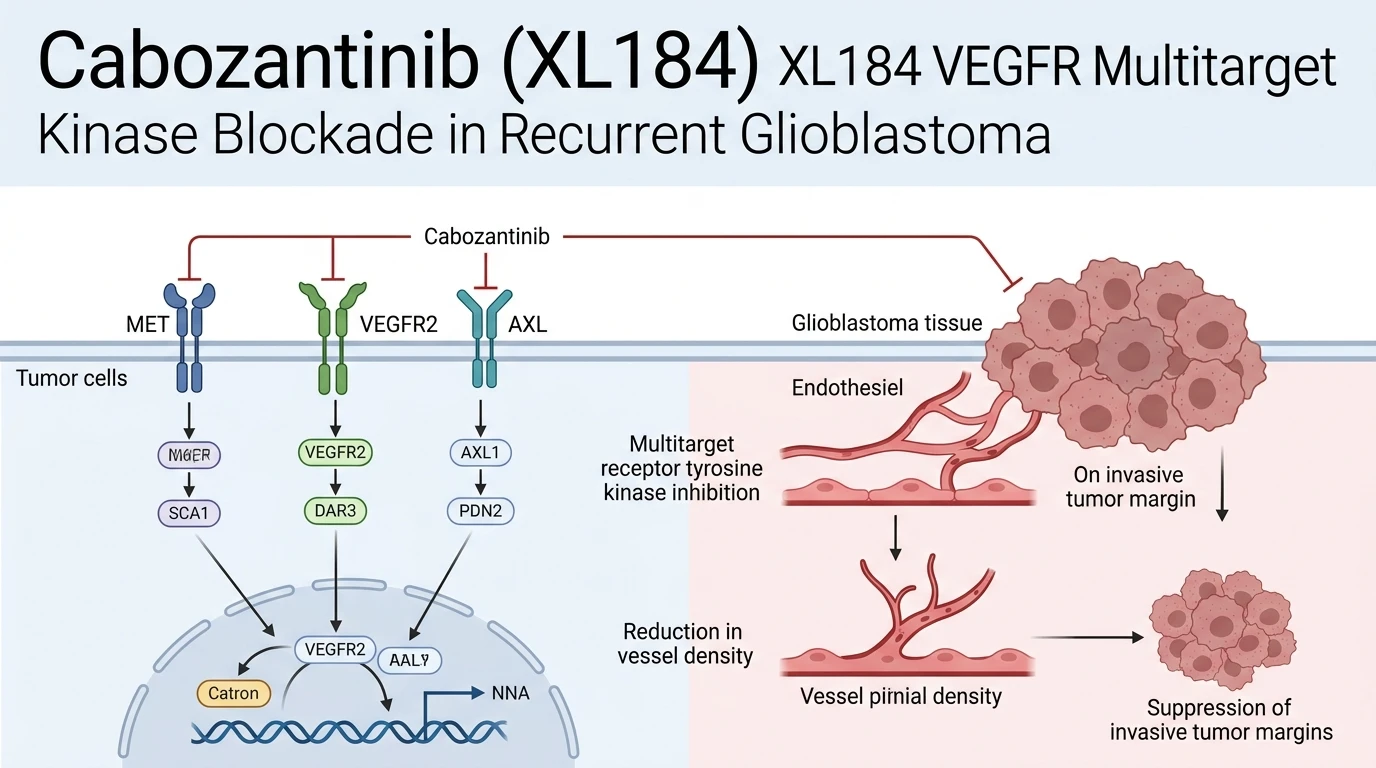
Glioblastoma represents an aggressive primary central nervous system malignancy characterized by pronounced microvascular proliferation, severe tissue hypoxia, and widespread parenchymal invasion. Tumor progression and neoangiogenesis rely heavily on signaling mediated by vascular endothelial growth factor receptor pathways. However, clinical resistance to selective antiangiogenic agents, such as the humanized anti-VEGF-A monoclonal antibody bevacizumab, occurs almost universally. Secondary resistance mechanisms frequently involve upregulation of alternative pro-angiogenic and invasive receptor tyrosine kinase signaling cascades, notably hepatocyte growth factor receptor (MET) and AXL receptor tyrosine kinase.
Cabozantinib (XL184) is an oral small-molecule multitarget tyrosine kinase inhibitor engineered to disrupt these compensatory survival mechanisms simultaneously. The agent exhibits potent nanomolar binding affinity against MET, VEGFR2, AXL, KIT, RET, TIE2, and FLT3. By inhibiting both MET and VEGFR2, the compound neutralizes compensatory invasive signaling induced under hypoxic stress during isolated antiangiogenic pressure. Within the catalytic cleft of target enzymes, the molecule acts as an ATP-competitive inhibitor, stabilizing an inactive kinase conformation and blocking downstream autophosphorylation cascades.
In a multicenter phase II clinical trial, investigators evaluated the therapeutic potential of Cabozantinib (XL184) in a cohort of 70 patients presenting with recurrent or progressive glioblastoma following prior antiangiogenic treatment. The trial cohort comprised individuals heavily pretreated with anti-VEGF therapies, predominantly bevacizumab. Dosing schedules were evaluated at either 140 mg daily or 100 mg daily. The objective of the investigation was to evaluate whether dual target blockade could overcome established antiangiogenic refractory states.
The primary clinical metrics revealed modest activity within this heavily pretreated patient population. Objective response rates measured by standardized radiological criteria reached 4.3%, representing confirmed partial responses in 3 patients. The median duration of response among responders was 4.2 months. Stable disease was documented in 47.1% of evaluated subjects. Notably, 66% of evaluable patients exhibited measurable tumor volume reductions relative to baseline measurements. Overall survival reached a median of 4.6 months, while median progression-free survival was 2.3 months. The 6-month progression-free survival rate stood at 8.5%.
These pharmacodynamic and clinical outcomes illustrate both the challenge of treating refractory glioblastoma and the biochemical rationale behind multi-kinase inhibition. Contemporary advances in oncological kinase inhibitor development emphasize targeting multiple bypass loops concurrently. For instance, XL184 VEGFR blockade limits vessel sprouting, while MET suppression attenuates the mesenchymal shift that facilitates cell scattering into adjacent brain tissue.
Despite logical target engagement, clinical tolerability presented noticeable challenges. Treatment-emergent adverse events were frequent across both dose cohorts, necessitating therapeutic dose reductions in 48.6% of patients. Fatigue was the most prevalent adverse event, reported in 74.3% of participants. Gastrointestinal toxicity was also observed, with diarrhea occurring in 47.1% of patients. Biochemical monitoring identified elevated alanine aminotransferase levels in 37.1% of the cohort, while vascular side effects included hypertension in 35.7% of patients. Consequently, management of toxicities remains critical when deploying multi-kinase inhibitors following antiangiogenic failure.
Therapeutic Evaluation and Pharmacological Characterization in Glioblastoma
Copy code to add this image to your page
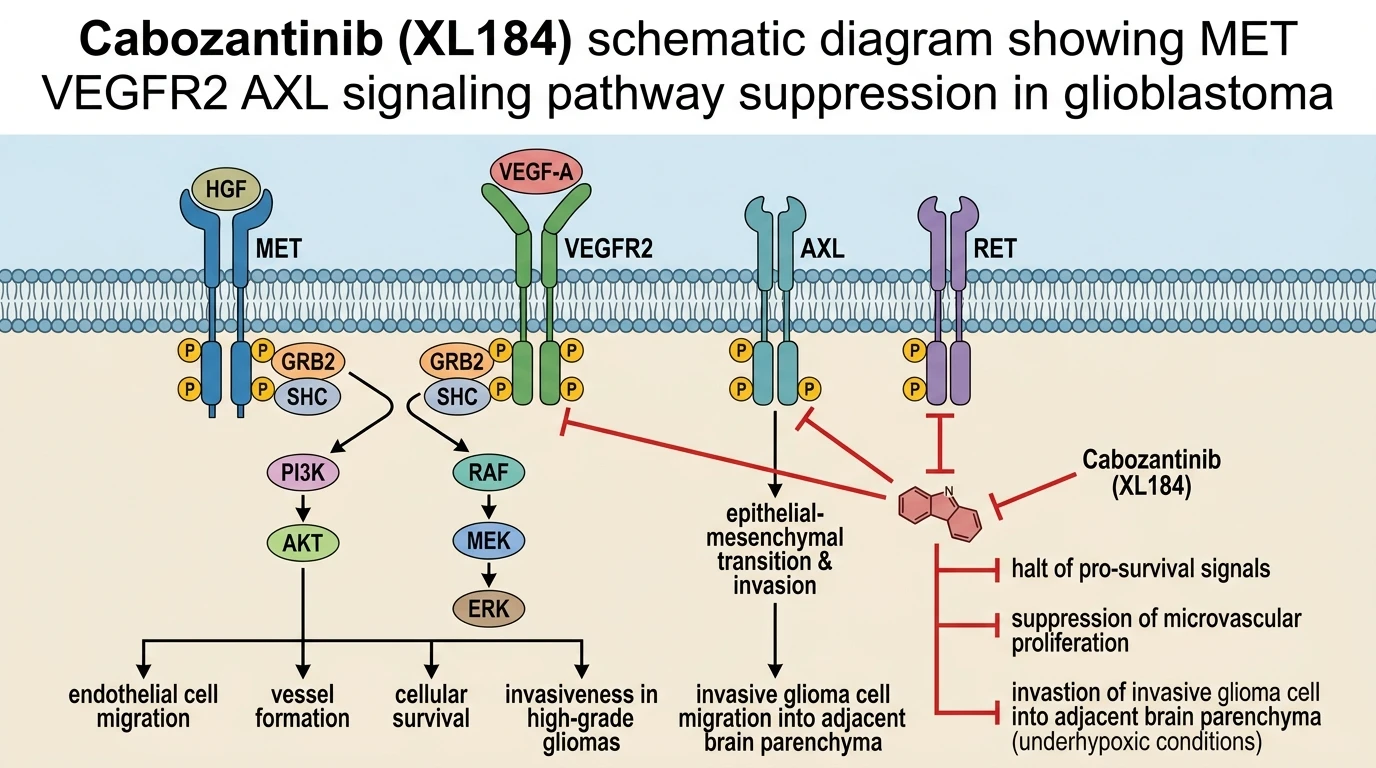
Cabozantinib (XL184) acts as a potent ATP-competitive inhibitor against receptor tyrosine kinases including MET, VEGFR2, AXL, KIT, RET, TIE2, and FLT3. Simultaneous suppression of VEGFR2 and MET prevents compensatory angiogenic switching driven by hypoxia-inducible factors during antiangiogenic monotherapy. Concurrently, blockade of MET and AXL disrupts pro-invasive intracellular signaling pathways involving PI3K-AKT and RAF-MEK-ERK. In glioblastoma models, this combined kinase inhibition decreases vascular density, halts tumor growth, and limits parenchymal cell invasion.
Survival Outcomes and Efficacy Metrics in Refractory Glioblastoma
Clinical evaluation in the phase II trial demonstrated modest activity in recurrent glioblastoma after bevacizumab failure. The objective response rate remained low at 4.3%. Three patients achieved partial responses. Median response duration lasted 4.2 months. The median progression-free survival reached 2.3 months, while the overall 6-month progression-free survival rate was 8.5%. Median overall survival reached 4.6 months across the cohort. These figures define clear boundary conditions for XL184 VEGFR target engagement in heavily pretreated antiangiogenic-resistant disease.
Volumetric Responses and Toxicity-Induced Dose Adjustments
Despite modest objective response rates, systematic radiographic assessments demonstrated unmistakable target engagement within tumor tissues. Volumetric tumor reductions occurred in 66% of evaluable patients. Stable disease was confirmed in 47.1% of subjects. Systemic toxicity restricted sustained drug exposure. Consequently, adverse event management mandated dose reductions in 48.6% of enrolled patients across both dose cohorts. Fatigue affected 74.3% of individuals. Gastrointestinal toxicities presented frequently, with diarrhea reported in 47.1% of treated patients. Hepatic monitoring revealed elevated alanine aminotransferase levels in 37.1% of subjects, whereas systemic hypertension occurred in 35.7% of cases. These tolerability profiles underscore severe physiological constraints during combined multi-kinase inhibition.